
David Ayer simplifies everything
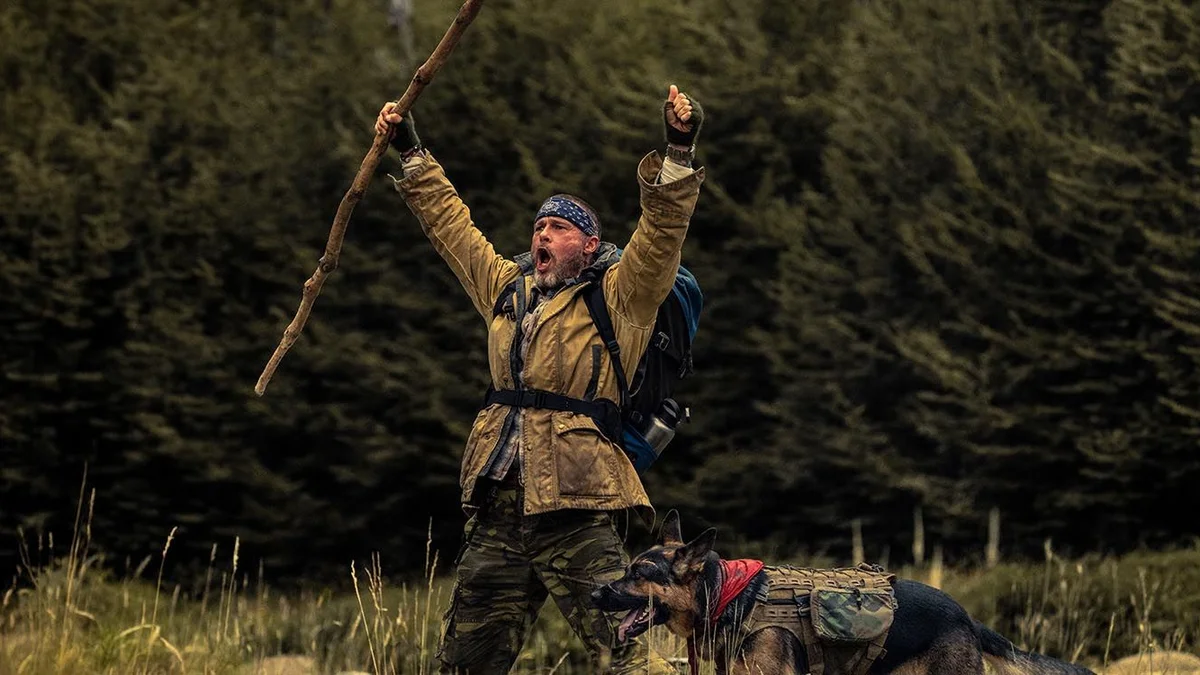
Heart of the Beast can almost be reduced to one sentence: after a plane crash, James Belmont and his dog Odin must cross the Alaskan wilderness to reach civilization.
David Ayer does not turn that premise into a narrative puzzle. Cameron Alexander's screenplay instead moves through elemental needs: recover supplies, find a route, avoid predators, endure the cold and keep going despite injury.
That simplicity inevitably produces familiarity. The Grey, The Edge, Arctic and a long tradition of wilderness stories have already stranded exhausted men in environments indifferent to their suffering.
Ayer gains something by refusing to overcomplicate the journey, however. The real subject becomes the way two veterans, one human and one canine, continue to function together.
Brad Pitt turns the volume down
James Belmont gives Brad Pitt very few human scene partners. J.K. Simmons appears briefly, Anna Lambe largely frames the story rather than occupying it, and much of the 101-minute film depends on Pitt alone with a dog, the terrain and his memories.
He plays that solitude without filling it with speeches. His body quickly matters more than dialogue: fatigue, pain, breathing and the hesitation before a movement that may be too dangerous.
The restraint works because Pitt does not turn Belmont into an indestructible super-soldier. His training provides an advantage but does not erase age or physical damage.
Even when the screenplay demands a few distinctly cinematic feats, Pitt keeps enough exhaustion in the performance to sell the struggle.
The dog is not an accessory
The film's decisive success is Odin.
Several dogs contributed to the role, with Uber serving as the principal German Shepherd performer. Published reviews have been unusually consistent on this point: the bond between Pitt and his canine partner is what allows Heart of the Beast to rise above its very conventional structure.
Odin is not merely there to generate affection. He watches, reacts, anticipates danger and becomes an active part of the decisions Belmont makes.
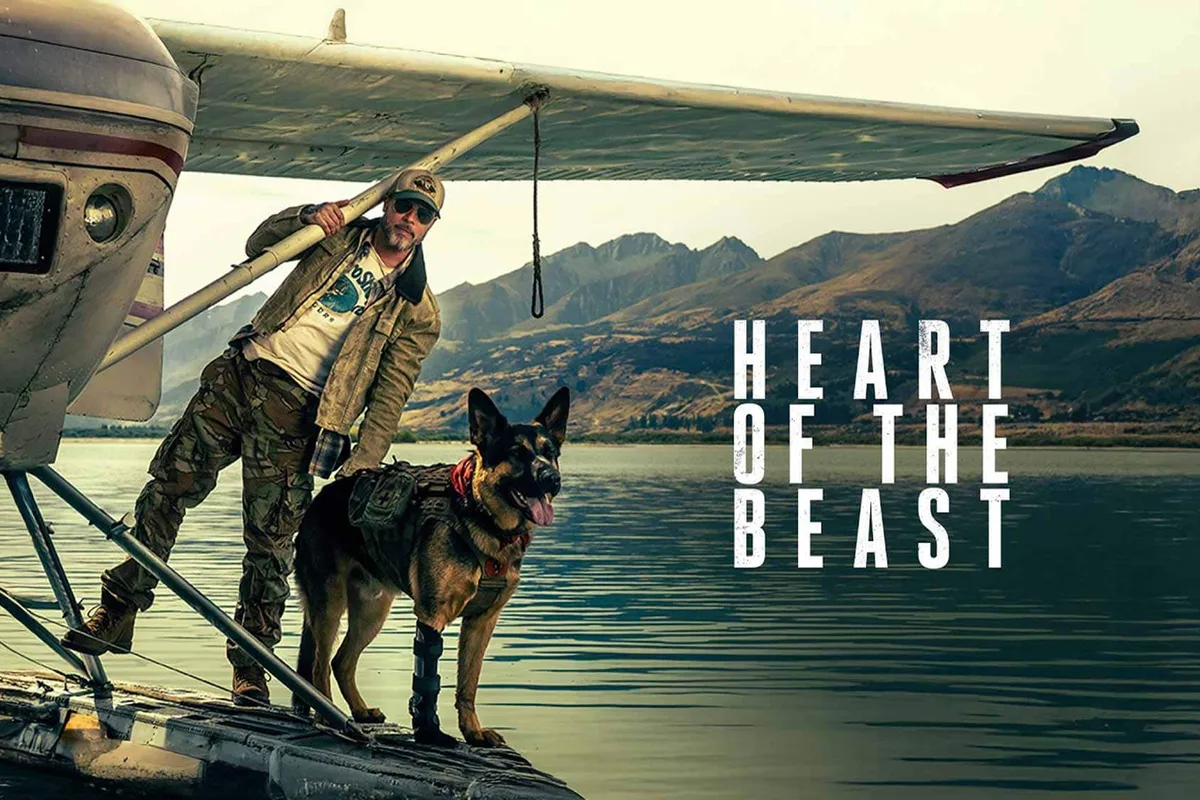
The film also gives the dog his own traces of war. His prosthetic limb and behavior place him within the same traumatic framework as Belmont.
The symmetry is simple and perhaps obvious, but it gives their relationship more weight than the usual story of a master and his loyal animal.
Nature works best when the visual effects stay away
Mauro Fiore has an environment built for widescreen composition. Lakes, forests, mountains and enormous horizons give the film scale that the cinematography regularly exploits.
Ayer moves effectively between images that reduce man and dog to tiny figures in a landscape and much tighter passages concerned with immediate survival.
The strongest threats are frequently the simplest ones: a steep descent, freezing water, one bad step or an injury that makes every mile harder.
The film becomes less persuasive when digitally created wildlife enters the equation. Several critics have singled out wolves and other animal encounters as noticeably less convincing than the physical landscape around them.
That is unfortunate because the environment already provides enough danger without needing constant amplification.
Ayer returns to Fury territory
Heart of the Beast reunites Brad Pitt with David Ayer after Fury, and that connection is most visible in the director's treatment of Belmont's military past.
The effects of war are useful material. They explain the bond between man and dog and add another dimension to their dependence on each other.
The flashbacks are less subtle.
At several points the film explicitly explains what Belmont and Odin's behavior had already made clear. Ayer occasionally seems worried that narrative simplicity might be mistaken for lack of depth and adds military symbolism that the relationship itself did not require.
The melodrama is completely sincere
Heart of the Beast is also more openly sentimental than its survival premise might initially suggest.
A wounded dog, a soldier marked by war, isolation, family and loyalty are never approached with ironic distance.
The movie wants a direct emotional response.
That works when Pitt and Odin generate it through a look, touch or reaction. It becomes less effective when score and screenplay underline a feeling that was already entirely clear.
That lack of cynicism is nevertheless refreshing from Ayer. The filmmaker behind End of Watch, Fury and The Beekeeper appears more interested here in masculine vulnerability than immediately converting that vulnerability into violence.
The survival story is predictable but controlled
The structure offers relatively few genuine surprises. Most obstacles can be anticipated, as can the ways they temporarily separate the pair and the emotional sacrifices the screenplay is preparing.
The opening even deliberately removes some uncertainty around Odin's fate.
That decision makes Ayer's priorities clear. Heart of the Beast is not fundamentally built around the question of who survives. It is more interested in what survival does to Belmont.
That reduces conventional suspense, but it also avoids one of the easiest tricks available to an animal movie: using the possible death of the dog as its only source of tension.
It does not reinvent the genre, but the partnership is enough
Heart of the Beast carries the weaknesses of a film deliberately choosing the straightest possible route.
Its obstacles are familiar, its symbols easily read and its emotions sometimes overemphasized. It lacks the existential brutality of The Grey and the radical solitude of more austere survival films.
It does have one advantage that cannot easily be manufactured: the relationship between man and dog feels credible.
At 7 out of 10, that relationship is what keeps the movie above its machinery. David Ayer delivers a classical, visually sturdy and occasionally clumsy survival film, but one sincere enough for simplicity to stop feeling like a weakness whenever Odin enters the frame.