
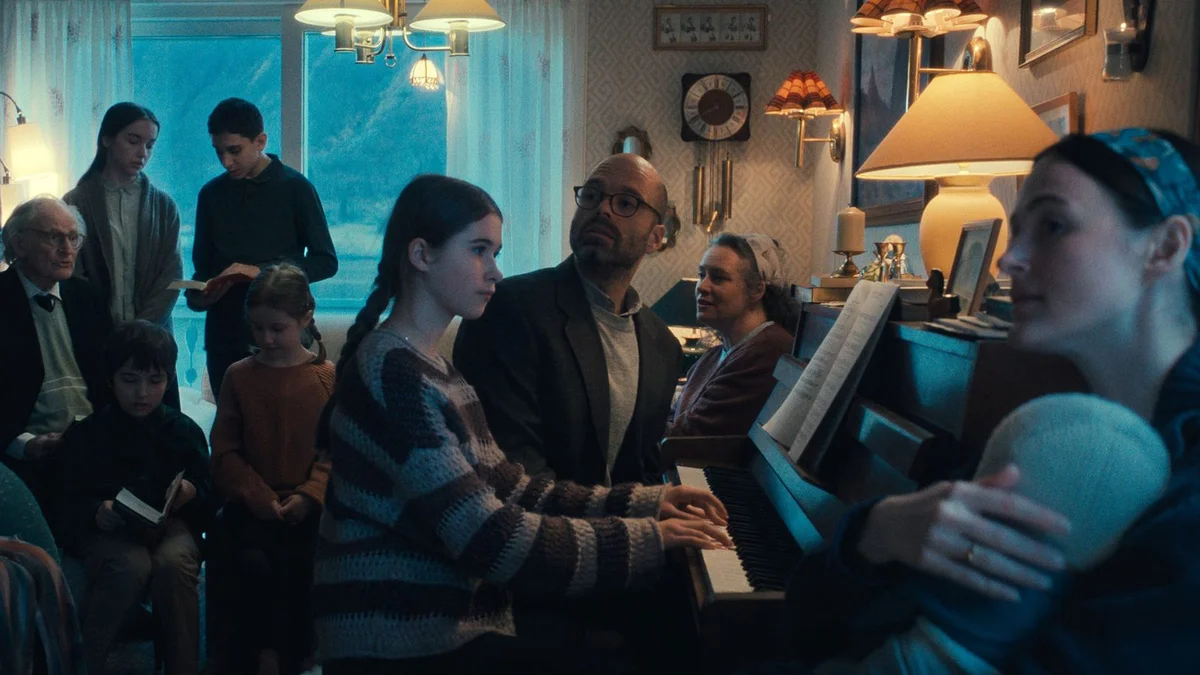
Following its Palme d'Or victory, Fjord reaches London
Cristian Mungiu is bringing one of the year's most debated European films to the London Film Festival. Fjord is scheduled to screen on Saturday, October 17, 2026, at 2 p.m. at the Royal Festival Hall, followed by another screening on Sunday, October 18, at Vue West End.
The Romanian Cultural Institute in London has announced that Mungiu and lead actors Sebastian Stan and Renate Reinsve will attend the UK premiere. The main festival screenings have sold out, reflecting significant interest in the production.
The London presentation follows the film's world premiere at Cannes, where it received the Palme d'Or on May 23.
The award made Mungiu one of the relatively few directors to win Cannes' highest honor twice. He previously received the Palme d'Or in 2007 for 4 Months, 3 Weeks and 2 Days, his drama about two young women living in the final years of communist Romania.
Almost two decades separate the films, but they share an interest in difficult decisions, institutional authority and the challenge of judging situations when the people involved possess incomplete or conflicting information.
Fjord began a limited American theatrical release on October 9, with an expansion announced for October 23. Picturehouse Entertainment has scheduled its UK and Irish cinema release for November 13.
As of October 16, the London screenings and the UK commercial opening have not yet taken place. The film has already reached festival audiences, but its theatrical availability remains different across territories.
A Romanian family discovers the limits of its new community's tolerance
Sebastian Stan plays Mihai Gheorghiu, a Romanian-born father living in Norway. Renate Reinsve portrays his wife Lisbet.
The couple move with their five children to a small settlement beside a remote Norwegian fjord.
Their conservative evangelical Christian beliefs influence their daily lives, the upbringing of their children and the expectations they bring to their relationships with other families.
At first, the transition appears relatively peaceful. The Gheorghius become friendly with their neighbors, the Halbergs, whose children develop relationships with their own.
The adults gradually discover that they do not share the same views on parenting, family roles or individual freedom.
The situation changes dramatically when teachers discover bruises on Elia, one of the Gheorghiu daughters.
Questions emerge about the parenting methods used inside the family, and Norway's child welfare authorities become involved.
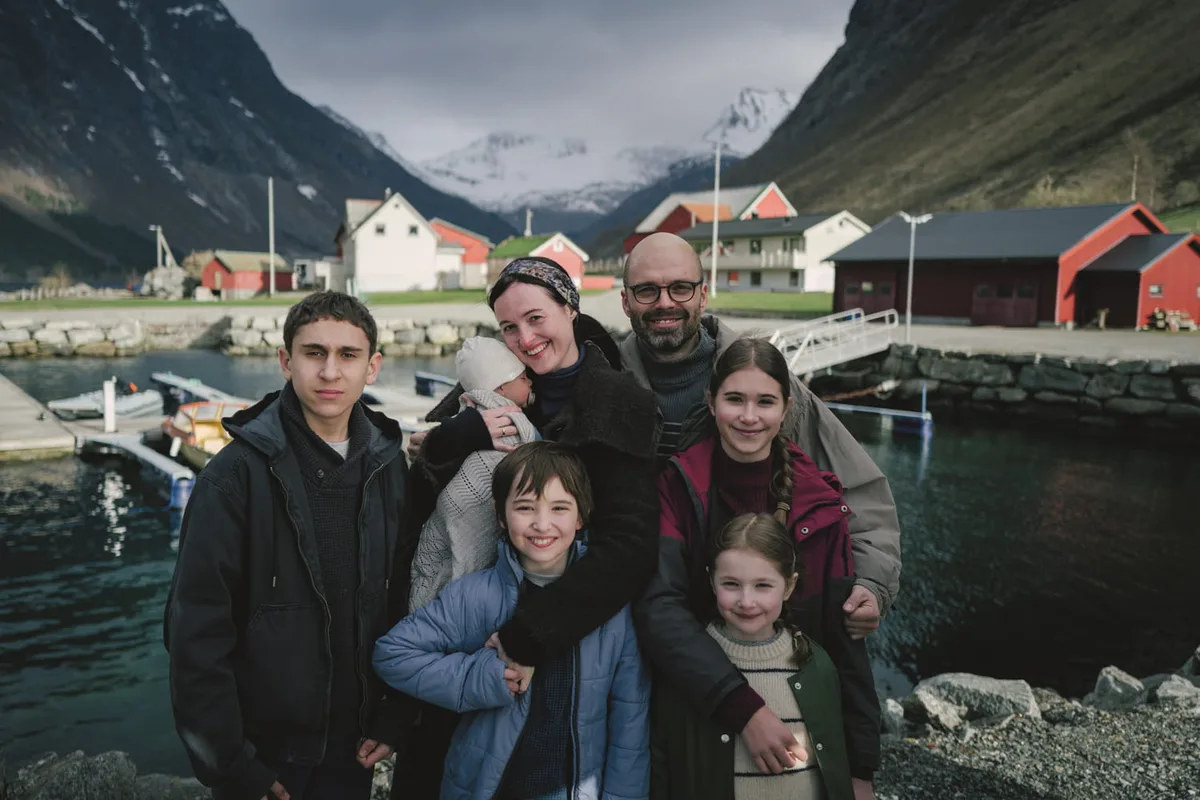
What began as a clash of cultural expectations becomes an institutional crisis.
The parents must respond to officials whose responsibility is to assess the children's safety, while struggling to understand or accept the methods used to evaluate their household.
Mungiu complicates the conflict by including neighbors, teachers and other people whose interpretations of the same family differ.
The audience must distinguish between cultural difference, questionable parenting and conduct that may justify intervention to protect a child.
These are separate questions. Religious conviction is not itself evidence of abuse. Conversely, cultural tradition cannot provide an exemption from laws protecting children against mistreatment.
The film places its central conflict precisely where these principles become difficult to apply in practice.
Sebastian Stan takes on an unusually restrained role
Sebastian Stan's presence is one of the production's most recognizable features.
The Romanian-born actor is internationally familiar as Bucky Barnes in Marvel's films and television series, although his career also includes darker, psychologically complex performances.
In Fjord, he plays a father whose beliefs are increasingly challenged by the expectations of the country where he lives.
Mihai is not an action hero confronted with a straightforward threat. He must defend his decisions, respond to serious suspicions and face the possibility that his understanding of his family is fundamentally different from that of the people responsible for its safety.
Stan performs across several languages, including Romanian, Norwegian and English.
The multilingual dimension adds a practical layer to the family's predicament. When people disagree about the meaning of an event, differences in language and cultural assumptions can make the situation even harder to resolve.
Renate Reinsve portrays Lisbet, whose relationship to Norway differs from her husband's.
The actress, who attracted worldwide attention through The Worst Person in the World, brings another perspective to a marriage shaped by migration, faith and family responsibilities.
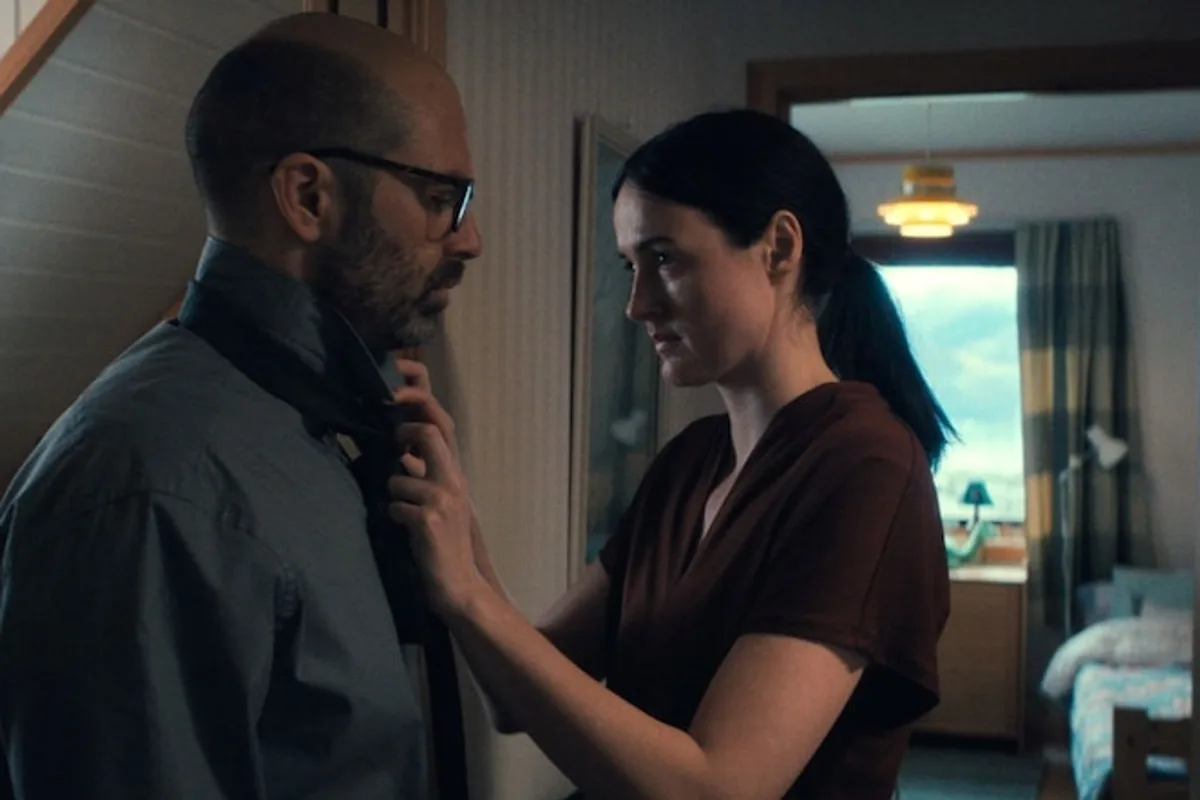
Their pairing allows the film to move beyond a simple opposition between a foreign father and a host society. Differences and uncertainties also exist within the couple itself.
The supporting cast includes Lisa Carlehed, Ellen Dorrit Petersen, Lisa Loven Kongsli and Henrikke Lund-Olsen.
The presence of internationally established performers has not led Mungiu to abandon his characteristic filmmaking approach.
The film relies on extended scenes, detailed interactions and mounting discomfort rather than the visual spectacle associated with many Hollywood dramas.
Mungiu spent years researching the real-world conflicts behind the story
Fjord is not a direct cinematic reconstruction of one court case.
Mungiu spent years studying disputes involving immigrant families and child welfare institutions in Nordic countries.
In an interview published by The Verge on October 10, the filmmaker described meeting a family involved in a prominent case, as well as children, relatives, lawyers, journalists, advocacy organizations and people connected to social services.
He also attended legal proceedings to better understand how competing claims were presented and evaluated.
The process reflects his early professional experience as a journalist.
Before establishing himself as a filmmaker, Mungiu worked in the Romanian press during the final years of communist rule. He has said that the experience influenced his approach to gathering information and constructing narratives.
The distinction between research and fiction remains essential.
Fjord uses fictional characters and situations to explore a moral and institutional conflict. It should not be treated as documentary evidence establishing what happened within a particular real household.
Mungiu has acknowledged that, even after extensive research, he could not be certain about every allegation involved in some of the cases he examined.
That caution matters because an artist's familiarity with a controversial subject does not automatically make a fictional narrative a definitive account of individual responsibility.
The Bodnariu case returns to public debate
On October 16, The Guardian examined the differing reactions to Fjord in Romania and Norway.
The article connected the film's premise to the widely discussed 2015 Bodnariu case, involving a Romanian-origin Christian family living in Norway.
Five children were removed from the household following concerns about their welfare, prompting protests, diplomatic tensions and extensive media coverage.
The children were eventually returned to their family, but the case remained deeply controversial.
Mungiu's film does not reproduce every event in that history.
It does, however, examine similar questions about the relationship between parenting practices and public standards, the interpretation of possible signs of harm and the difficulties institutions can face when family members distrust their interventions.
The debate extends beyond Norway.
It concerns how governments can protect children effectively without assuming that a family poses a danger merely because of its cultural background or religious beliefs.
An important legal point is often lost in the public discussion: corporal punishment is prohibited in both Romania and Norway.
The disagreement is therefore not simply between one country that legally permits physical punishment and another that forbids it.
It also involves social attitudes, different understandings of acceptable parenting and questions about how institutions assess allegations.
Child protection and religious freedom are not inherently opposing rights
Fjord raises a question with implications far beyond its fictional setting: how can a society respect minority beliefs while protecting the fundamental rights of children?
Child welfare institutions exist to intervene when there are credible concerns about abuse, serious neglect or other dangers.
Their responsibility cannot depend entirely on whether the parents agree with an investigation.
At the same time, institutions can make mistakes, misunderstand unfamiliar family practices or be influenced by assumptions about the people they investigate.
Recognizing those risks does not imply that child protection should be weakened or abandoned.
It instead reinforces the importance of careful assessment, accountable procedures and meaningful attention to the experiences of children themselves.
Mungiu has said he wanted to examine the limits of tolerance within societies that regard themselves as tolerant.
He argues that dialogue becomes particularly difficult when individuals consider their own values so self-evidently correct that they no longer feel the need to question them.
This approach does not eliminate the need to distinguish between legitimate differences of belief and harmful behavior.
Protecting children from established violence remains essential. Respecting cultural or religious convictions does not require accepting practices that violate fundamental protections.
The film generates debate because it asks how those boundaries are recognized and applied when people distrust one another.
Cannes' highest honor has not produced critical agreement
Winning the Palme d'Or brought Fjord considerable visibility, but the award has not removed disagreements over its political and moral implications.
Some critics praise Mungiu's ability to depict people who sincerely believe they are acting correctly while revealing the flaws and contradictions of both individuals and institutions.
Others argue that the film gives insufficient attention to the children's own perspectives.
There have also been objections to its portrayal of social workers and child welfare authorities.
A story that places viewers close to the family may make public institutions seem remote or impersonal, particularly when their employees receive less personal development.
The Guardian's October 16 discussion highlights how different audiences have interpreted those choices.
For some, Fjord represents a necessary examination of institutional certainty. For others, it risks presenting an unbalanced account of a highly sensitive responsibility.
The disagreement exposes a fundamental challenge for the film.
A narrative that declines to tell viewers explicitly what to think may encourage reflection, but its construction can still influence where sympathy is directed.
Cinema does not become neutral merely by presenting conflicting viewpoints.
Directors make decisions about camera placement, the information provided to audiences and which characters are allowed to explain their experiences.
The Norwegian landscape becomes part of the isolation
The film's title directly evokes its geographical environment.
Norwegian mountains, dark water and remote settlements provide more than picturesque scenery.
They place the characters in a relatively confined community where relationships between neighbors carry particular weight.
The Gheorghius are not living in a large city where disagreements can be avoided by moving between entirely separate social environments.
Their children's school, their neighbors and the surrounding institutions become central to their daily lives.
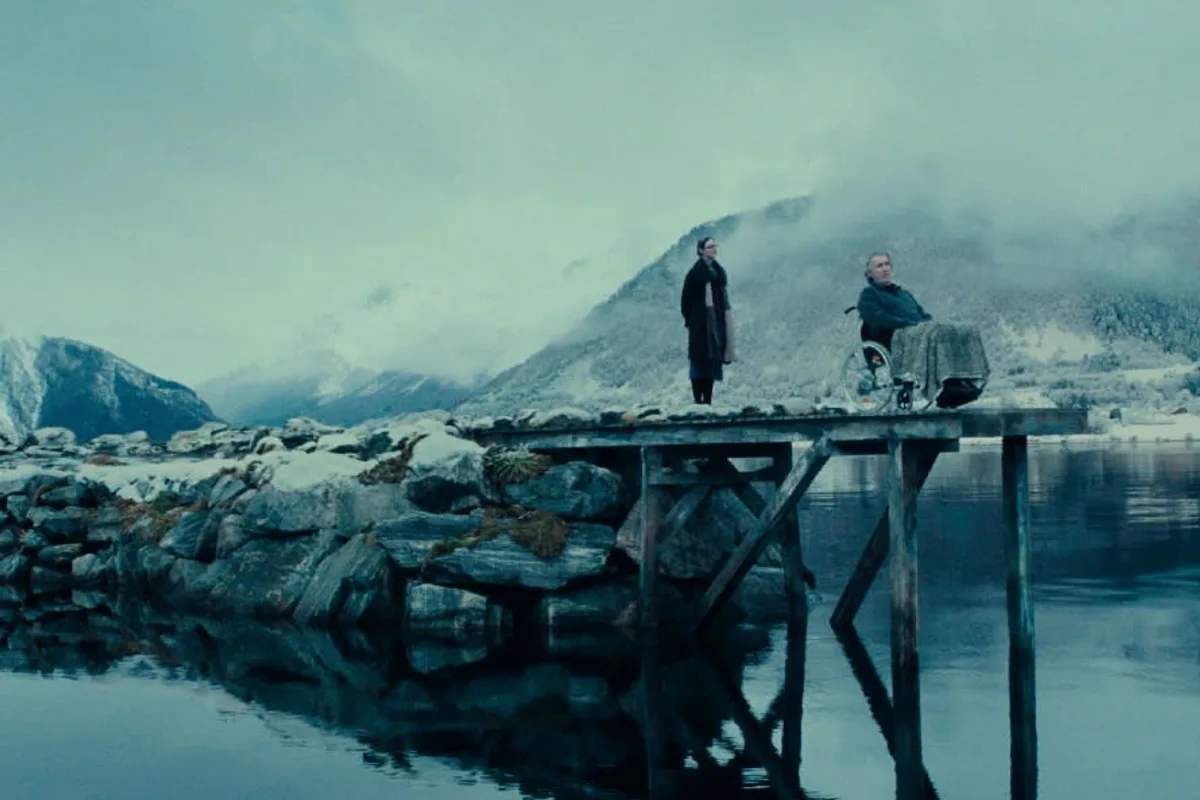
Tudor Vladimir Panduru's cinematography develops that contrast between the apparent serenity of the setting and the conflicts taking place inside the families.
Mungiu also continues his preference for sustained takes and scenes allowed to unfold at their own pace.
In his interview with The Verge, he describes an effort to avoid guiding audiences too forcefully toward a predetermined interpretation.
The aesthetic approach is directly connected to the film's subject.
Words and gestures may acquire different meanings depending on the convictions of the person observing them, and the viewer must remain attentive to the difference between a character's account and what can actually be established.
The result is a demanding 146-minute drama in which the consequences can be immense even though the tension often begins with ordinary remarks or everyday interactions.
Fjord continues its international journey after Cannes
A Palme d'Or victory usually opens new opportunities for international distribution, but it does not mean that a film becomes commercially available everywhere at once.
Fjord has already screened at several festivals, including Vancouver, and began a limited theatrical engagement in the United States on October 9.
A wider American release is scheduled for October 23, while the London Film Festival screenings take place on October 17 and 18.
The UK and Irish theatrical opening follows on November 13.
Festival presentations, advance screenings and national commercial releases are distinct events.
A film can receive extensive international coverage while remaining unavailable to ordinary moviegoers in many regions.
Mungiu's reputation, the presence of Stan and Reinsve, and the Cannes prize all provide significant visibility.
However, the film's subject, length and restrained dramatic style position it differently from large Hollywood commercial productions.
Its broader theatrical performance will depend on distributors, specialist cinemas and audiences interested in challenging European drama.
Winning Cannes' highest prize establishes major artistic recognition. It does not, by itself, predict box office revenue or commercial reach.
Mungiu wants audiences to take responsibility for their judgments
Fjord is not simply a story about differences between Romania and Norway.
It examines what happens when people who believe they are defending positive values become increasingly unable to understand the beliefs and experiences of others.
Mungiu has described his preferred role as something closer to a moderator than a judge delivering a final answer.
That ambition makes demands on viewers.
It requires listening to characters whose convictions may be uncomfortable without losing sight of the need to identify and respond to genuine harm.
The film distinguishes trust in institutions from the assumption that institutions cannot make mistakes. It also separates individual freedom from the idea that all behavior must be accepted in its name.
The divided response suggests that this method does not produce universal agreement.
Some audiences see an invitation to reconsider their assumptions. Others question whether the film itself distributes sympathy fairly.
On the eve of its British premiere, that may be the most distinctive quality of Mungiu's latest Palme d'Or winner.
Rather than merely depicting a conflict, Fjord asks viewers to examine how they choose a side.
After Cannes, the conversation moves to London and then to British cinemas. The discussion surrounding the film is becoming almost as significant as the events it portrays.