
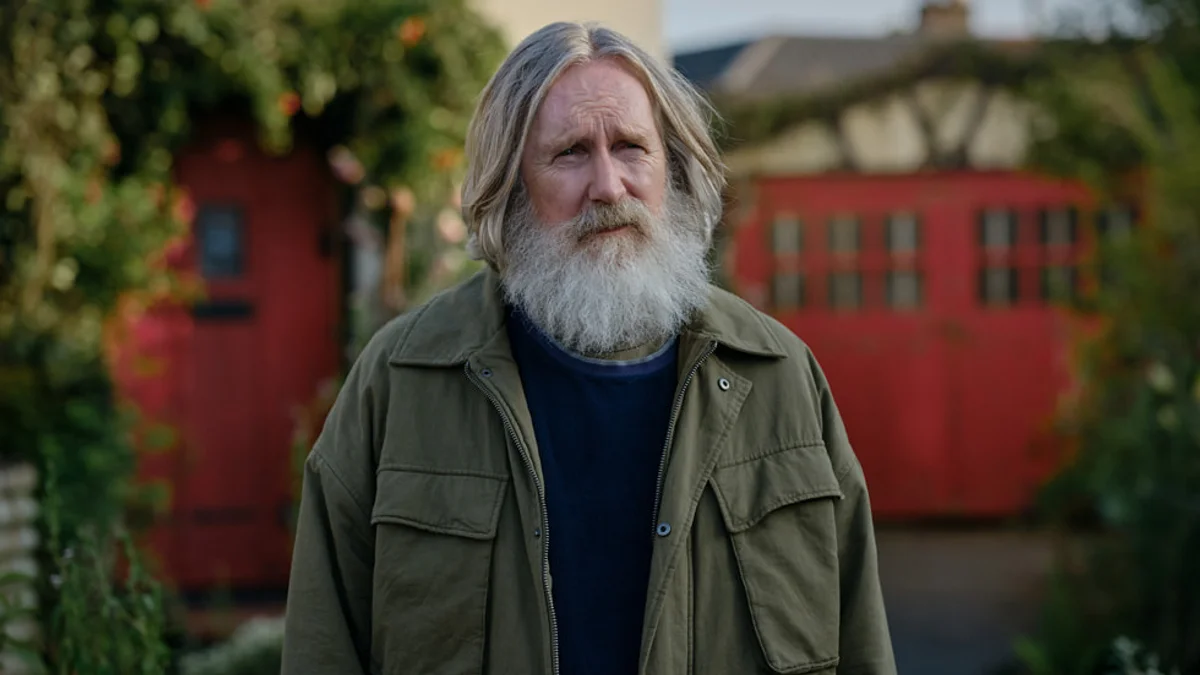
Small Prophets arrives on Apple TV, with one important exception
Small Prophets began streaming internationally on Apple TV on Wednesday, October 7, 2026. The first two episodes premiered together, followed by a third installment on October 14. The remaining episodes are scheduled for October 21, October 28 and November 4.
The first season contains six episodes, meaning that only the first half of the international Apple TV release is available as of October 16.
The United Kingdom follows a different distribution schedule. The series had already premiered earlier in 2026 on BBC Two and BBC iPlayer, where British viewers could discover the complete production before its international Apple TV release.
Apple plans to offer Small Prophets to its UK subscribers in 2027, although an exact date has not been announced.
This arrangement may seem unusual. A British series is reaching international Apple TV audiences before becoming available on the same streaming service in its home market.
The explanation lies in territorial licensing agreements, which do not always follow the unified release strategies familiar from major American streaming originals.
Apple did not originally commission Small Prophets as an exclusive production for its service. It acquired international distribution rights from Sphere Abacus after the show's British debut.
This is therefore the international expansion of an existing series, rather than the worldwide premiere of a production developed entirely for Apple TV.
Michael Sleep has been waiting seven years for Clea
The story centers on Michael Sleep, played by Pearce Quigley. His life has effectively stopped since his beloved partner Clea disappeared seven years earlier.
He now follows a quiet and repetitive routine. He works in a hardware store, visits his father and continues hoping that something might provide an answer to the absence that has defined his existence.
Michael is not an accomplished detective or someone accustomed to extraordinary adventures. He is an ordinary man whose world has gradually narrowed around an unresolved loss.
One day, his father Brian, portrayed by Michael Palin, shares an unusual old recipe. It supposedly explains how to create homunculi, miniature magical beings with the ability to predict future events.
The required ingredients are hardly reassuring. They include rainwater, horse manure and an assortment of alchemical procedures.
Despite his skepticism, Michael decides to attempt the experiment.
He is not searching for wealth, influence or the power to transform the world. His goal is considerably more personal: finding out whether he will ever see Clea again.
That simple emotional motivation gives the supernatural premise its meaning. When someone has lived with uncertainty for years, even an absurd method of obtaining an answer can begin to appear worthwhile.
Mackenzie Crook finds magic in ordinary surroundings
Mackenzie Crook created, wrote and directed Small Prophets. He also appears on screen as Gordon, the manager of the hardware store where Michael works.
British audiences know Crook particularly well for Detectorists, his acclaimed comedy about two metal-detecting enthusiasts.
That series found humor and emotion in modest discoveries, apparently insignificant conversations and the ordinary relationships between its characters.
Small Prophets extends a similar interest in unremarkable lives while introducing a supernatural element.
The setting remains thoroughly familiar: retail work, curious neighbors, awkward professional relationships and a garden that should not ordinarily attract much attention.
The extraordinary enters precisely that environment.
Instead of transporting its characters to a remote fantasy kingdom, the series introduces magical creatures into a place more likely to contain gardening equipment.
That contrast helps distinguish the premise from more conventional fantasy storytelling.
Michael is not trying to master a spectacular supernatural power. He wants to discover whether an unlikely experiment can restore a sense of possibility to an existence dominated by waiting.
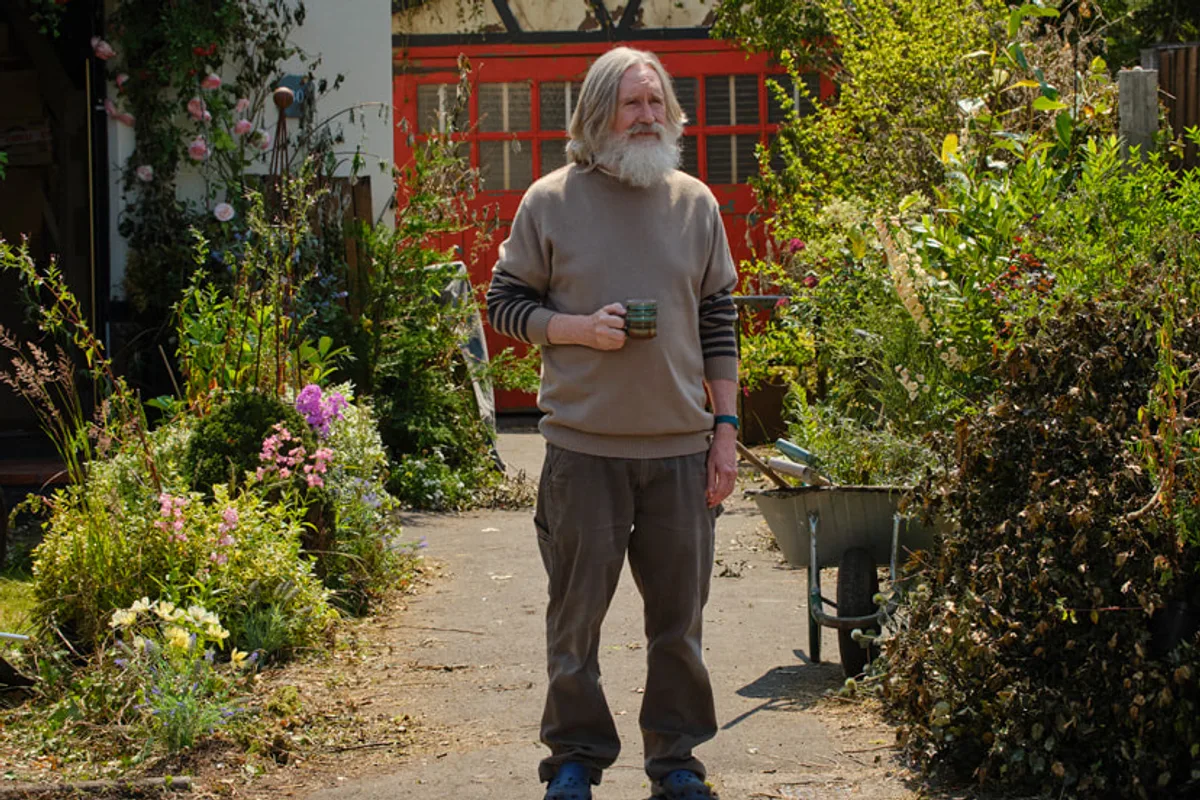
The setting in and around Manchester is essential to that identity. The series was filmed in the region and uses recognizable residential streets, gardens and working environments.
Apple also confirms that the production incorporates animated elements alongside live-action footage.
The combination allows the show to introduce the fantastic without abandoning the everyday surroundings that define its characters.
Pearce Quigley and Lauren Patel form an unlikely partnership
Michael does not conduct his strange experiments entirely alone. He receives assistance from Kacey, a younger coworker played by Lauren Patel.
Their connection develops partly through a shared dislike of Gordon, their manager at the hardware store.
It is a deliberately unheroic foundation for a friendship. In Small Prophets, two people can become close simply because neither particularly enjoys working for the same boss.
Kacey gradually becomes involved in Michael's unusual activities.
Her presence introduces a new relationship into the life of a man who has struggled to move forward since Clea disappeared.
It would be reductive, however, to describe her only as an assistant helping the protagonist create magical creatures.
Apple's official synopsis emphasizes their friendship as an important part of the story.
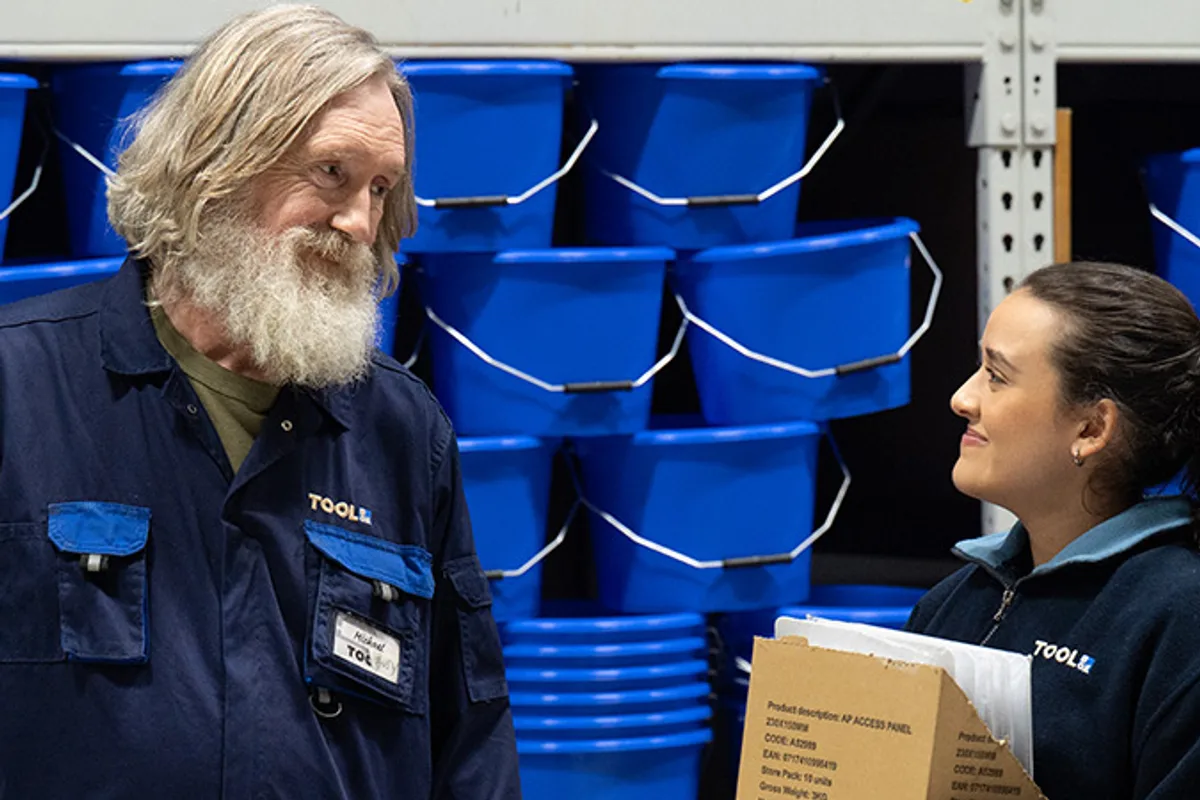
Quigley previously worked with Crook on Detectorists, continuing a creative association even though Michael Sleep belongs to an entirely different fictional world.
Patel, whose earlier work includes Waterloo Road, represents a different generation within a comedy where age differences do not prevent unexpected connections.
The series appears particularly interested in relationships formed almost accidentally through routine circumstances, before the people involved discover deeper reasons to remain in one another's lives.
Michael Palin gives the story its peculiar family connection
Michael Palin is one of the most immediately recognizable members of the cast.
The former Monty Python performer and celebrated travel writer plays Brian, Michael's father.
His character provides the mysterious recipe that sets the entire alchemical experiment in motion.
Without Brian's discovery, Michael would probably never have considered transforming his garden shed into something resembling a laboratory.
The father-son relationship also introduces an unusual form of inheritance.
Brian does not simply offer wisdom or a familiar family keepsake. He gives his son an extraordinary and deeply improbable method of addressing an emotional problem that has remained unresolved for years.
Sophie Willan and Jon Pointing play Bev and Clive, two neighbors increasingly fascinated by the strange activities taking place around Michael's shed.
Their curiosity adds another complication to the experiment.
Michael must cope with an unpredictable supernatural process while trying to prevent the surrounding neighborhood from discovering exactly what he is doing.
Paul Kaye is also among the performers confirmed by Apple.
The ensemble brings together talent associated with different strands of British comedy, from the distinctive tradition of Monty Python to more contemporary character-driven television.
Small Prophets has already earned recognition at Series Mania
Before reaching Apple TV, Small Prophets received significant recognition within the international television festival circuit.
In March 2026, the series won the Best Series award in the International Panorama competition at Series Mania.
That achievement helps explain why a relatively understated British comedy has attracted interest beyond its original market.
Apple's September 30 announcement also highlighted a 100 percent critics' score on Rotten Tomatoes at the time of publication.
That percentage represents the share of reviews classified as positive by the aggregator. It is not a perfect average rating, a measure of audience size or a guarantee that the score will remain unchanged as additional reviews appear.
The Series Mania award nevertheless provides a confirmed example of the show's professional recognition.
Small Prophets is not reaching international audiences solely because a streaming company has signed a licensing agreement.
It already possesses a reputation among critics and festival programmers, which can help distinguish it within a crowded market for television acquisitions.
For a production of this scale, such recognition may be particularly valuable when seeking distribution beyond its country of origin.
Apple TV is not relying exclusively on its own productions
The distribution history of Small Prophets highlights a less conspicuous part of modern streaming strategy.
Apple TV has built much of its reputation through original productions commissioned directly for the service.
However, streaming platforms can also acquire distribution rights to series that have already been produced and released elsewhere.
That is what happened here. Apple secured international rights through Sphere Abacus following the show's initial BBC run.
The arrangement offers several advantages.
The production already exists, its episode count is known and its initial critical reception can be evaluated before the international licensing deal.
For the distributor, the agreement opens additional markets. For Apple, it provides an established program without requiring the same development process as a completely new commission.
That does not mean the acquisition is free of financial risk.
Licensing rights carry costs, and the value of an agreement depends on territories, duration and contractual conditions.
The financial details of Apple's Small Prophets acquisition have not been publicly established in the verified sources used for this article.
The editorial choice is nevertheless revealing.
By adding an unusual British fantasy comedy, Apple is diversifying its offering with a series that does not attempt to compete directly with the scale of major franchise productions.
A British series travels internationally before returning to British Apple TV
The most unusual aspect of the arrangement may be its release schedule.
In the United Kingdom, Small Prophets was already accessible through the BBC before its Apple TV international rollout.
The public broadcaster therefore remains central to the series' original distribution history.
In other supported territories, Apple TV became an additional home for the production from October 7.
The company plans to introduce the series to its UK subscribers in 2027.
This is not an anomaly. Television rights are frequently organized around separate territorial windows.
It is nevertheless a reminder that an internationally distributed program is not always accessible through the same service in every country at the same time.
Streaming catalogs may appear global, but the commercial agreements determining their contents often remain national or regional.
Small Prophets also demonstrates how a program originating on public television can find a second distribution life through a subscription streaming platform.
That may introduce the series to audiences who would never have encountered its original BBC broadcasts.
The scale of that additional exposure cannot yet be measured. Apple has not published verified international viewing figures specifically associated with the acquisition.
The supernatural premise is really about absence
Behind the homunculi and absurd ingredients, Small Prophets has a deeply personal dramatic motivation.
Michael is not experimenting with magic merely because he is curious about the future.
He wants to know whether his life can regain a sense of direction after seven years of waiting for Clea.
That desire changes the role of the supernatural.
The tiny magical beings are more than fantastical entertainment. They represent the possibility of finally answering a question that ordinary life has left unresolved.
The premise could easily support a bleak drama, but the official presentation also emphasizes friendship, hope and humor.
That combination makes the series unusual.
Fantasy does not promise Michael a grand heroic adventure. It interrupts a life that has become static, offering the possibility that something might finally change.
His relationship with Kacey becomes part of that movement.
Even if the creatures were unable to provide every answer Michael wants, the experiment has already created the opportunity for another person to become involved in his life.
That interpretation follows from the confirmed premise without revealing or presuming the ending of the six-episode story.
A small-scale comedy in an industry attracted to spectacle
Small Prophets does not offer the enormous scope of a major fantasy franchise or a cast assembled primarily from Hollywood's biggest stars.
Its story revolves around an ordinary man, a hardware store, an eccentric father, a younger colleague and several excessively curious neighbors.
Magic enters that world without immediately transforming it into a vast spectacle.
That restraint may appeal to viewers looking for something different from more conventional genre television.
The show's distinctive premise is not built around an elaborate mythology. It emerges from the meeting of everyday routines and impossible events.
It would be premature to treat that unusual scale as proof of universal appeal. Positive British reviews and festival recognition do not guarantee an identical response from international audiences.
The Apple TV rollout will nevertheless provide an opportunity to see whether a comedy so closely associated with ordinary British life can connect with viewers across different markets.
As of October 16, three episodes have been released internationally through the service, with the remaining three scheduled through November 4.
Small Prophets still has part of its international journey ahead. In a streaming calendar crowded with political thrillers, horror franchises and expensive spectacles, a story about a man using horse manure to create magical creatures in the hope of finding his missing partner already possesses one unmistakable quality: it does not sound much like anything else.