
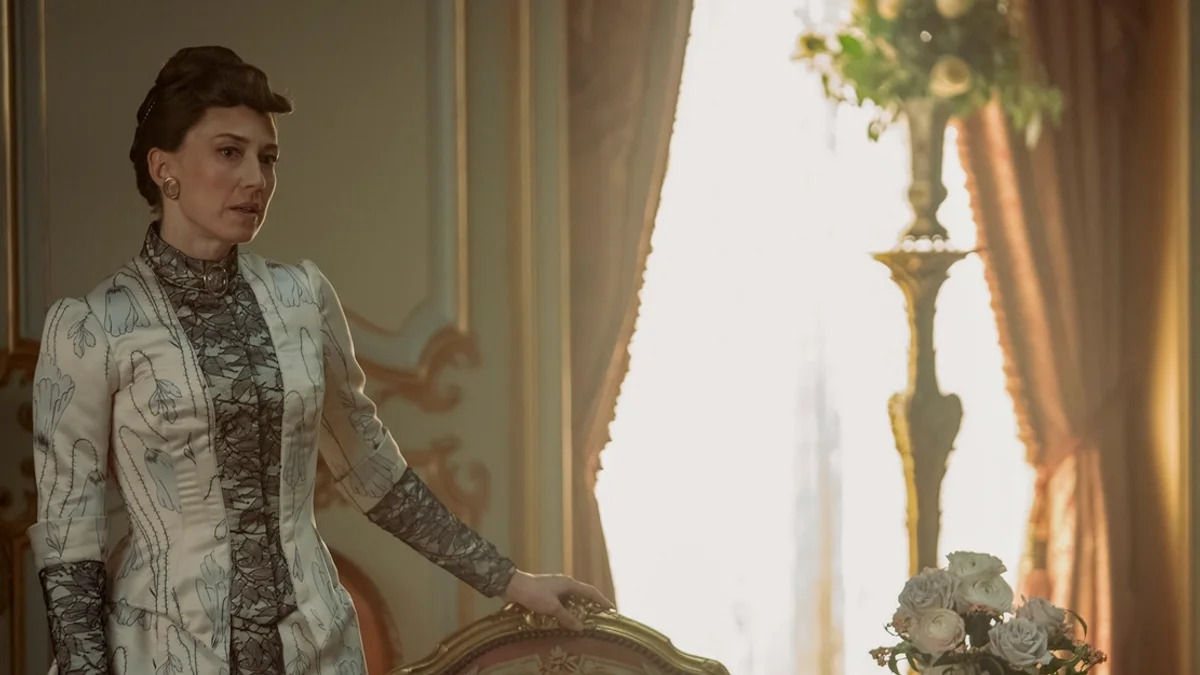
Bertha Russell spent years forcing her way into a world that refused to recognize her family.
She organized extravagant receptions, challenged established conventions and built influence through determination and carefully selected alliances.
Now she has much of the social standing she once lacked.
But The Gilded Age has never presented success as a guarantee of happiness.
The fourth season premiered in the United States on Sunday, November 1, 2026, on HBO and HBO Max.
The new installment contains eight episodes, which will be released weekly.
Its official premise emphasizes the consequences of Bertha's social victories and the increasingly difficult relationships within the Russell family.
The new season is therefore less concerned with whether Bertha can enter the upper ranks of society than with what happens after she has succeeded.
That shift creates opportunities for old rivalries to develop in unexpected directions.
Bertha Russell has won status but endangered her family
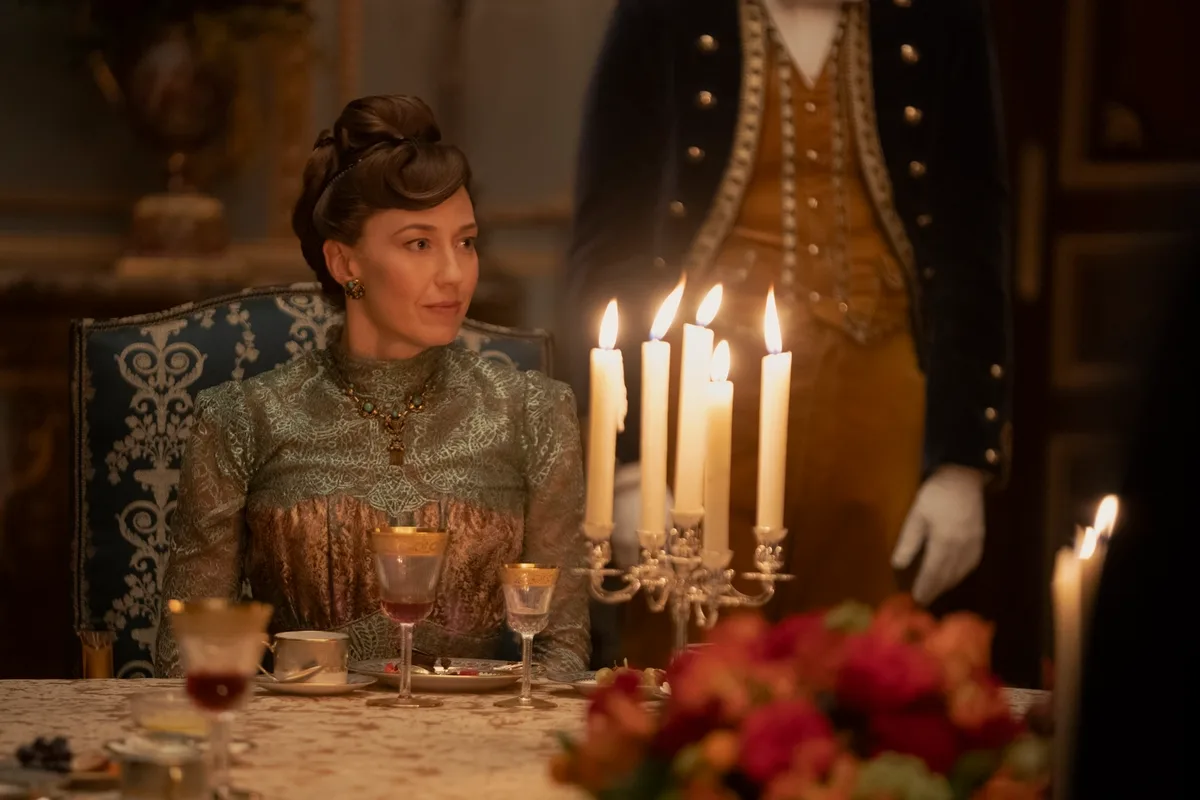
Since the beginning of the series, Bertha Russell has been determined to secure a place among New York's most influential families.
Her husband George possesses considerable wealth through his industrial and railroad interests.
But money alone cannot guarantee acceptance by families whose social authority comes from generations of established status.
Bertha has therefore pursued recognition through elaborate social events and strategic relationships.
Her ambitions reached a major turning point in Season 3.
She arranged the marriage of her daughter Gladys to the Duke of Buckingham.
The marriage connected the Russell family's American industrial fortune with British aristocracy.
From Bertha's perspective, it represented an extraordinary achievement.
But George did not share her satisfaction.
He increasingly questioned her willingness to interfere with their children's personal lives.
That disagreement has damaged their marriage.
HBO's official Season 4 synopsis emphasizes that Bertha has changed society at a considerable cost.
Her family must now deal with the consequences.
The conflict between social ambition and personal loyalty will therefore shape much of the new story.
George Russell begins challenging his wife's decisions
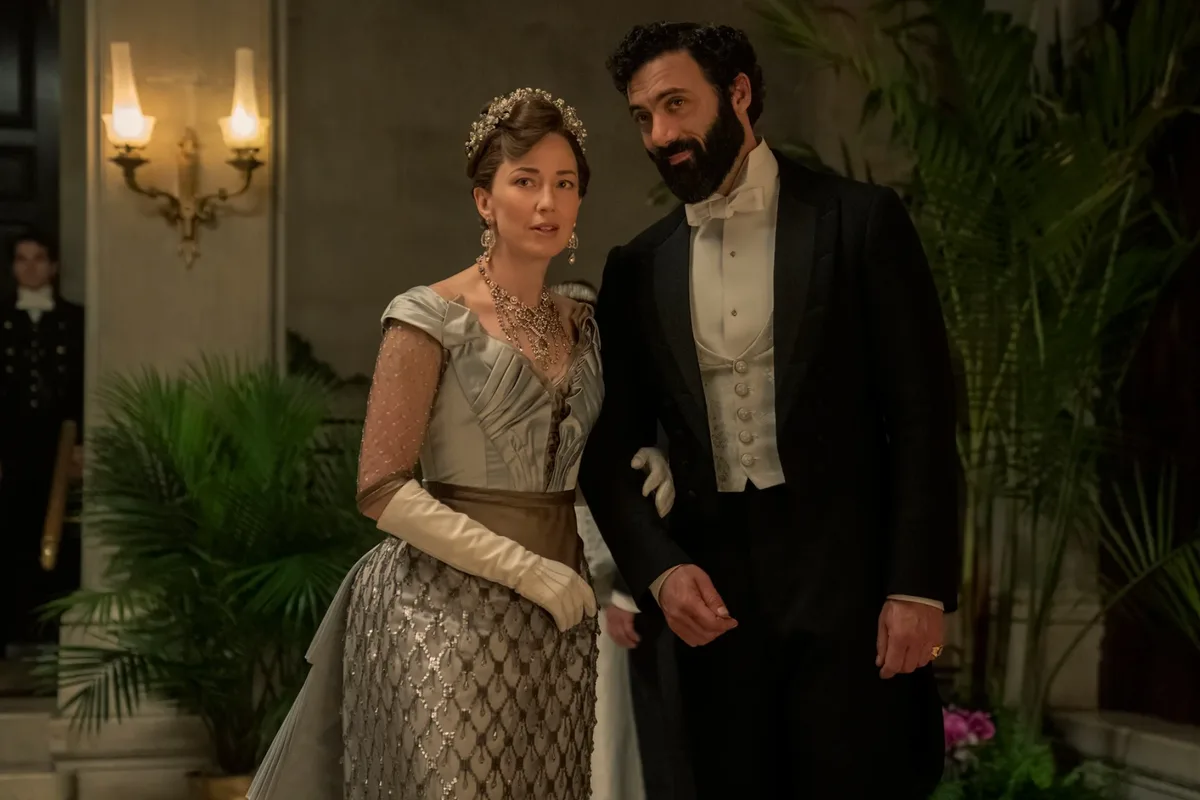
Morgan Spector returns as George Russell.
The wealthy industrialist represents the extraordinary economic power created by America's expanding railroad industry.
Throughout the earlier seasons, George and Bertha often appeared unusually united.
Their ambitions were not identical, but they shared a determination to establish their family's position.
That partnership has become increasingly difficult to maintain.
Bertha's involvement in Gladys' marriage has exposed a disagreement about the boundaries of parental authority.
George believes that social advancement cannot justify every sacrifice.
The new season develops the consequences of that division.
It is no longer simply a dispute over one marriage.
It concerns whether two people who built an empire together can maintain their relationship when their priorities begin to diverge.
This gives the Russell family's story a more intimate dimension.
The central danger is not necessarily an external rival.
It may be the collapse of the alliance that made their success possible.
Agnes van Rhijn sees an opportunity to regain influence
Christine Baranski returns as Agnes van Rhijn.
Agnes has represented the established social order since the first season.
Her position rests on family history, inherited prestige and a strong belief in the traditions governing New York's upper class.
She rarely needs to explain why her opinions should matter.
Her authority comes from belonging to a world that once controlled admission to elite society.
Bertha's rise has repeatedly challenged that system.
Season 4 gives Agnes a new chance to recover some of her lost influence.
The official synopsis explicitly describes her efforts to reclaim her position.
Promotional interviews also indicate that a presidential dinner will become an important social event.
Agnes hopes to use the occasion to demonstrate that established families can still command considerable attention.
The arrival of President Grover Cleveland brings national politics into the social competition.
For Agnes, hosting the right people can become a strategic act rather than a simple expression of hospitality.
That approach reflects one of the show's central ideas: social events can function as political negotiations without anyone openly acknowledging them as such.
Ada Brook is becoming more independent
Cynthia Nixon resumes her role as Ada Brook.
For much of the series, Ada occupied a quieter position beside her formidable sister Agnes.
Her financial and personal circumstances have gradually changed.
She has gained independence and become more willing to express her own views.
Season 4 continues that transformation.
In interviews with Entertainment Weekly, Nixon and Baranski discussed the difficulties emerging between the sisters.
Ada is less willing to defer automatically to Agnes' judgments.
That creates a problem for Agnes at precisely the moment she wants to reestablish her authority in New York society.
The two women share years of family history and genuine affection.
But their understanding of responsibility, independence and personal freedom is no longer identical.
The tension makes their relationship one of the show's most effective ways of examining social change.
An evolving society can transform the relationships within a single household just as profoundly as it changes public institutions.
Marian Brook searches for a different future
Louisa Jacobson returns as Marian Brook.
Marian has consistently struggled to reconcile her personal convictions with the expectations of the society around her.
Family alliances, marriage and reputation remain central considerations in her world.
But Marian wants an existence in which she can make meaningful decisions for herself.
The official Season 4 synopsis states that she is forging a new path.
Her relationship with Larry Russell, played by Harry Richardson, provides an important context for that development.
Their connection joins two families that have represented competing social traditions.
Marian may therefore find herself caught between emotional loyalty and pressures created by family rivalry.
However, the outcome of that relationship has not been established through the official synopsis.
It would be premature to announce specific developments in episodes that have not yet premiered.
What is clear is that Marian's desire for greater independence remains central to her story.
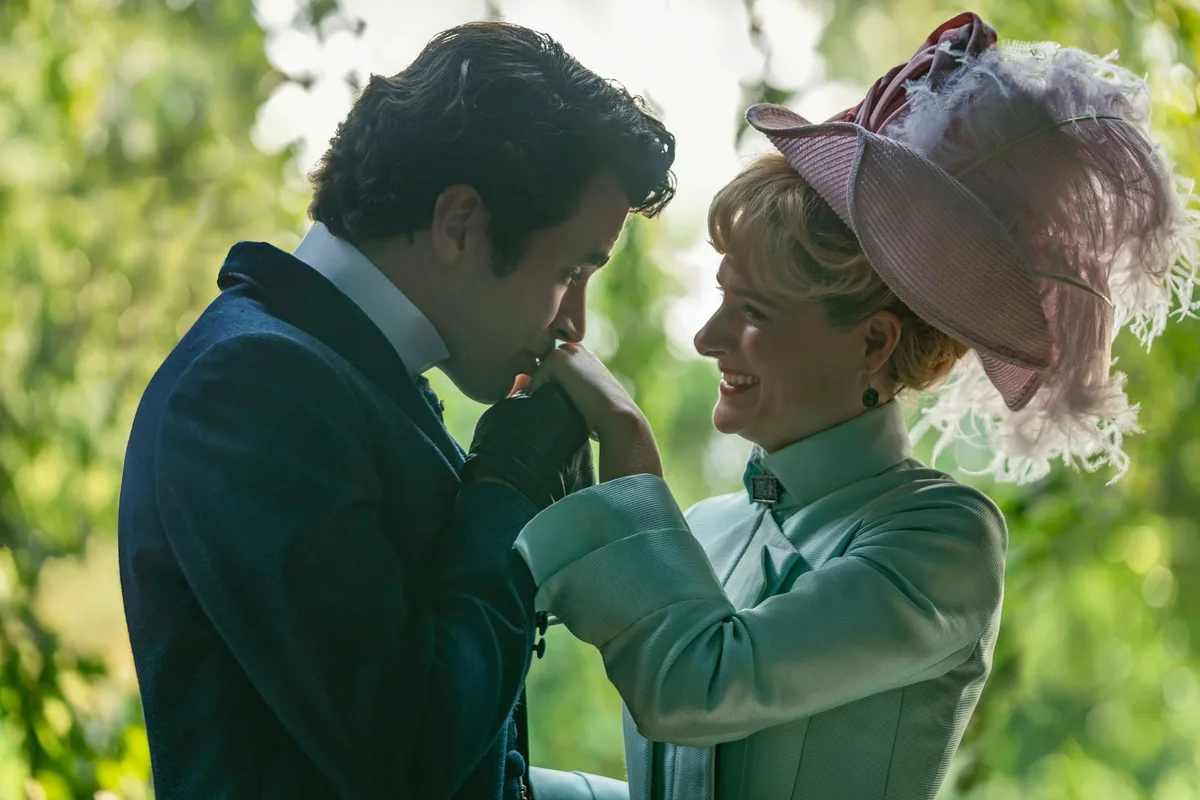
Peggy Scott seeks acceptance from her future in-laws
Denée Benton returns as Peggy Scott, the journalist and aspiring writer whose experiences broaden the show's portrayal of nineteenth-century New York.
Her storyline examines Black professional and social life beyond the wealthy white families dominating many of the city's most exclusive institutions.
Peggy has repeatedly pursued intellectual and professional independence.
Season 4 also continues her relationship with Dr. William Kirkland, portrayed by Jordan Donica.
The couple's future is complicated by expectations within William's family.
The official synopsis states that Peggy is trying to gain acceptance from her future in-laws.
Phylicia Rashad plays Elizabeth Kirkland, whose attitudes and expectations are expected to create challenges.
This storyline allows the series to explore class divisions within New York's Black middle and upper classes.
It demonstrates that social hierarchies do not disappear when the story moves away from Bertha Russell's drawing rooms.
Peggy's experience provides another perspective on ambition, identity and personal autonomy.
Her story also keeps the series connected to institutions and communities often excluded from conventional representations of the Gilded Age.
President Grover Cleveland joins the cast of characters
Season 4 introduces several recognizable historical figures.
Jim Gaffigan plays President Grover Cleveland.
His presence connects with the social events surrounding Agnes van Rhijn.
Dallas Roberts portrays Daniel Manning, Cleveland's Secretary of the Treasury.
Neal Huff plays industrialist John D. Rockefeller.
These additions demonstrate how Julian Fellowes continues combining fictional families with real figures from American history.
The characters place the show's personal conflicts within a larger period of economic and political transformation.
Their inclusion does not make The Gilded Age a historical documentary.
The series remains a fictional drama whose writers may construct conversations and situations around historical people.
The actual historical setting gives the narrative context rather than guaranteeing that every portrayed encounter occurred exactly as shown.
This approach allows the fictional characters to interact with individuals who symbolize the era's industrial and political power.
An expanded ensemble brings new perspectives
The fourth season features an exceptionally large cast.
Alongside the returning leads, several performers introduce characters from different professional and social environments.
Dennis Haysbert portrays Dr. Reginald Harris, a physician associated with fundraising for Freedman's Hospital.
Bonnie Milligan plays journalist Louisa Knapp Curtis, a historical figure linked to the development of Ladies' Home Journal.
Elizabeth Marvel joins as Virginia Saville.
Andrew Burnap plays Porter, a wealthy young investor.
Adrienne Warren portrays Ava, Peggy's cousin.
James Scully appears as painter Lee Klein, while Maggie Kuntz plays Fiona Summers.
These new characters broaden the show's social landscape.
The story is no longer exclusively centered on the conflict between old and new money.
It also involves journalists, artists, medical professionals and political figures.
That expansion presents a narrative challenge.
The writers must balance a growing number of relationships within a season consisting of only eight episodes.
The success of that approach will depend on how effectively the different stories remain connected.
Julian Fellowes continues exploring 1880s New York
The Gilded Age was created by Julian Fellowes, best known for Downton Abbey.
Both productions explore social hierarchy and the complicated relationships between established privilege and social change.
Their historical settings are different.
Downton Abbey primarily takes place in early twentieth-century England.
The Gilded Age focuses on New York during the 1880s, when industrial fortunes challenged the prestige of long-established families.
Wealth could create extraordinary power but did not always provide social acceptance.
Bertha Russell represents the determination of newly wealthy families to challenge those boundaries.
Agnes van Rhijn represents the established order resisting change.
Their rivalry has been one of the series' defining conflicts.
Season 4 changes their respective positions.
Bertha no longer needs to fight for every invitation.
She has become powerful, but that power now threatens relationships she once considered secure.
Agnes sees an opportunity to exploit the difficulties facing her rival.
The struggle continues, but its underlying balance has shifted.
HBO maintains an ambitious period production
The Gilded Age is a co-production between HBO and Universal Television.
Julian Fellowes remains its creator, writer and executive producer.
Salli Richardson-Whitfield serves as a director and executive producer.
Sonja Warfield is a writer and executive producer.
Other executive producers include Gareth Neame, David Crockett, Bob Greenblatt, Kate Churchill, Davita Scarlett and Elaine Aronson.
The production continues to rely on elaborate historical recreation.
Costumes, architecture, interior decoration and carefully staged social events form an essential part of its identity.
The details are more than visual decoration.
They help communicate status, wealth and the expectations governing interactions between characters.
A dress, invitation or seating arrangement can convey an entire conflict without an explicit argument.
That makes the show's material world an important part of its storytelling.
It also contributes to the complexity of producing a historical drama on this scale.
Eight episodes will air through December 20
Season 4 consists of eight episodes.
The premiere, Ring the Bells, aired on Sunday, November 1, 2026, in the United States.
New installments are scheduled for Sundays at 9 p.m. Eastern.
Episode 2, You Won't Hear Me Beg, is scheduled for November 8.
Episode 3, Ain't That Good News, follows on November 15.
Episode 4, Good Taste, is expected on November 22.
The remaining installments are scheduled for November 29 and December 6, 13 and 20.
The season finale is therefore scheduled for December 20, assuming no changes to the announced calendar.
The weekly rollout allows the family conflicts and social rivalries to develop across almost two months.
It also differs from streaming releases that make entire seasons available immediately.
As of November 2, only the opening episode has premiered in the American schedule.
The complete eight-episode season is not yet available.
International release dates vary by territory
In the United States, The Gilded Age returned on November 1 through HBO and HBO Max.
Some international markets have a different schedule.
Warner Bros. Discovery has confirmed November 2 premieres on HBO Max in several European countries.
In Germany, Sky and WOW also carry the new season through existing distribution arrangements.
Those details should not be generalized to every market.
Streaming rights and release schedules vary between countries.
The confirmed American premiere date remains November 1, 2026.
Audiences elsewhere should consult the release information for their territory and streaming service.
The cost of becoming powerful
Season 4 of The Gilded Age begins with a paradox.
The Russell family has secured wealth and influence that once seemed beyond its reach.
But its social ascent has not made its members happier.
Bertha is discovering that controlling society does not mean controlling the people closest to her.
George is questioning the sacrifices required by their ambitions.
Agnes sees opportunities in the difficulties facing her opponents.
Marian and Peggy are pursuing personal futures within a society still determined to define the acceptable choices for women.
Those storylines continue the show's central examination of power.
Social influence is never permanently secured.
It depends on alliances, reputations and relationships that can change with remarkable speed.
The fourth season is now underway, with new episodes scheduled through December 20.
Its most important question may be whether Bertha can preserve her family after winning the position in society she spent years pursuing.
In Julian Fellowes' New York, being admitted into the grandest drawing rooms does not mean the struggle is over.
Sometimes the greatest danger begins after the doors have finally opened.