
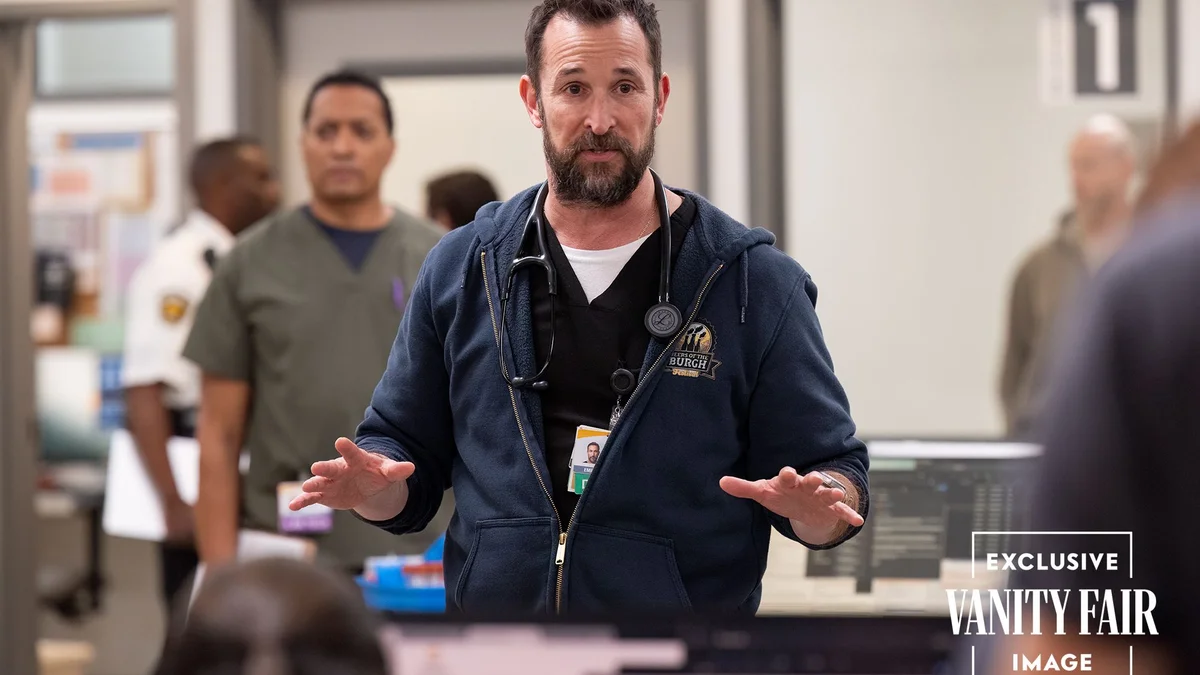
The Pitt and ER share an unmistakable collection of familiar elements. Both portray chaotic emergency departments, exhausted medical professionals and difficult decisions unfolding under intense pressure. They also have important creative personnel in common, including Noah Wyle and John Wells.
The question is whether those similarities amount to more than a shared genre and overlapping professional histories.
On November 4, 2026, a California appeals court ruled that a lawsuit brought on behalf of the estate of Michael Crichton, the creator of ER, may continue against Warner Bros. Television.
The ruling represents a significant procedural development, but it is not a final determination that The Pitt copied ER illegally or breached the relevant contract.
The estate has demonstrated enough support for its claim to survive an early challenge. The parties must now continue through the legal process before liability can be determined.
The decision is also not a complete victory for the plaintiffs. The appellate court ordered the dismissal of claims against other defendants, including actor Noah Wyle, producer John Wells and showrunner R. Scott Gemmill.
Warner Bros. Television remains the principal defendant in the dispute.
What the appeals court actually decided
The litigation concerns a motion made under California's anti-SLAPP law.
That legislation provides a mechanism for defendants to seek the early dismissal of certain claims involving constitutionally protected speech and related activities.
However, courts must also consider whether the plaintiff has presented a legally sufficient claim supported by enough evidence to proceed.
In this case, Warner Bros. Television sought to prevent the lawsuit from moving forward.
The trial court had already denied that attempt. The appellate panel has now affirmed the decision as it applies to Warner Bros. Television.
The judges identified multiple similarities between The Pitt and ER, including their emergency-room environments, fast-moving medical crises, specialized dialogue, graphic depictions of injuries and portrayals of inexperienced doctors.
Those similarities were considered alongside the history of the project and the specific contractual restrictions associated with ER.
The court concluded that the estate's evidence was sufficient to make a preliminary case.
That is a narrower conclusion than establishing that the claim has been proven.
The decision does not mean that emergency departments, medical terminology or inexperienced doctors are automatically protected creative properties belonging exclusively to ER.
The remaining legal question is whether the circumstances surrounding The Pitt amount to a violation of the agreement governing derivative works from the earlier series.
The dispute begins with a 1994 contract
Michael Crichton developed the project that became ER from a screenplay he wrote in 1974, drawing on his experience as a medical student.
The drama eventually reached television in September 1994, becoming one of the most successful and influential hospital series in American broadcasting.
Its production involved a contractual arrangement defining how certain rights connected to the series could be used.
One of its central provisions is commonly described as the frozen rights clause.
The clause requires agreement among the relevant rights holders before certain sequels, remakes, spin-offs or other derivative projects may proceed.
Crichton died in 2008, but the contractual interests associated with his work remained relevant to his successors.
Roadrunner JMTC LLC represents the interests of the Michael Crichton trust in the litigation.
Sherri Crichton, the writer's widow, argues that the studio developed The Pitt after negotiations over a revival of ER failed.
According to the estate's allegation, the new show effectively continued a project originally intended to revive the older series without obtaining the approval required by the agreement.
That is the plaintiffs' interpretation of the events.
It has not been established as a final factual or legal conclusion.
Warner Bros. argues that The Pitt is an independent drama
Warner Bros. Television disputes the estate's position.
The studio maintains that The Pitt is a separate original work rather than a sequel, reboot or derivative of ER.
Its legal argument emphasizes that many of the characteristics identified by the plaintiffs are common to medical dramas.
Hospitals, medical terminology, serious injuries, inexperienced doctors and stressful working conditions are not inherently unique to a single television series.
The defense also disputes the suggestion that the development of an independent medical show necessarily breached the restrictions in the older contract.
The question therefore involves more than determining whether the two series look similar.
The court must consider what the parties agreed to in 1994 and how those obligations apply to the circumstances surrounding The Pitt's creation.
That distinction separates the case from a simple claim that one television show borrowed the visual style or general premise of another.
The central litigation concerns contractual rights and the interpretation of what constitutes a derivative work under the agreement.
The appellate ruling permits that question to be investigated further without deciding it definitively.
Noah Wyle and two major producers are removed from the case
A particularly important aspect of the ruling concerns the individual defendants.
While the appellate court allowed the estate's case against Warner Bros. Television to continue, it reversed the lower court's decision as applied to the other defendants.
That includes Noah Wyle, John Wells and R. Scott Gemmill.
The court found insufficient evidence that these individuals knew they might be participating in conduct that violated the contractual rights claimed by the estate.
As a result, the relevant claims against them must be dismissed.
That distinction matters for understanding the outcome.
Wyle remains the star and an executive producer of The Pitt. Wells remains a major executive producer, and Gemmill continues as the show's creator and showrunner.
Their dismissal from the litigation does not settle the separate case against the studio.
Nor does it imply that every disputed issue concerning the production's origins has been resolved.
The remaining question is whether Warner Bros. Television breached the contractual restrictions that the estate seeks to enforce.
Noah Wyle's career connects ER and The Pitt
For audiences, the clearest connection between the two medical dramas is Noah Wyle.
In ER, he portrayed John Carter, whose development from young medical student to experienced physician became one of the series' enduring character arcs.
He appeared across much of the show's fifteen-season run and became closely associated with the fictional Chicago hospital.
The Pitt gives Wyle a different role.
He stars as Dr. Michael Robby Robinavitch, who leads a team of healthcare workers in the emergency department of a Pittsburgh hospital.
Robby is not officially presented as John Carter under a new name.
The character has a separate identity, personal history and set of professional relationships.
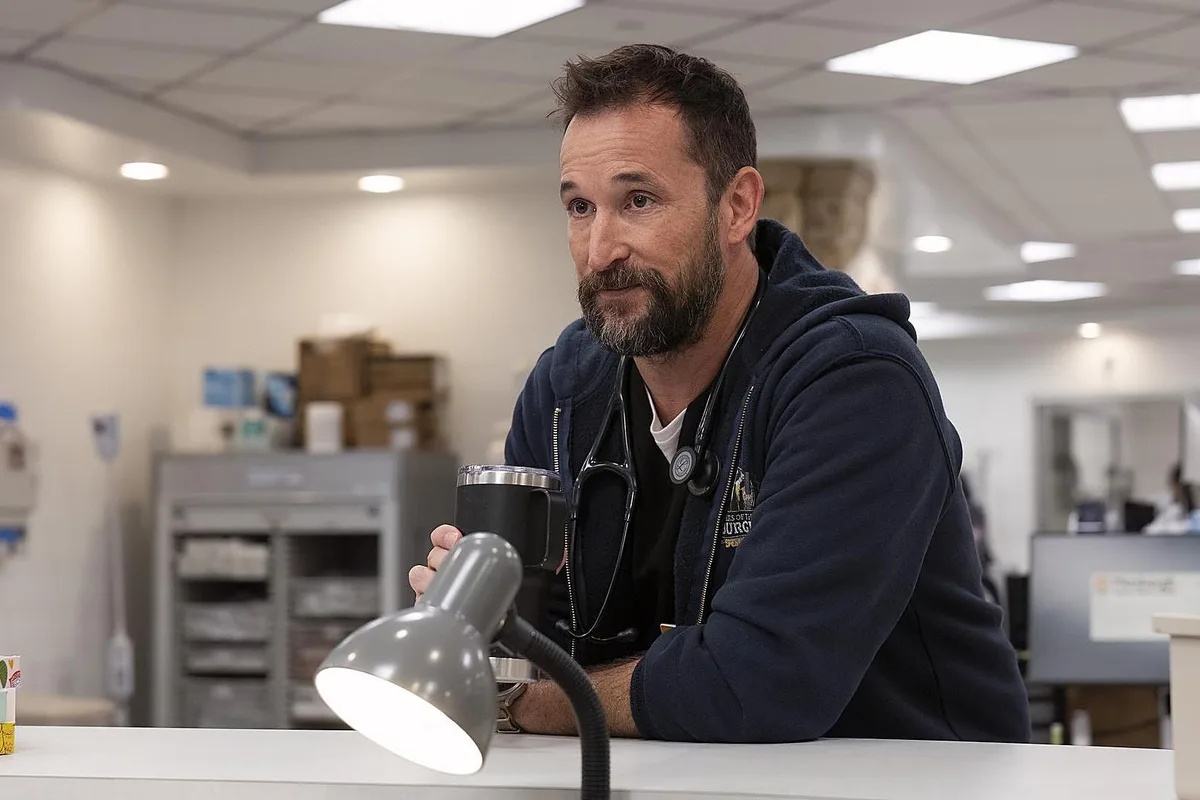
The series also changes the city and the historical context, focusing on the pressures of contemporary American healthcare.
Nevertheless, Wyle has discussed the earlier conversations about reviving ER that preceded the eventual development of The Pitt.
Those conversations are significant to the estate's argument because they may help establish how the current project emerged.
But the existence of negotiations for one series does not automatically prove that a later production legally constitutes the same work.
That is among the issues the litigation must resolve.
ER remains one of the defining medical dramas
ER established a television storytelling approach that influenced subsequent medical dramas for decades.
Beginning in 1994, the NBC series followed doctors, nurses and other medical staff working at Chicago's County General Hospital.
Its defining characteristics included a large ensemble, rapid dialogue, overlapping medical emergencies and camera movements that emphasized the urgency of the hospital environment.
Rather than presenting a single patient or medical decision at a time, the show often allowed multiple crises to unfold simultaneously.
That structure created the impression of a workplace where professionals must constantly adjust their priorities.
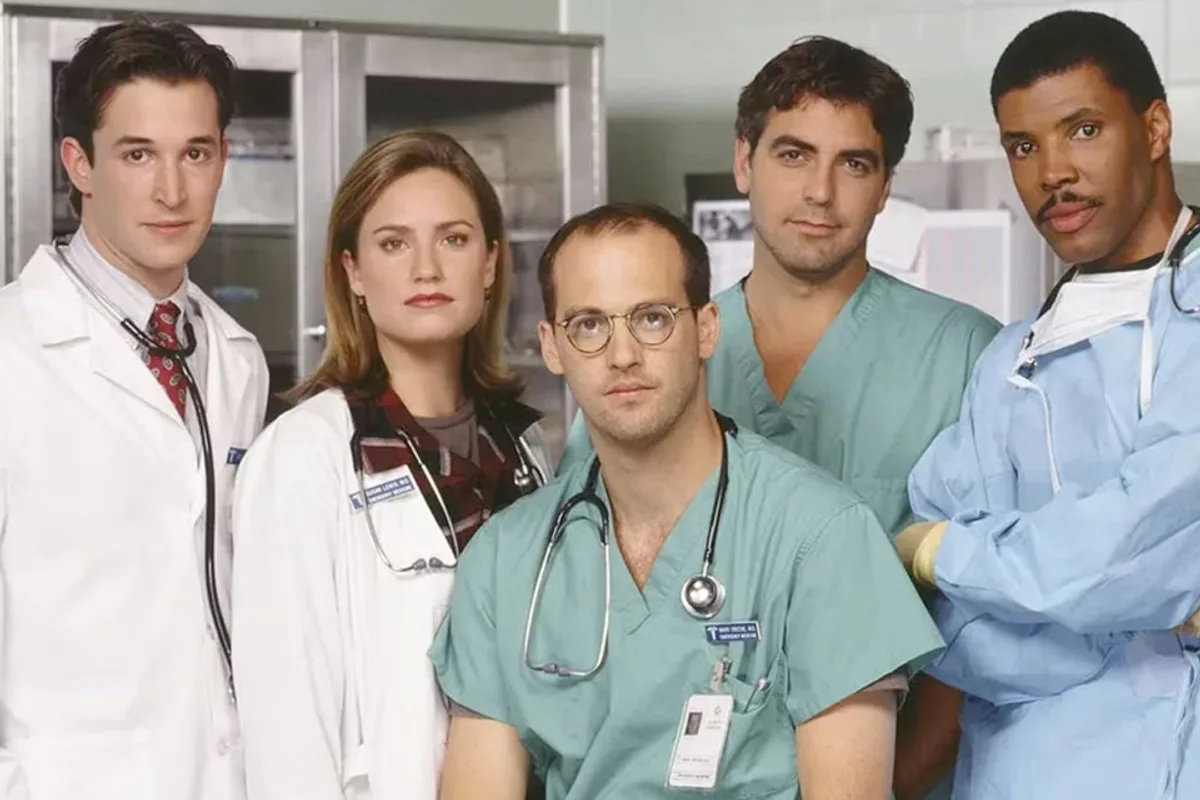
Its cast included George Clooney, Anthony Edwards, Julianna Margulies, Eriq La Salle and Noah Wyle, among many others.
The show's popularity and critical success made its methods familiar to television audiences.
That cultural influence is separate from the legal question currently before the courts.
A television production can be influenced by an earlier work without automatically becoming a derivative project under a particular contract.
Conversely, specific contractual provisions may impose obligations that go beyond the general principles governing inspiration or similarities between genres.
The Pitt litigation turns on that distinction.
The Pitt has its own real-time storytelling structure
The Pitt follows a distinctive format in which each season depicts a lengthy emergency-room shift.
Its first season consisted of fifteen episodes corresponding approximately to fifteen hours of work.
That structure allows medical crises and personal tensions to accumulate as the hospital staff grows increasingly exhausted.
Robby occupies the central position, but the narrative also develops a substantial ensemble of doctors, nurses and trainees.
The show uses the passage of time to create pressure.
A crisis cannot simply be postponed while a character resolves a personal conflict. Patients continue arriving, colleagues make mistakes and the consequences of earlier decisions remain present.
The series has received extensive recognition for this approach, including major television awards.
The estate considers some of these structural choices relevant to its argument about the relationship between the two productions.
Warner Bros. maintains that The Pitt's creative approach belongs to a separate series.
The court has not made a final determination resolving those competing positions.
A Los Angeles jury could hear the dispute in 2027
The case will now move through additional legal proceedings, including discovery.
That process allows the parties to seek documents, communications and testimony relevant to their claims and defenses.
Records concerning the unsuccessful ER revival discussions and the subsequent development of The Pitt could become particularly important.
If the parties do not reach a settlement, the remaining dispute may ultimately be considered by a jury in Los Angeles Superior Court.
Deadline has reported that a trial could potentially take place as early as summer 2027.
No firm trial date has been confirmed in the reporting available at the time of the ruling.
A settlement is also legally possible before a jury reaches a decision.
Sherri Crichton welcomed the appellate outcome and indicated that she looks forward to discovery and presenting the estate's case.
She has described the dispute as significant for the rights of writers, creators and the families who inherit their interests.
Representatives for Warner Bros. Television and the show's production did not provide a fresh public response to several entertainment publications reporting the decision.
The Pitt Season 3 remains scheduled for January 2027
For viewers, the immediate question is whether the legal dispute will affect the next season.
There is currently no official announcement that the appellate ruling has suspended or canceled The Pitt.
HBO Max has already renewed the drama for a third season and released a teaser and first-look images.
The new season is scheduled to arrive in January 2027.
Noah Wyle is returning alongside cast members including Patrick Ball, Katherine LaNasa, Fiona Dourif, Taylor Dearden and Isa Briones.
The production's continuation and the progress of the legal case are therefore separate developments.
It would be premature to conclude that the litigation cannot affect the series' future rights or business arrangements.
It would be equally inaccurate to claim that the court has ordered the third season to be withdrawn or delayed.
No such order or official production announcement has been identified.
The dispute could matter far beyond television hospitals
The conflict between Michael Crichton's estate and Warner Bros. Television raises questions relevant to the wider entertainment industry.
Studios regularly develop new versions of established properties, while producers and writers move between projects that share settings, genres and storytelling conventions.
Contracts negotiated decades earlier may continue to restrict how certain intellectual properties can be reused.
Determining whether a later production is genuinely independent can therefore involve examining more than its title, characters or visual style.
The contractual language, history of negotiations, development records and knowledge of the people involved may all become important.
The November 4 ruling does not establish a universal rule for every reboot or medical drama.
It allows one specific contractual dispute to continue against Warner Bros. Television while dismissing claims against several individual defendants.
The final outcome remains uncertain.
For now, The Pitt is continuing toward its third season, while another story involving its relationship to ER is moving closer to a courtroom.
The decisive question will not be whether audiences recognize similarities between the shows. It will be whether Warner Bros. Television violated the rights that the original parties agreed to protect.