
Getting out of Ang Lee's shadow
Adapting Sense and Sensibility again comes with an unfair problem. It is not enough to wrestle with Jane Austen. A filmmaker also has to survive comparison with Ang Lee's 1995 film, scripted by Emma Thompson and treated by many viewers as the definitive screen version.
Georgia Oakley appears to understand that competing with that film on identical terms would be pointless. Her version is neither pursuing the same elegance nor quite the same comic rhythm.
Her first move is to get things a little dirtier.
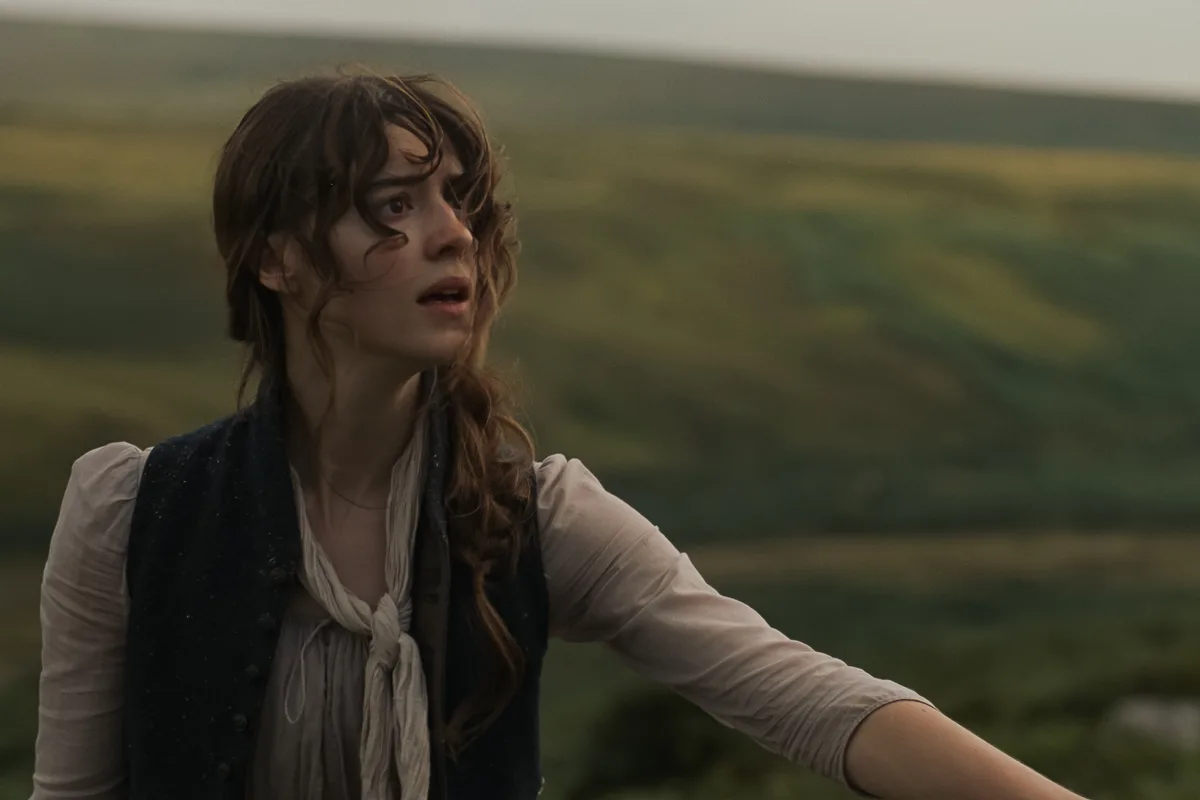
The Dashwoods live among tall grass, wind, rain and muddy paths. Hair escapes its arrangement. Clothes carry traces of the landscape. Regency England becomes more than a sequence of drawing rooms and magnificent houses; it becomes a physical environment acting on the characters.
That difference gives the film its clearest reason to exist.
Two sisters before two romances
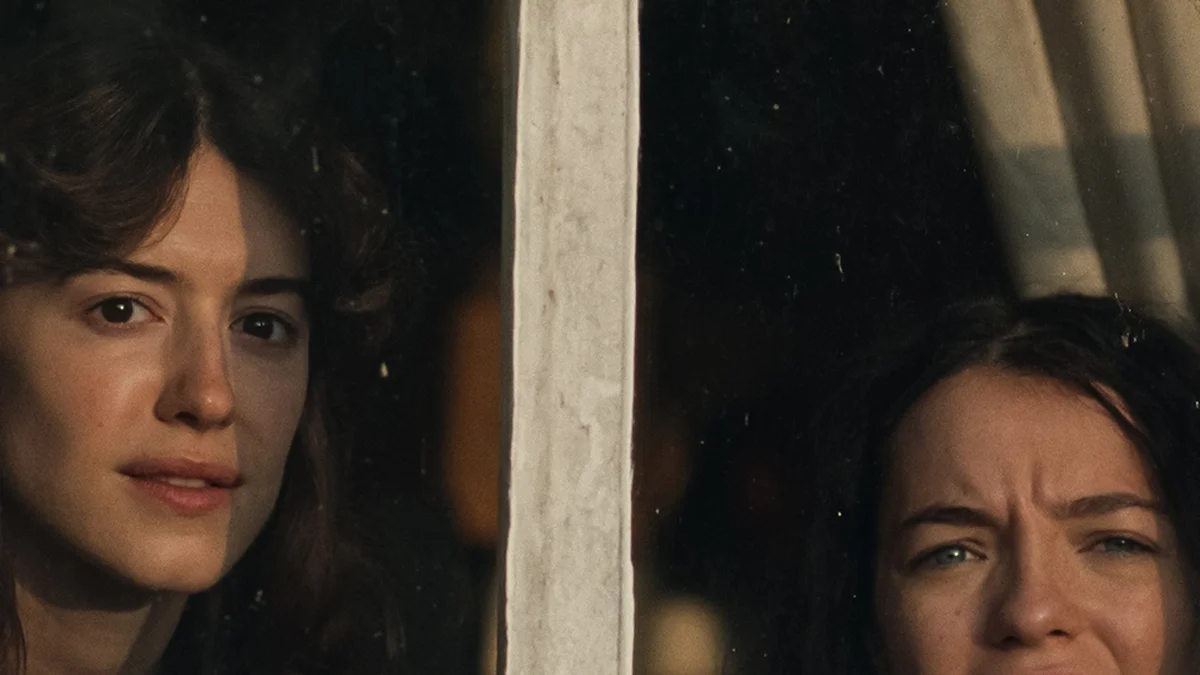
Daisy Edgar-Jones plays Elinor with a restraint that could easily collapse into passivity. Instead, she makes us notice the effort required to reveal nothing.
A change in breathing, a prolonged glance or a sentence left unfinished can matter more than a declaration. Oakley's direction understands that interiority and frequently isolates Elinor in the frame even when other people occupy the room around her.
Marianne operates in the opposite direction. Esmé Creed-Miles inhabits her body with considerably more disorder. She runs, falls, suffers, erupts and appears almost incapable of separating what she feels from what she shows.
The contrast could have become schematic. What saves it is the convincing sisterly relationship between the two performers.
They watch, irritate and protect each other, often understanding what the other cannot articulate. The romances remain essential, but Oakley seems even more interested in the relationship that will remain after every suitor has left the room.
Romance moves through the landscape
Arnaud Potier's cinematography is probably the element that most immediately distinguishes this adaptation.
Shot on 35mm and making extensive use of natural light, the film looks less polished than many contemporary period dramas. Interiors can remain genuinely dim, faces are not always perfectly illuminated and the countryside changes with the weather rather than behaving like a postcard.
When Marianne crosses the hills or Elinor stares across a landscape she can control no more easily than her feelings, nature stops functioning as decoration.
Oakley sometimes photographs the women as though they belong to the grass, flowers and wind surrounding them. The sensuality can feel closer to the Brontës than to the polished visual shorthand usually attached to Austen.
The idea occasionally becomes emphatic, but it also gives the film many of its strongest images.
The costumes chart a social fall
Grace Snell similarly avoids turning the production into a catalogue of immaculate period clothing.
The Dashwoods' wardrobe changes alongside their circumstances. Mourning begins in blacks and greys, Barton Cottage introduces warmer and more organic textures, while London becomes sharper, cleaner and more constructed.
Antique materials and natural dyes contribute to the sense that these clothes are being lived in rather than displayed.
The effect is not spectacular in a conventional costume-drama sense. It is tactile. A dirty hem or a garment shared between sisters can communicate their altered social position more effectively than explanatory dialogue.
Fiona Shaw remembers that Jane Austen is funny
The obvious danger in this earthy, melancholic approach is that Sense and Sensibility is not only a story about romantic suffering.
Jane Austen is funny. Extremely funny, especially when observing money, manners and the extraordinary human talent for disguising selfishness as propriety.
Oakley's film does not erase that humor, but it gives it less room.
Fiona Shaw therefore becomes essential as Mrs Jennings. She enters scenes with enough enthusiasm, indiscretion and absence of restraint to let the entire movie breathe again.
Stacy Martin also benefits from Fanny Dashwood's vicious selfishness, but the film as a whole remains more fascinated by silent pain than comic cruelty.
It is a legitimate adaptation choice. It is also the choice most likely to divide audiences.
Edward works best in what remains unsaid
George MacKay plays Edward Ferrars with a gentleness that fits naturally into this interpretation.
His scenes with Edgar-Jones depend less on sweeping declarations than on their inability to make them. Both characters are frequently at their most interesting while trying not to say what they mean.
That restraint gives the relationship a convincing fragility.
Frank Dillane's Willoughby has the more immediately seductive and dangerous role, although Diana Reid's screenplay seems somewhat less interested in treating him as a straightforward villain than some previous versions.
Herbert Nordrum's Colonel Brandon is deliberately understated. The approach successfully avoids imitating Alan Rickman, but it comes at a price: Brandon can struggle to acquire the emotional authority required for his patient presence to become truly moving.
London confines the filmmaking too
One of the film's ironies is that London, supposedly expanding the Dashwoods' social world, visually reduces much of what had made the movie distinctive.
Drawing rooms, parties and formal interiors push the filmmaking toward more conventional period-drama imagery. The compositions remain handsome but lose some of the almost physical connection between character and environment.
The contrast can certainly be read as intentional. The countryside allows emotion to breathe while London society contains it.
That does not entirely prevent this stretch from feeling slightly longer and less personal.
Modernizing Austen without making her speak like 2026
The film's modernity exists less in anachronistic dialogue than in Oakley's way of looking at the characters.
The Dashwoods' financial insecurity is not simply the mechanism that launches several romances. The movie emphasizes what it means to be women whose housing, money and future options depend on inheritance rules designed around men.
Desire consequently becomes inseparable from security.
That reading is already embedded in Austen. Oakley's contribution is to move it toward the foreground without turning her characters into contemporary spokespersons.
The film occasionally underlines its ideas more firmly than necessary, but it generally avoids the trap of making Austen modern by giving her a vocabulary that does not belong to her.
A good adaptation that does not need to replace the last one
Comparison with the 1995 film is unavoidable and, in some respects, brutal. Ang Lee's version remains more fluid in the way it moves between irony, romance and melodrama.
But requiring this new film to render the old one obsolete misses what it achieves.
Georgia Oakley brings a different texture. She is less interested in the pleasures of social convention than in the cost of surviving it. Landscapes become extensions of her heroines, and sisterhood moves toward the center of the romantic machinery.
At 7 out of 10, Sense and Sensibility is neither a new definitive adaptation nor a radical reinvention. It is something more modest and ultimately more useful: another perspective on a classic that still finds enough unexplored emotional space to justify looking again.