
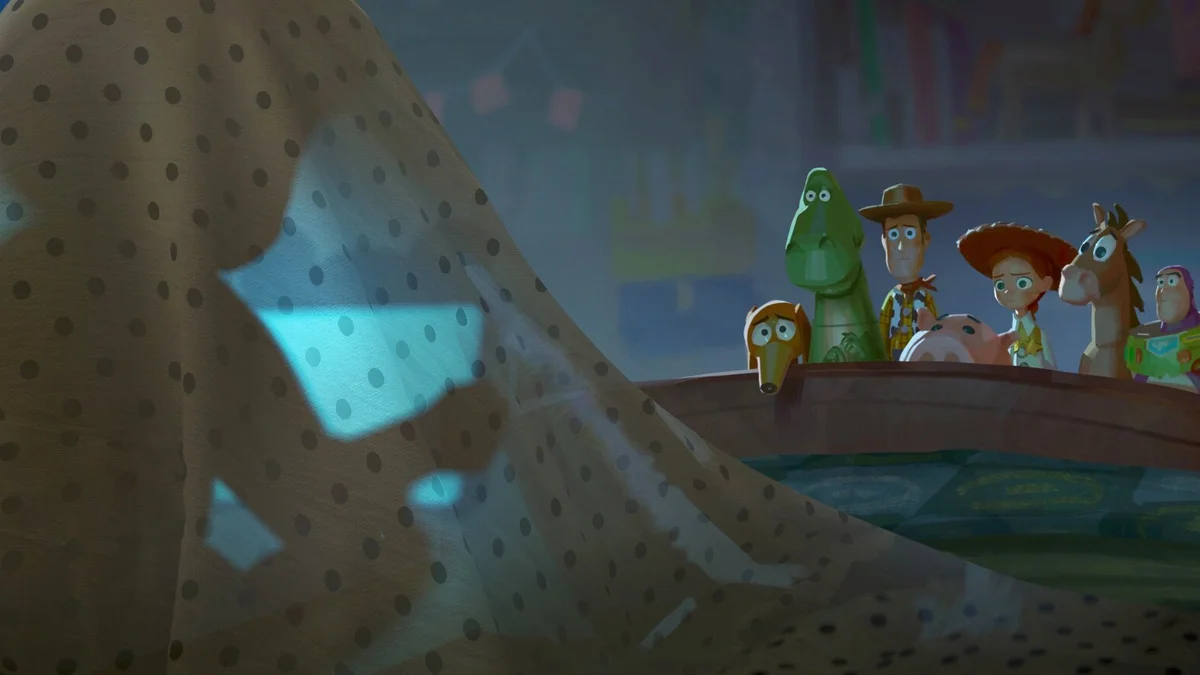
Toy Story 5 cannot hide its most obvious weakness because it existed before a single frame was animated: this franchise has already ended well. Twice.
Toy Story 3 completed Andy's childhood. Toy Story 4 then gave Woody a separate future beyond Bonnie's room. A fifth movie therefore needs something stronger than another rescue mission.
Andrew Stanton and Kenna Harris return to the oldest Toy Story anxiety instead: what happens when a child stops needing a toy? This time Bonnie is not growing into adulthood. She is eight years old and increasingly fascinated by Lilypad, a frog-shaped tablet.
Making Jessie the lead changes more than the poster
RogerEbert.com's review identifies the movie's smartest adjustment immediately: Jessie is the emotional center rather than Woody.
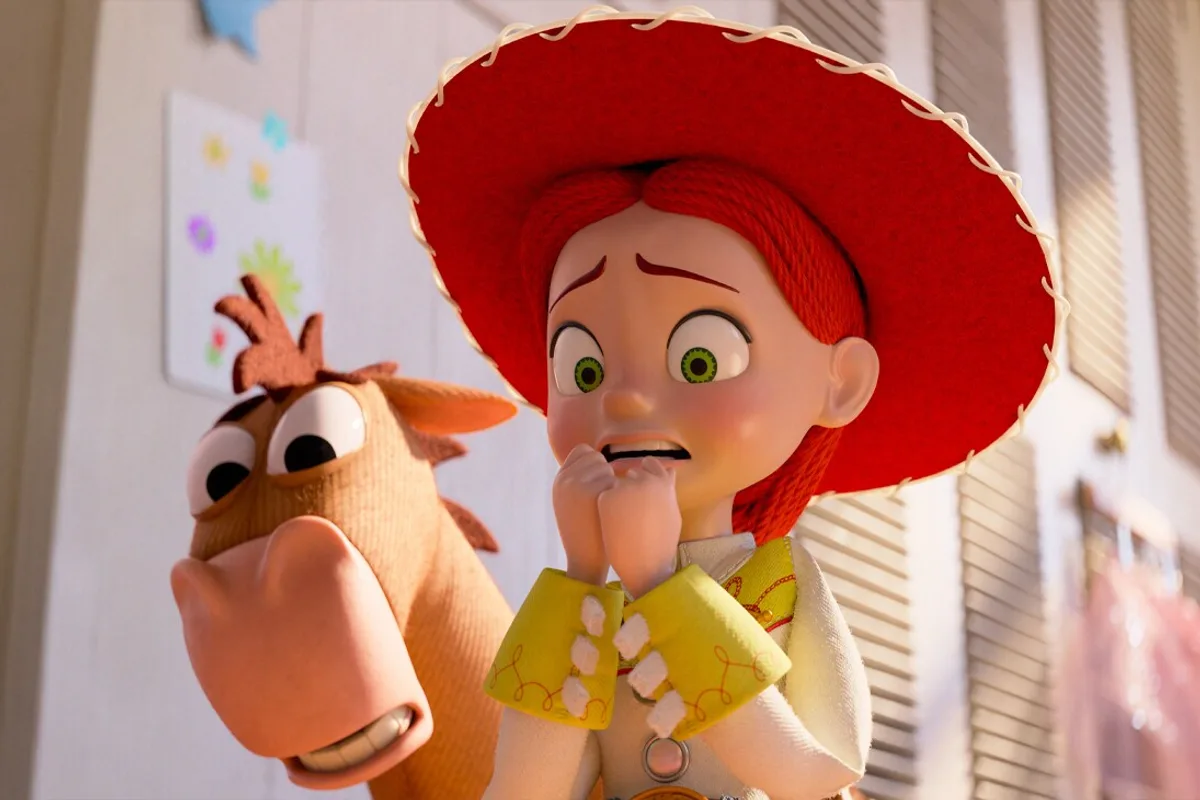
Her history makes the choice matter. Jessie already knows what abandonment feels like. Toy Story 2 established Emily's rejection as the defining wound of her life, so Bonnie drifting toward a screen does not simply recreate Woody's old jealousy. Jessie recognizes a cycle she desperately wants to stop.
Joan Cusack keeps that fear attached to the character's usual speed and stubbornness. Jessie can be frightened without becoming solemn.
The tablet is much better once Pixar stops treating her like a villain
The initial premise practically writes a bad version of itself: toys represent authentic childhood, screens represent decay, and adults nod approvingly while children wait for the lecture to end.
Pixar moved away from that binary during development. Co-director Kenna Harris has said the filmmakers realized technology was not going away and that the original good-versus-evil conception needed to change.
That gives Greta Lee something more interesting to play. Lilypad genuinely believes she is helping Bonnie. She encourages a shy child to connect with her dance friends through an online space called The Pond. Jessie and Lilypad are therefore competing over method rather than affection.
The conflict becomes less forceful and more credible.
The film's best argument is still a child making things up
Toy Story 5 becomes most persuasive when nobody explains its theme.
Bonnie's imaginative play can alter the logic of the room, turning ordinary objects into whatever a child needs them to be. Variety's strongly positive review singled out the film's imagination, while RogerEbert.com connected its playfulness to a broader argument about children finding themselves away from curated digital identities.
Pixar's rendering has reached a ridiculous level of polish, but the studio wisely preserves cartoon performance. Plastic surfaces can look almost photographic while Jessie's face stretches into an expression no physical doll could make.
Obsolescence is now the franchise's most reusable toy
The overall critical response is strong. Rotten Tomatoes currently lists 93 percent from 324 reviews. Metacritic's 55-review sample sits at 73, with 44 positive reviews, 10 mixed and one negative.
The reservations are remarkably consistent.
The Los Angeles Times argues that the series is once again coloring another variation of the same fear of irrelevance. Woody feared Buzz replacing him in 1995. Later films used collectors, growing children, abandoned toys and independence to keep returning to the question.
Now the threat is a tablet.
That familiarity becomes particularly visible around Woody and Buzz. Their reunion is pleasant, but Jessie's story could survive with substantially less of them. RogerEbert.com similarly found Woody underdeveloped compared with the film's stronger central arc.
Pixar refuses the easy anti-screen movie
Bonnie's world gives the filmmakers plenty of evidence for one. Pixar's official character material says her peers prefer screens to toys, leaving her unsure whether she has become too old for play.
Yet Lilypad also provides social connection.
That ambiguity frustrated some critics. The Guardian's negative review saw the technology theme as muddled and insufficiently powerful, particularly compared with the emotional directness of earlier Toy Story films.
There is another way to read the compromise. The movie is less interested in proving that screens are harmful than in asking what disappears when every game, interaction and response arrives pre-designed.
Its answer is imagination.
A sequel that cannot make itself essential but can still make itself sincere
Toy Story 5 is not another Toy Story 3. It has fewer surprises and arrives carrying thirty years of emotional machinery the audience can recognize before the characters use it.
Jessie changes the balance enough.
She does not need to discover that children eventually leave toys behind. She has to accept that protecting Bonnie's childhood cannot mean freezing it in the form Jessie understands.
For a movie that could easily have felt like little more than stewardship of a valuable franchise, that is an unexpectedly human place to end up.