
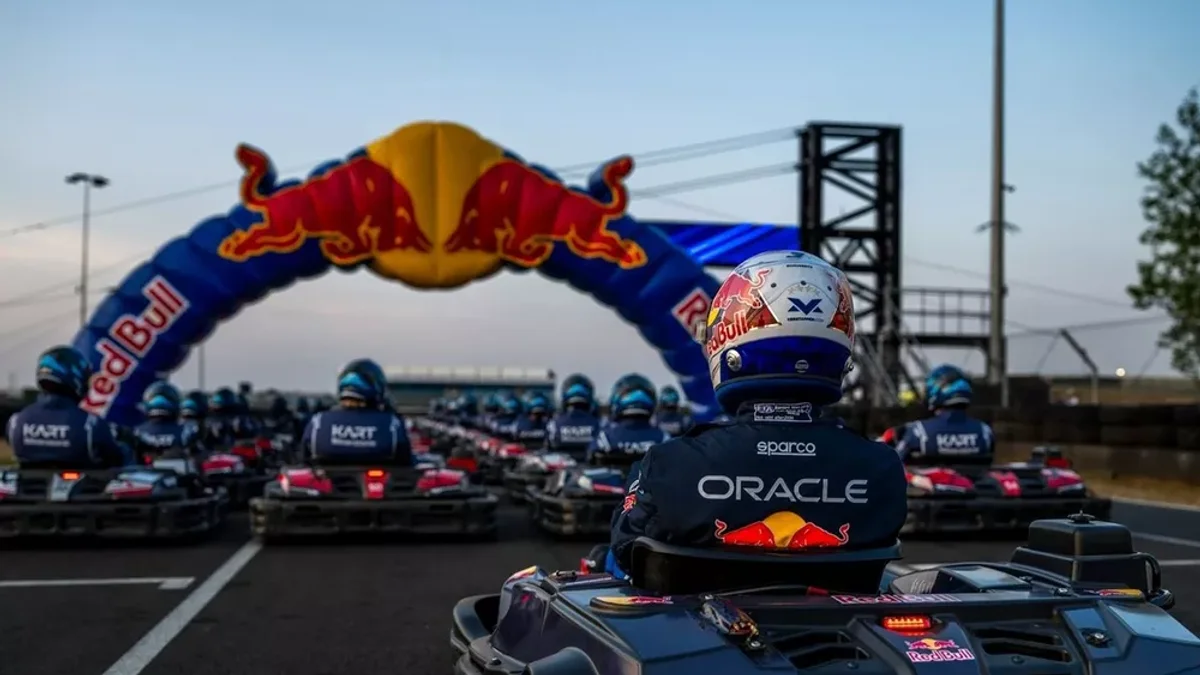
Max vs 100 is more structured than its wonderfully blunt title suggests. The main race lasts 60 minutes plus one lap, puts 101 identical karts on the grid and begins with Verstappen in P101 behind every other competitor.
The live broadcast starts at 5 p.m. UK time, 6 p.m. CEST. A Formula 1-style light sequence will release a field large enough to make the first few corners interesting before Verstappen has even attempted an overtake.
The other 100 drivers are racing each other too
The challengers are not simply moving targets. They have their own individual classification and qualify for the main race in five groups of 20. Each gets one flying lap, with those times establishing positions P1 through P100.
Verstappen skips that process entirely. His assigned position is P101.
Once Verstappen fully passes a driver, that competitor must remain behind him at a minimum distance and later return to the pits after crossing a designated Red Bull arch. The active field therefore shrinks as the chase progresses.
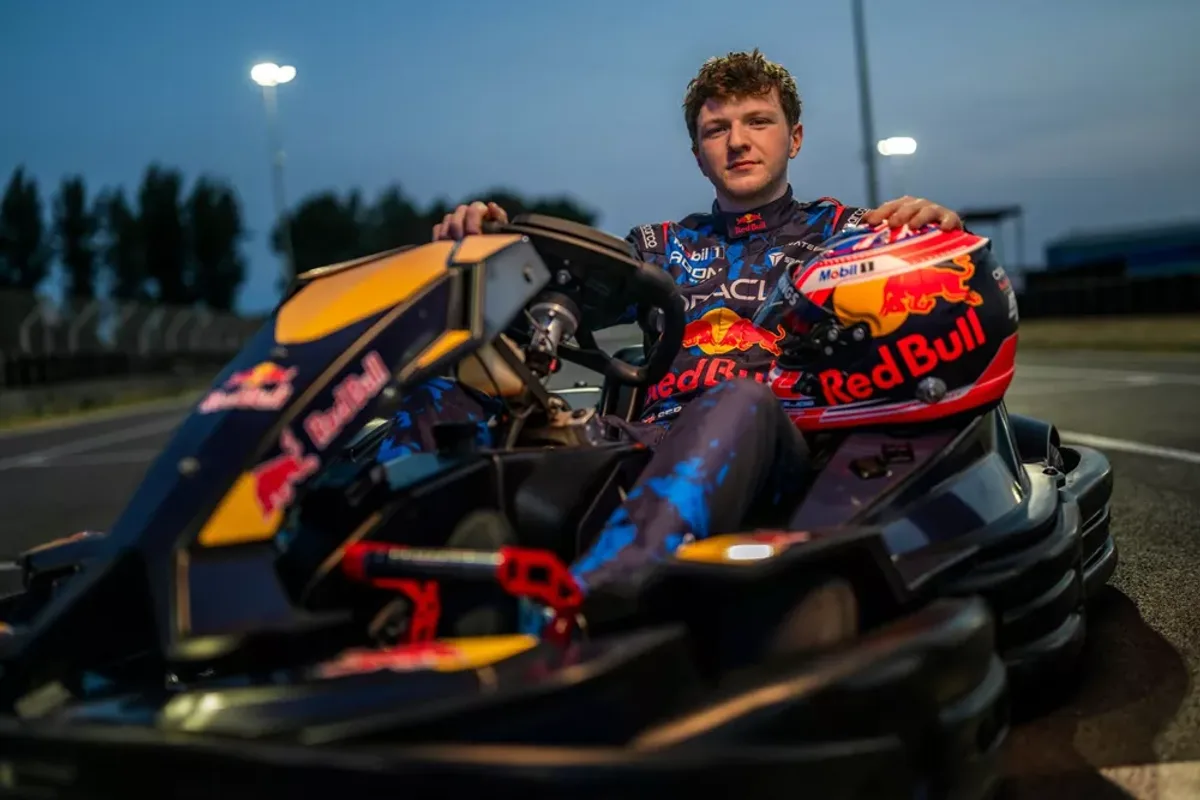
The Bonus Lap adds a shortcut with rules attached
A special shorter route has been built into the circuit. Every challenger must use that Bonus Lap once during the first half of the race, creating opportunities to gain track position or briefly escape Verstappen.
He gets one too, although his version cannot be used until the second half and is restricted around Safety Car and Full Course Yellow periods.
It is a deliberately game-like mechanic, but it solves a practical problem. Putting 100 drivers ahead of an elite racer creates traffic; giving those drivers an extra strategic option makes the order harder to predict.
Silverstone itself has been modified for the experiment
Race director David Terrien designed a purpose-built layout combining part of Silverstone's kart circuit with a custom extension laid out across part of the Grand Prix venue. The course also contains the Bonus Lap route and a separate penalty loop.
The organizers tested the format with large groups before race day. That matters because the circuit has conflicting jobs: it needs enough overtaking room for Verstappen to make progress, but not so much space that 100 opponents become irrelevant within minutes.
The grid looks more like internet culture than a racing championship
Red Bull athletes share the event with creators, streamers, personalities and invited fans. TheGrefg, Caedrel and TheDonato are among the announced creator names, alongside ultrarunner Arda Saatçi, freestyle mountain biker Matt Jones and basketball shooting specialist Chris “Lethal Shooter” Matthews.
Their experience levels will vary dramatically. That is intentional. Max vs 100 is entertainment built around the contrast between one elite racing driver and a huge, unpredictable group rather than a conventional field selected purely on lap time.
The broadcast is being designed like part of the challenge
Whisper will produce the live show using game-inspired graphics, race data, on-screen information and cinematic drone footage. Mo Gilligan leads the presenting team.
Verstappen will also be able to communicate directly with competitors during the event, giving the production conversations it can fold into the live story while overtakes are happening.
That distinction is important for Disney+. Max vs 100 is not an established sporting property that has simply changed broadcasters. Disney and Red Bull are shaping the rules, visual language and personalities around an event intended to work specifically as live entertainment.
It streams through ESPN on Disney+ in supported markets on September 16. ESPN Unlimited subscribers in the United States can also watch through the ESPN App, with ESPN2 airing it later on delay.