
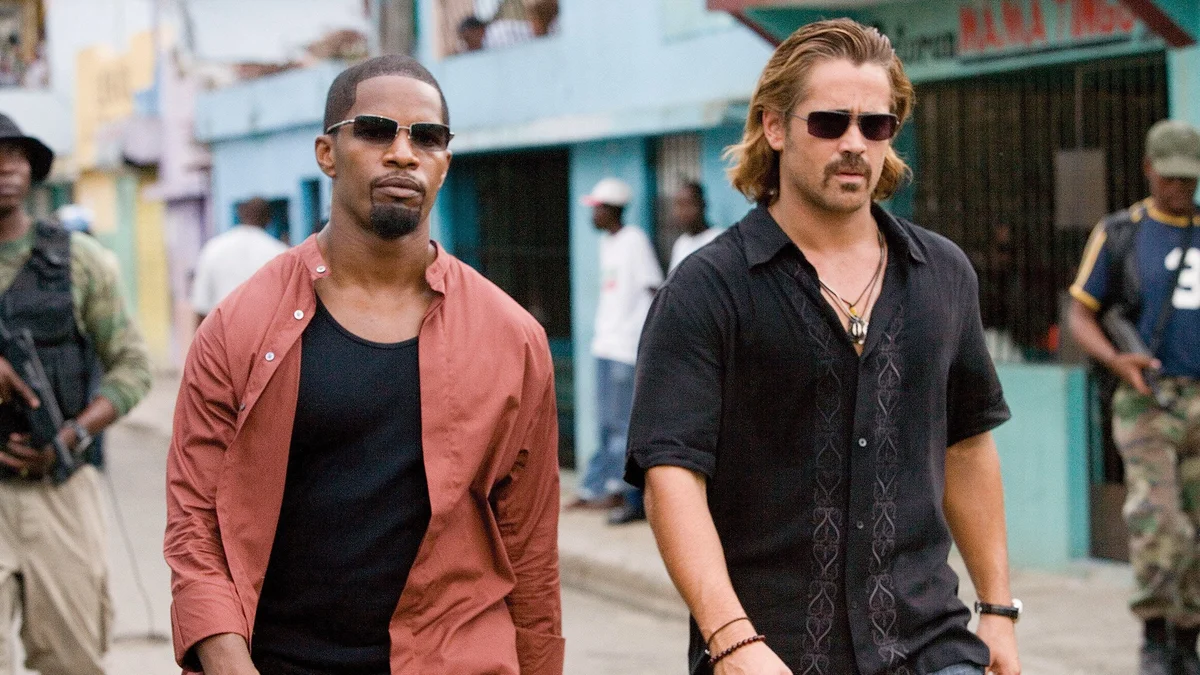
Beyond Fest will premiere Miami Vice: Director’s Final Cut at 7 p.m. on October 3 at Directors Village in Los Angeles.
The festival identifies the screening as the world premiere of Michael Mann’s new cut in 4K, marking the movie’s 20th anniversary. Mann will attend for a post-screening conversation.
This is not simply a new presentation of the Director’s Cut audiences already know.
Miami Vice already had a Director’s Cut
That distinction is what turns an anniversary screening into a much stranger event.
The theatrical version released in July 2006 runs roughly 133 minutes. Universal followed it later that year with an Unrated Director’s Edition running about 140 minutes.
The changes were structural as well as additive. Most famously, the theatrical movie begins abruptly inside a nightclub operation, dropping Crockett and Tubbs into the story without conventional orientation. The 2006 Director’s Cut instead adds an earlier go-fast boat sequence before reaching the club.
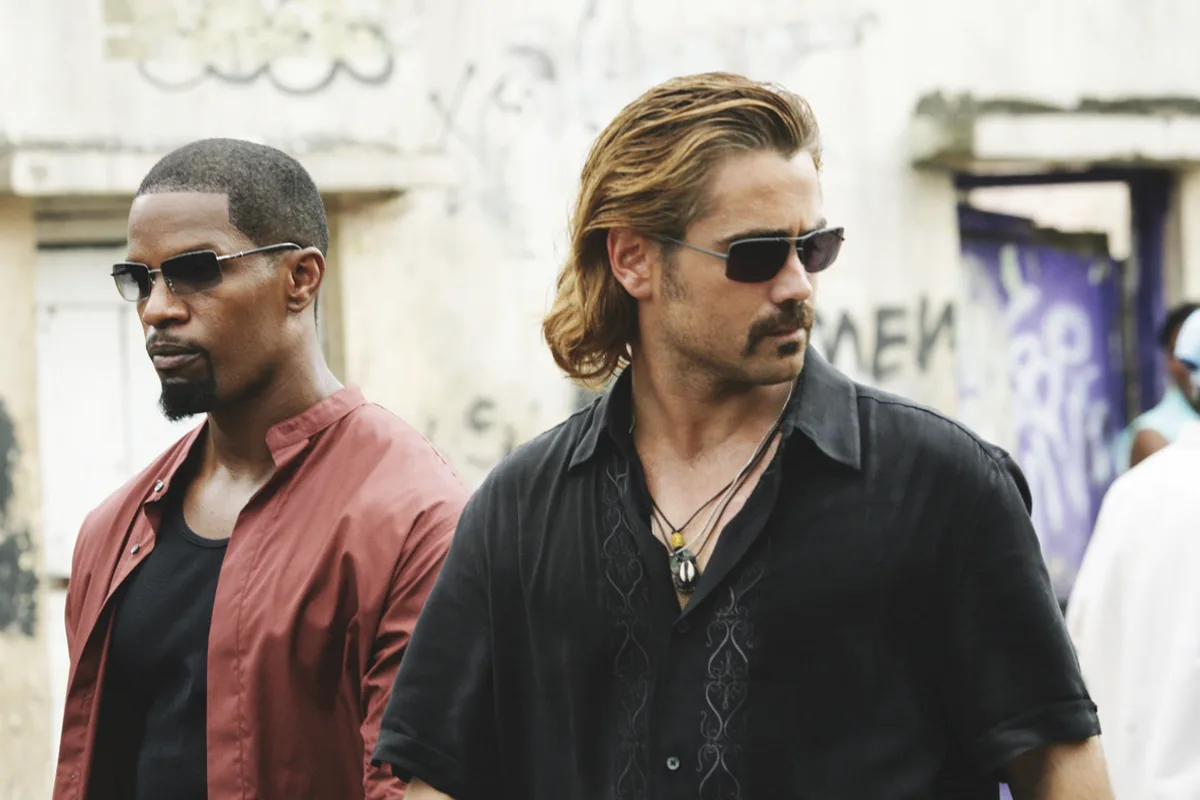
Twenty years later, Mann has apparently reconsidered the film once again.
Beyond Fest lists the runtime of the new Director’s Final Cut as TBA. Neither the festival nor Mann has publicly detailed which scenes have been added, removed, shortened or rearranged.
“Final” is a particularly interesting word for Michael Mann
Mann has never treated every theatrical release as an untouchable endpoint. Across his career, home releases, restorations and later presentations have sometimes given him opportunities to revisit the shape or visual presentation of earlier work.
Miami Vice makes unusual sense as a movie to keep adjusting because so much of its effect exists in rhythm rather than exposition.
The underlying crime plot is straightforward. Miami detectives Sonny Crockett and Ricardo Tubbs infiltrate an international drug organization after federal agents are murdered.
Mann turns that framework into something far less procedural: long stretches of waiting, movement, romance and dread interrupted by sudden violence.
The movie's reputation changed more dramatically than its story
Miami Vice arrived in 2006 carrying the name of one of the most recognizable television shows of the 1980s, yet it refused to behave like a nostalgic revival.
Colin Farrell's Crockett and Jamie Foxx's Tubbs inhabit a colder and more severe world, joined by Gong Li, Naomie Harris, Luis Tosar, John Ortiz and Ciarán Hinds.
The movie underperformed domestically, earning roughly $63 million in North America against a costly production.
Its critical afterlife has been far more generous. The qualities that once looked alienating — Dion Beebe’s abrasive digital imagery, minimal exposition and Mann’s willingness to let atmosphere overwhelm plot mechanics — became central to the film’s later cult reputation.
Its 2006 digital image now looks like a historical artifact
Miami Vice comes from a particularly strange moment in the transition to digital cinematography.
The production combined digital systems including Thomson Viper and Sony CineAlta cameras with 35mm material in selected sequences.
Rather than hiding the limitations of early high-definition capture, the movie often embraces them: noisy shadows, blown highlights, unusual color response and night skies that feel electrically unstable.
In 2006, that could look technically wrong to audiences accustomed to film. Twenty years later, it belongs to a visual period Hollywood passed through surprisingly quickly.
A 4K presentation does not have to mean a cleaner Miami Vice
That makes the new cut’s 4K presentation potentially important.
Higher-resolution delivery does not inherently require smoothing away the texture of the source material. Color, contrast, black levels and the treatment of the original digital photography will matter more than simply attaching the number 4K to the screening.
Beyond Fest has not yet provided technical details about the master beyond describing the event as the world premiere of Mann’s new cut in 4K.
It would therefore be premature to describe this as a newly restored commercial edition or to claim visual changes that have not been announced.
For now, the Final Cut exists only as an event
No UHD Blu-ray, new digital release or wide theatrical reissue of Miami Vice: Director’s Final Cut has been announced.
The confirmed destination is Beyond Fest on October 3, with Mann in attendance.
That may eventually become the beginning of a broader release. For now, it is a single screening and a wonderfully appropriate question.
After two previous versions and twenty years of distance, what did Michael Mann still see in Miami Vice that needed another cut?