
A disappointing opening for a major theatrical release
The Social Reckoning opened in US theaters on October 9, 2026, earning an estimated $5.5 million across its first North American weekend, according to figures reported by the Associated Press. Released by Sony Pictures in 2,606 theaters, the film placed fifth behind Other Mommy, Verity, Resident Evil and Heart of the Beast.
The comparison with The Social Network is difficult to avoid. David Fincher's 2010 film, written by Sorkin, opened above $22 million in North America, eventually earned more than $224 million worldwide and won three Academy Awards. Those achievements set a demanding benchmark for a project returning to the same corporate universe, even though the new film tells a markedly different story.
Reports cited by the Associated Press put The Social Reckoning's production budget at approximately $30 million, excluding marketing. An opening weekend alone does not determine a film's final profitability. International revenues, subsequent theatrical performance and later distribution will also matter. Still, a $5.5 million start from more than 2,600 theaters gives the Sony release a difficult commercial path.
A different chapter in Facebook's history
Sony describes The Social Reckoning as a companion piece to The Social Network rather than a conventional sequel. Instead of revisiting Facebook's founding disputes, the story focuses on the disclosures made by former employee Frances Haugen and their consequences.
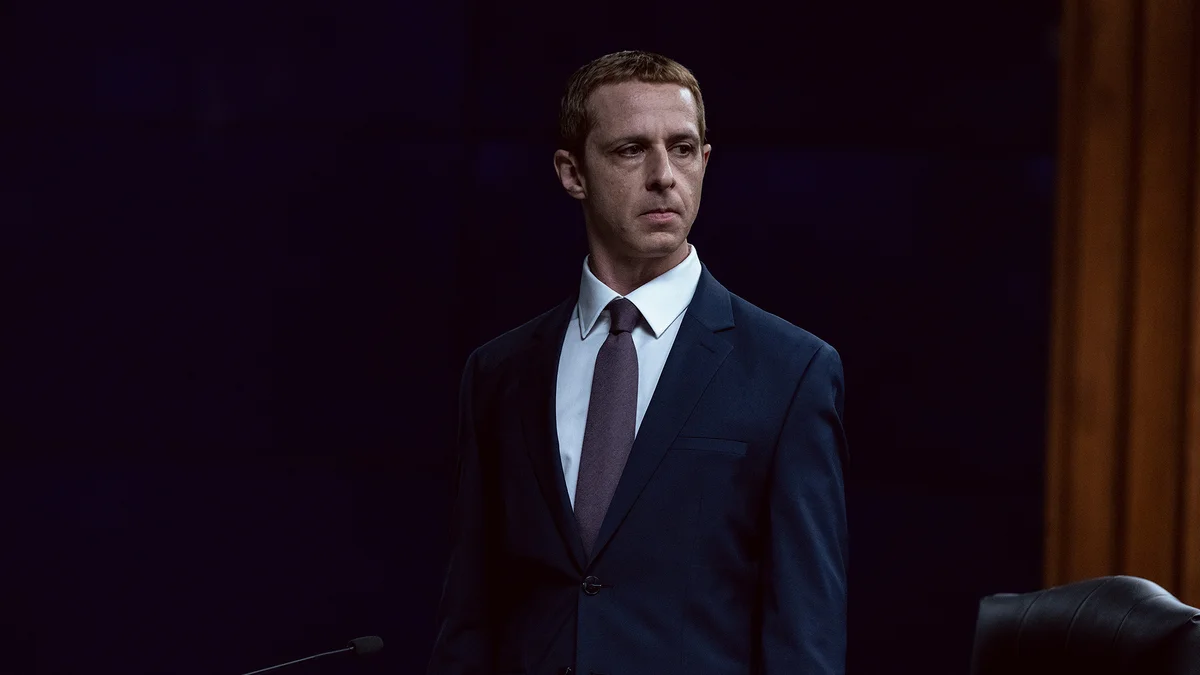
Mikey Madison portrays Haugen, who provided internal Facebook documents to The Wall Street Journal for its 2021 investigation, The Facebook Files. Jeremy Allen White plays journalist Jeff Horwitz, while Jeremy Strong takes over the role of Mark Zuckerberg from Jesse Eisenberg.

Sorkin both wrote and directed the film, taking on the filmmaking role previously held by Fincher. Speaking to Reuters ahead of the release, he described how meeting Haugen helped him develop a new story after a prolonged creative block. Although the film draws on real events and actual individuals, it is a fictionalized account. Its dramatic construction should not be treated as a documentary record of every conversation or decision.
The underlying investigation raised significant concerns about content recommendation systems, user safety and the broader social consequences of Facebook's operations. Facebook, now part of Meta, disputed aspects of Haugen's characterization, including the suggestion that it deliberately promoted anger for profit. The film enters an ongoing debate rather than an entirely settled historical episode.
When a familiar controversy struggles to become an event
There is a telling tension at the center of The Social Reckoning. Its subject is highly recognizable. The effects of social platforms on public discourse, political polarization and personal well-being have become subjects of everyday debate. Familiarity makes the story timely, but it can also make a theatrical release feel less revelatory.
The Social Network arrived when Facebook's rise still carried considerable fascination. It transformed the origins of a technology empire into a story about ambition, ownership, friendship and betrayal. The Social Reckoning approaches the same company after years of public scrutiny, shifting attention from its creation to allegations about the consequences of its business decisions.
That is a legitimate dramatic change, but it presents a different marketing challenge. The new film asks audiences to invest in the investigation of a company whose controversies may already feel familiar. The original could offer a compelling origin myth; its companion piece is more concerned with dismantling the mythology.
The weekend's box office provided a sharp contrast. Other Mommy, a horror release reportedly produced for around $19 million, earned an estimated $27.5 million in North America. That does not prove audiences have abandoned socially engaged dramas. It does, however, illustrate how easily an immediate genre proposition can outperform a prestigious film built around widely discussed real-world issues.
Prestige alone is not enough
Early reception has offered limited encouragement. The Associated Press reported mixed-to-negative critical reviews and a B- CinemaScore from surveyed moviegoers. Those responses are hardly a complete verdict on the work, but they do not suggest the enthusiastic word of mouth that might substantially expand the audience for an adult-oriented political drama.
For Sony, the result raises a familiar question about theatrical positioning. The Social Reckoning has a celebrated writer-director, an established intellectual property connection, a recognizable cast and a story drawn from important investigative journalism. None of those advantages automatically guarantees that audiences will treat a film as a must-see theatrical event.
It would be premature to declare the project a definitive commercial failure or to extrapolate from it a rejection of films about Silicon Valley. Its theatrical run is still developing, and one release cannot settle an industry-wide question. What the opening does establish is a considerable gap between the cultural visibility of Facebook's controversies and the immediate box office appeal of dramatizing them. Sorkin has returned to a story that matters, but the first weekend suggests that relevance and ticket sales remain stubbornly different measures.