
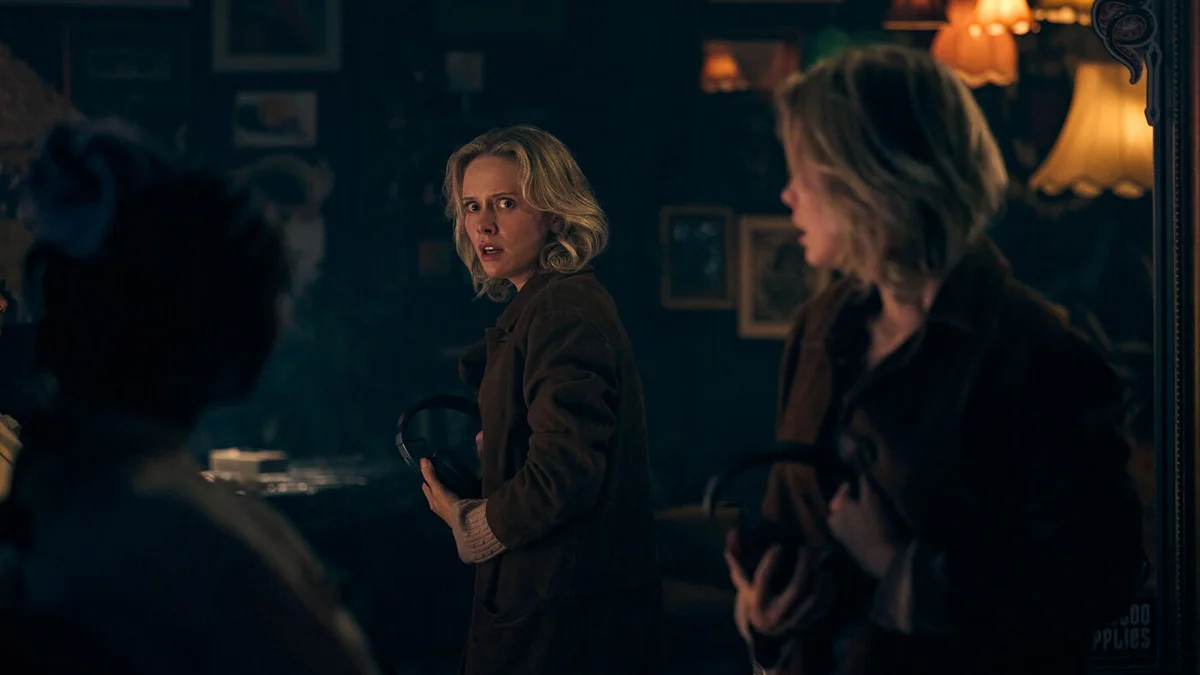
Six films after that first red silhouette appeared behind Patrick Wilson, Insidious faces the classic problem of a long-running horror series: its language is now so recognizable that a new variation can be identified before it has even properly begun. The shrieking strings, the face hidden in the background, the journey into the Further, the paranormal specialist arriving to explain the rules — these are as much the franchise's identity as they are its limitations.
Out of the Further does try to move several pieces around. The Lamberts are gone, replaced by Gemma, a single mother played by Amelia Eve, and her daughter Maya. More importantly, Gemma has an ability that could theoretically redraw the entire geography of the series: she does not merely travel into the Further. She can bring things back.
A very good idea that immediately feels larger than the movie containing it
On paper, it is exactly the kind of premise a sixth installment needs. The Further has traditionally been a place the living enter at enormous risk. Allowing Gemma to reverse that journey potentially turns a private purgatory into a physical threat capable of spilling into everyday reality.
The film gets several memorable images from that idea but far fewer consequences than expected. The promised invasion remains largely concentrated around Gemma, her home and a collection of familiar spaces. Instead of truly expanding the world of Insidious, the screenplay gradually folds its big concept back into a conventional haunting structure.
That gap between premise and actual scale appears repeatedly across the critical response. It explains much of the disappointment: the concept has the energy of a sequel ready to break down the walls while the story keeps behaving as though it is afraid to leave the house.
Jacob Chase is more convincing when staging fear than explaining it
The encouraging part is that several sequences demonstrate why Insidious has survived for this long. Chase has a strong instinct for familiar spaces that slowly stop obeying normal architectural logic.
The pillow-fort sequence is the clearest example. A child's refuge stretches into something almost liminal, with spaces becoming too deep, passages leading somewhere they should not and the distinctly Insidious feeling that another room has somehow inserted itself inside the house.
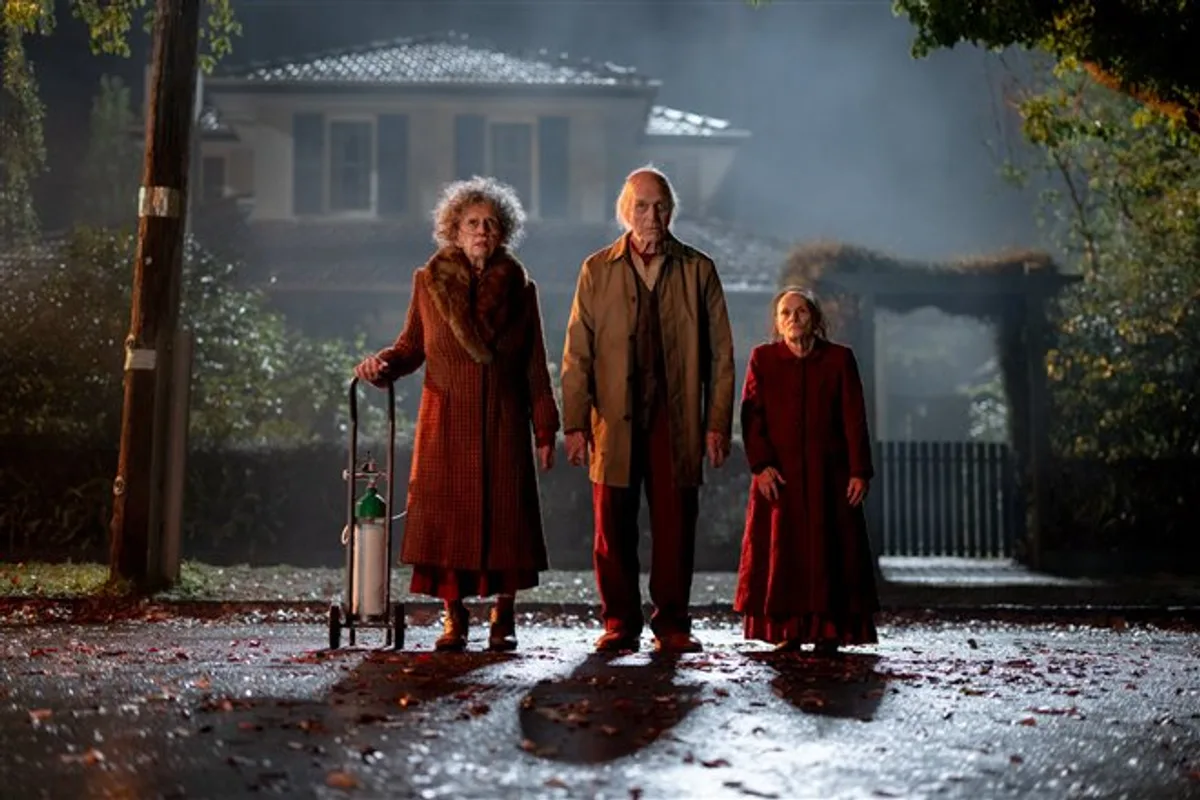
That distortion of domestic space is more effective than most of the film's mythology lessons. It creates unease before a creature even appears because the environment itself can no longer be trusted.
The dental setting gives the movie its nastiest physical idea
Gemma works in dentistry, and the screenplay could easily have treated that job as a line of dialogue designed to simulate an ordinary life. Chase wisely understands that horror cinema has never needed to behave sensibly when it has metal instruments, teeth and an open mouth beneath a clinical lamp.
The dental material is among the film's most consistently praised material. It has a tactile ugliness that the rest of the movie sometimes lacks, with scraping and organic sound becoming almost more important than the image itself.
This is also where the film's relatively restrained rating becomes an interesting constraint rather than a weakness. Without relying on extreme gore, Chase leans into anticipation and disgust. A mouth becomes a complete horror environment on its own.
Amelia Eve inherits a character more interesting than the script allows her to be
Moving away from the Lamberts could have been a difficult transition. Amelia Eve gets the new family over that hurdle fairly quickly. Gemma carries the nervous exhaustion of a mother trying not to pass her own damage to her daughter, and Eve avoids turning that anxiety into a simple collection of panic attacks.
The frustration is structural. The movie repeatedly tells us Gemma possesses an extraordinary ability, then keeps her in a surprisingly passive position for much of the story. She discovers, suffers, doubts, wakes after missing time and waits for other characters to explain what is happening.
That contradiction weakens the premise. Introducing a protagonist capable of changing the rules of the Further should alter the balance of power. For too long, her gift functions more like an additional vulnerability than a dramatic tool.
The mother-daughter relationship remains too functional
Generational trauma is the declared emotional center of the movie. Gemma returns to her childhood home, still lives with the consequences of what happened to her mother and fears repeating those mistakes with Maya.
The ingredients are exactly right for an Insidious story. The franchise works best when the supernatural and the family contaminate one another, when demons matter because they have already found a fracture inside the people being haunted.
Here, the theme is more frequently explained than felt. Maya remains peripheral for too much of the story before the climax requires her to become central. The deterioration of the relationship therefore lacks enough intermediate steps, forcing the final act to accelerate emotions that needed much earlier development.
Cyrus is a good monster trapped inside talkative mythology
Sam Spruell gives Cyrus something immediately useful: presence. His physicality, command of space and theatrical edge allow the new antagonist to avoid disappearing behind the franchise's more famous demons.
Turning him into a kind of cult leader inside the Further also creates an appealing visual idea. Evil is no longer just an isolated figure waiting in darkness; it has followers and a crude society around it.
Yet the more the film explains Cyrus, his plan and the mechanics connecting the two worlds, the less opaque the fear becomes. Insidious has always had explicit mythology, but that mythology works better as a frame for nightmares than as an engine for exposition.
Elise works better as a presence than as a necessity
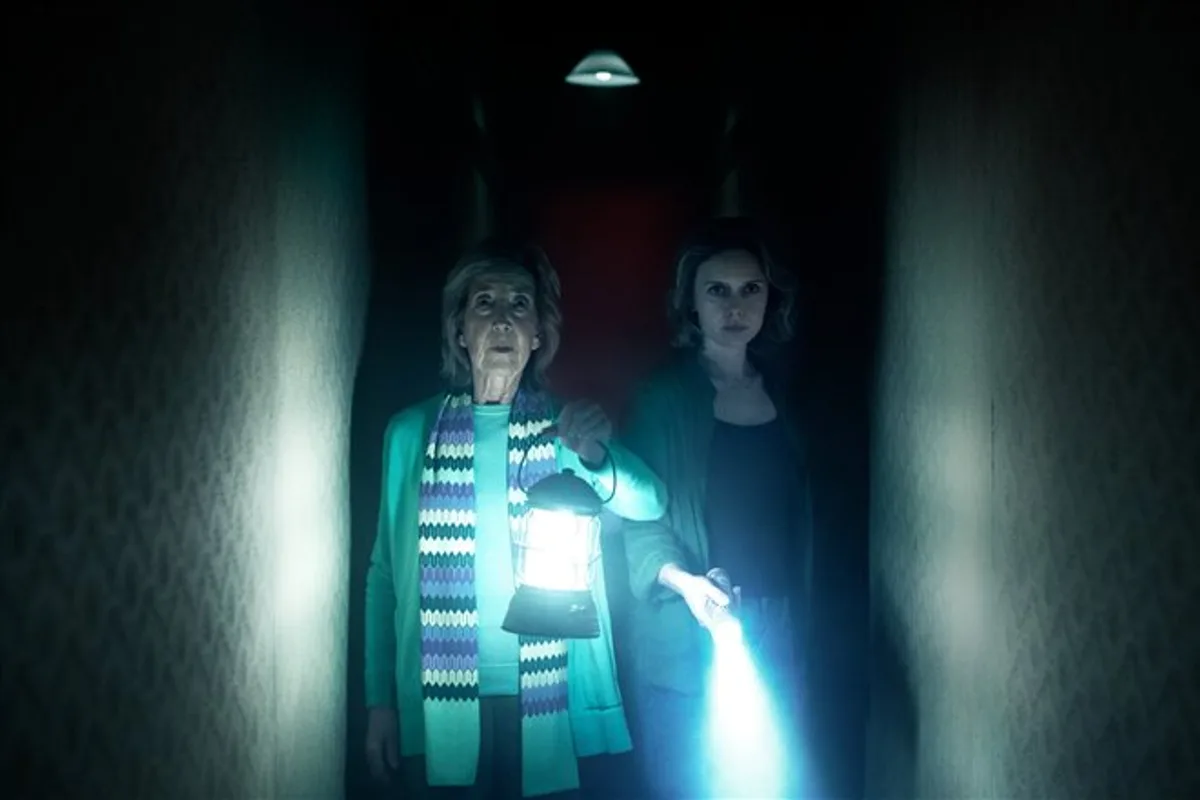
Lin Shaye remains one of the franchise's most valuable faces. It takes only a few moments to recover the warmth, resolve and familiarity that made Elise Rainier the connective tissue of Insidious.
Her return nevertheless raises a question the film never completely answers: if Gemma and a new generation are supposed to carry the series forward, how long can Elise continue functioning as a certificate of authenticity?
Her screen time is relatively limited. That may be preferable to a sequel built entirely around nostalgia, but it also emphasizes how functional several connections to the earlier films have become.
Returning entities sometimes create the same impression. They instantly reward viewers who recognize them without always adding much to the scene in which they appear.
It still works as a haunted ride in bursts
The critical response is especially divided here. Some reviewers found one of the franchise's more enjoyable recent sequels, while others saw an exhausted repetition of familiar machinery. Both reactions can almost coexist because the movie is significantly better scene by scene than it is as a complete narrative.
A doorway, hallway or badly placed noise can still produce an immediate reaction. The editing knows when to violently break a shot, backgrounds occasionally hide just enough information, and Joseph Bishara's musical identity needs only a few aggressive sounds to announce danger.
That pleasure is genuine. It is also intermittent.
Between its strongest moments, the story returns to a recognizable loop of nightmares, exposition, family conflict, another manifestation and preparation for the next trip into the Further.
The final act exposes the limits of the new direction
As Cyrus gets closer and Gemma better understands her gift, the film should logically become stranger. Instead, it mostly becomes busier.
Rules, supporting characters and franchise callbacks pile up until spectacle begins replacing uncertainty. The scale grows while the sense of the unknown shrinks.
That makes the title almost ironic. The Further does spill beyond its boundaries, but the movie becomes less frightening when it has to display that invasion directly. Chase is much better at suggesting that something impossible exists in the next room than arranging a conventional confrontation with it.
A sixth entry with enough life left to avoid the autopsy table
Out of the Further is neither the dramatic franchise rebirth suggested by its most ambitious ideas nor the terminal disaster described by its harshest critics.
Jacob Chase finds enough visual material to remind us that Insidious still has a distinct personality within studio horror. Its best moments are grimy, tactile and occasionally almost ridiculous in their cruelty, which suits this series extremely well.
What it lacks is a story willing to be as adventurous as those sequences.
Gemma's ability, Cyrus and the idea of the Further bleeding into reality all suggest a franchise prepared to change scale. The movie ultimately chooses to preserve the structure that carried it this far.
Six films in, that caution can still produce a decent horror ride. It is no longer enough to make every trip through the red door feel necessary.