

Peter Parker still has his powers. Almost everything else is gone.
Four years after the world forgot him, he lives alone in a battered New York apartment and has turned Spider-Man into something dangerously close to a full-time job. MJ and Ned have lives he can observe but no longer share.
Tom Holland finally gets to play the consequences
Brand New Day's most valuable change is maturity rather than mythology. Screen Daily praises Holland's increased gravitas, while RogerEbert.com sees a Peter who has moved beyond the simple question of becoming Spider-Man and into the harder problem of living with what that choice has cost.
Holland remains funny in the suit. Outside it, the performance is quieter and more exhausted.
Destin Daniel Cretton gives action a body again
The film deliberately pulls back from No Way Home's multiversal spectacle. Its best action scenes emphasise physical trajectory: bodies moving through windows, across rooftops and between structures rather than simply standing inside digital catastrophe.
The Los Angeles Times particularly praises the camera's movement through one airborne fight. Cretton understands that Spider-Man is interesting because his relationship with space is unusual, not merely because he can hit harder than ordinary people.
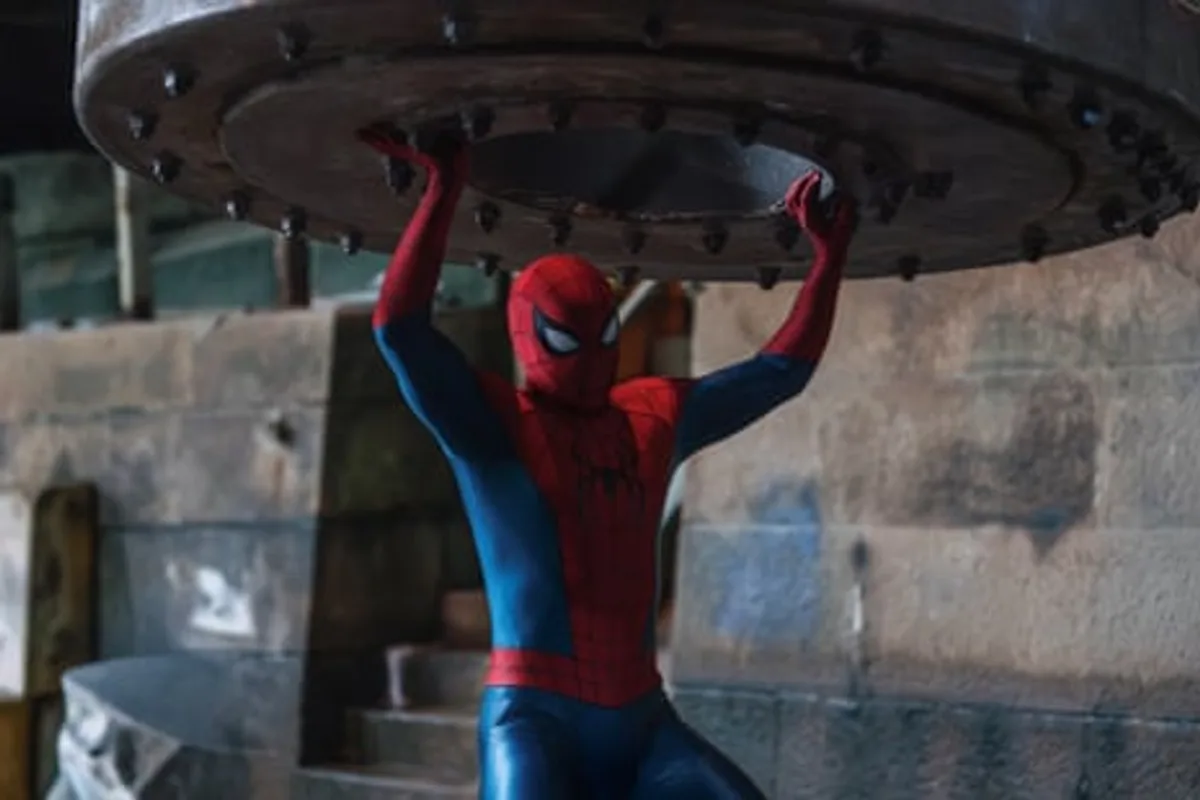
Peter's body becomes an external version of his grief
The stranger material concerns changes in Spider-Man himself. The Guardian detects a touch of Cronenberg in the physical anxiety, and that comparison is more useful than it initially sounds.
Peter has tried to cut his personal life away and function entirely as a superhero. His body begins refusing that clean separation.
Variety's frustration is that the film does not sustain all of these ideas. Some conflicts are introduced with enough weight to suggest a complete dramatic direction and then resolved far more quickly.
Zendaya changes the temperature of the movie
MJ's lack of memory creates an inherently unequal relationship. Peter carries years of emotional history into every conversation; she is talking to a stranger.
The Guardian argues that Zendaya rescues the movie from some of its generic superhero habits. Her scenes certainly force a different performance from Holland. The pace drops, jokes disappear and Peter can no longer hide behind the familiar chemistry of the earlier films.
Punisher is the useful kind of crossover
Jon Bernthal's Frank Castle feels physically and morally abrasive beside Spider-Man. The two characters occupy similar streets while disagreeing fundamentally about what protecting those streets permits.
Mark Ruffalo's Bruce Banner and other MCU connections are more complicated. They provide entertaining material, but every familiar face slightly weakens the promise that this would be a genuinely stripped-back Peter Parker story.
The antagonist exposes the film's hesitation
The central threat is built around violations of identity and control, which makes it an effective thematic companion to Peter's own attempt to suppress parts of himself.
Variety finds the eventual resolution too soft, while RogerEbert.com argues that the film repeatedly under-develops its strongest ideas. The final act is where those concerns become hardest to ignore.
145 minutes is a long time to call something a reset
The critical divide is unusually clear. Screen Daily and Ars Technica see a mature, emotionally grounded blockbuster. The Guardian and Time Out find it sluggish in places. Variety calls it overly episodic and too long.
All of those reactions describe parts of the same movie.
Brand New Day is strongest when Spider-Man is simply a lonely man moving through New York and trying to reconnect with people. It becomes less distinctive whenever the machinery of future MCU stories begins moving behind him.
The neighbourhood still matters
Cretton repeatedly returns from enormous action to ordinary New Yorkers, apartments and streets. Those images matter more than another promise about the future of the universe.
Spider-Man has survived many cinematic reinventions because the character can always come back down to the pavement.