

TIFF 2026 featured six China-produced or Chinese-language films, compared with three the year before. In a festival with 257 publicly accessible titles, six is hardly a takeover. The more interesting part is what those six films represent.
Some arrived with globally recognizable stars and an obvious commercial pitch. Others reached Toronto after building credibility through Cannes, international co-production and festival awards.
It's My Time arrives with Michelle Yeoh built into the pitch
Bai Xue's It's My Time is the easiest example to sell internationally. Michelle Yeoh plays Zhao Yanhong, a rebellious 70-year-old woman living in a nursing home who discovers an unexpected talent for solving a Rubik's Cube and begins training for competition with a former champion played by Liu Haoran.
The film had already opened across parts of Asia before TIFF, including China, Malaysia and Singapore. Toronto hosted its North American premiere on September 17.
It sits in an increasingly useful middle ground: a mainstream Chinese-language comedy with a recognizable local structure, but also a lead actor whose name immediately travels far beyond the domestic market.
Peter Ho-Sun Chan brings a different kind of scale
The Road Not Taken is built around a more traditional prestige-drama package. Peter Ho-Sun Chan directs Zhou Xun, Wen Qi, Tian Zhuangzhuang and Wang Xiao in a story dealing with early-onset Alzheimer's disease.
TIFF placed the film in Special Presentations, giving it a prominent position without presenting Chan as a discovery. His career already spans the commercial and prestige sides of Chinese-language filmmaking, and the new project reflects that same crossover.
A Girl Unknown comes through the festival pipeline
Zou Jing's A Girl Unknown represents almost the opposite route. The drama follows a Chinese girl from the age of six to eighteen as she moves between three families, each giving her a different name and identity.
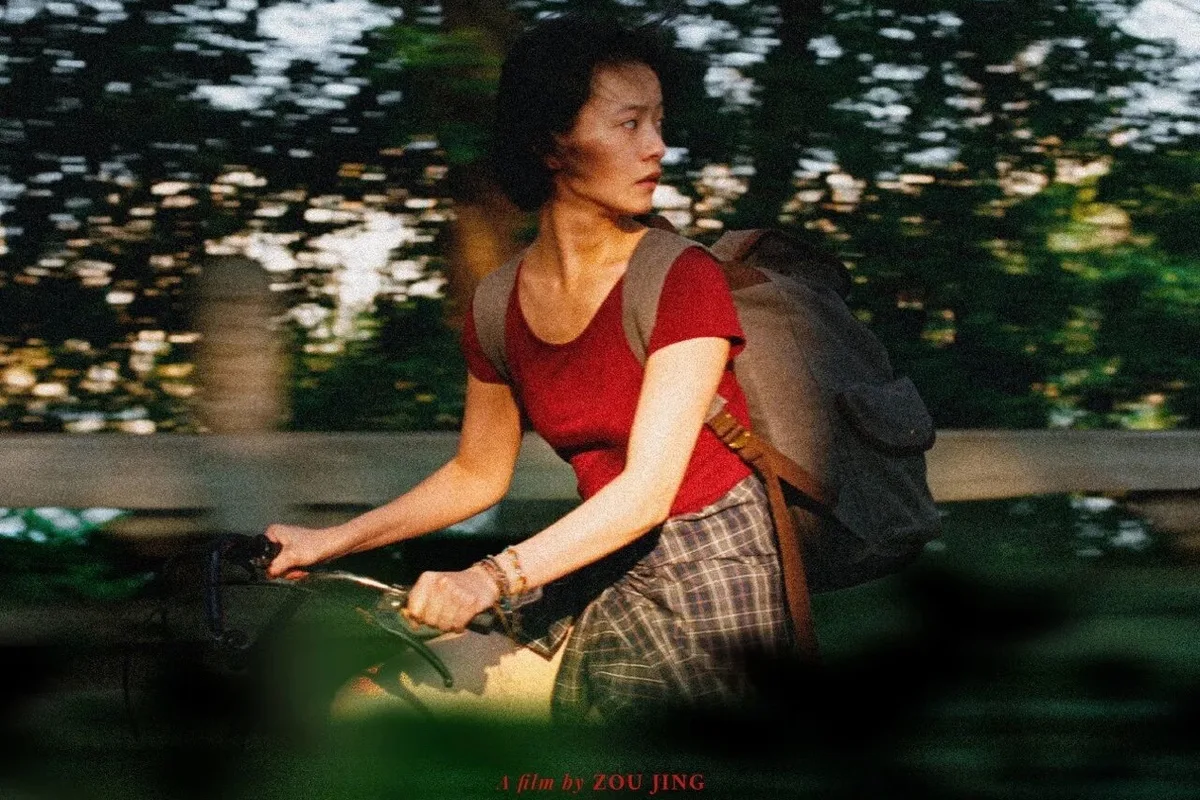
Before Toronto, Zou's first feature had already won major recognition at Cannes Critics' Week, including the FIPRESCI Prize and the Fondation Gan Award for Distribution. Its international run continues through additional festivals after TIFF.
There is no global star functioning as the obvious export hook. The film instead accumulates value through critical recognition, sales representation and festival circulation.
Mandarin cinema extends well beyond mainland China
Toronto's Asian presence was broader still. Mandarin-language films from Singapore, Taiwan and Malaysia also appeared in the festival, alongside work from across the rest of the region.
That matters because the phrase Chinese cinema can flatten an increasingly networked production landscape. Films now move through cross-border financing, international training, co-production structures and shared languages long before they reach a North American festival.
Six films do not make a new golden age
A jump from three titles to six should not be mistaken for proof that the entire Chinese film industry has suddenly transformed. Festival selections change every year, and one programme cannot function as a complete market indicator.
Still, TIFF 2026 offered three useful models at once: Michelle Yeoh carrying an accessible Chinese-language comedy, Peter Ho-Sun Chan operating at established prestige scale, and Zou Jing moving a first feature through the international festival system.
Fan Bingbing also received a special tribute during this year's festival. Taken together, the films and talent presence made East Asian cinema feel less like a specialist corner of Toronto's programme and more like one of its active international pipelines.