Quentin Tarantino has spent his filmmaking career developing a highly recognizable relationship between writing and directing. His scripts are so closely associated with his voice that the possibility of someone else directing them can seem unusual.
The Further Mis-Adventures of Cliff Booth is built around exactly that situation.
The screenplay belongs to Tarantino, the lead character first appeared in one of his most successful films, and Brad Pitt is returning to the role that earned him an Academy Award. Yet the movie is directed by David Fincher.
In an interview with Empire, reported by Variety, Entertainment Weekly and People on November 4, 2026, Tarantino explained how the arrangement came together.
His decision not to direct was not primarily about dissatisfaction with the script. He had written a story he liked and knew Pitt wanted to play Cliff Booth again.
The difficulty was that Tarantino no longer wanted this particular story to become his next directorial feature.
What troubled him most was the possibility that Pitt would feel disappointed.
The actor ultimately suggested an unexpected solution: David Fincher, a filmmaker with whom he had already enjoyed three major collaborations.
Tarantino's hesitation was personal
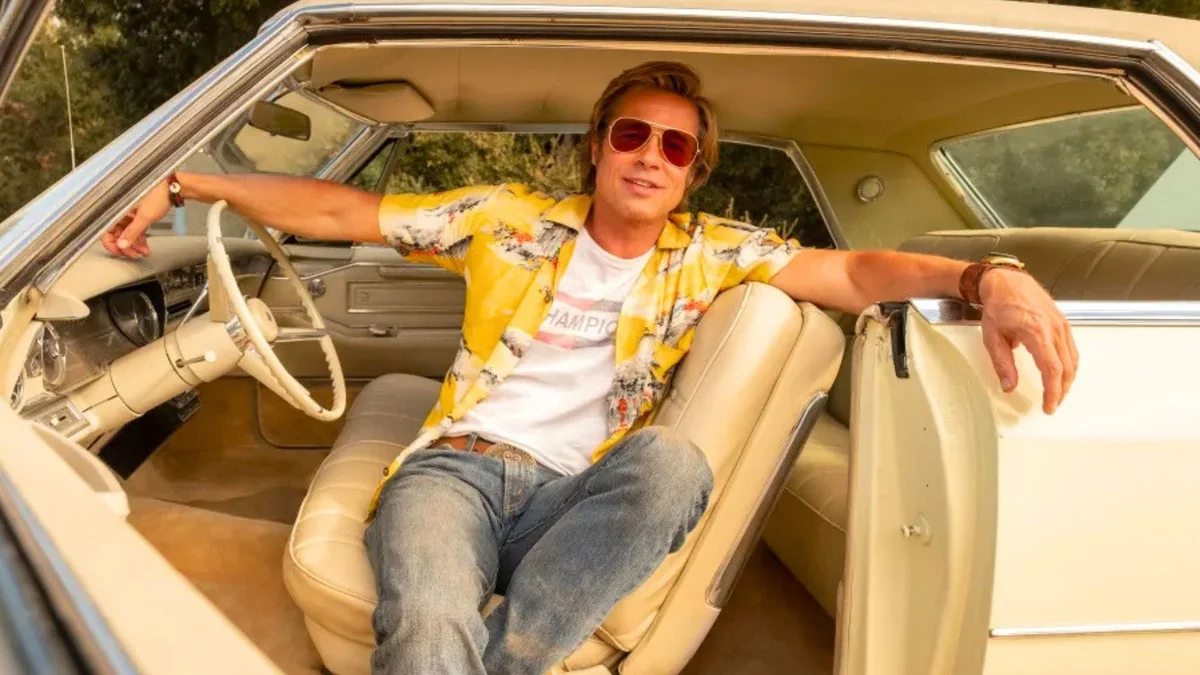
Pitt first portrayed Cliff Booth in Once Upon a Time... in Hollywood, released in 2019.
His performance as Rick Dalton's longtime stunt double and friend earned him the Academy Award for Best Supporting Actor in 2020.
The character became one of the film's most memorable elements, combining an apparently relaxed personality with an extraordinary capacity for violence.
Tarantino subsequently wrote a screenplay that would continue Booth's story.
Pitt was eager to return, but the writer-director began questioning whether he wanted to make the movie himself.
The decision had additional significance because Tarantino has repeatedly said that he intends to stop directing after his tenth feature film.
Once Upon a Time... in Hollywood is the ninth film in his personal count.
Directing the Cliff Booth follow-up would therefore have brought him closer to completing the filmography he has described as his intended body of work.
In previous comments, Tarantino explained that he did not want to return to creative territory he had already explored for what he expects to be his last film as director.
He wanted the uncertainty of confronting a different subject rather than revisiting characters and a setting with which he was already familiar.
The Empire interview adds a personal dimension to that reasoning.
He knew Pitt was enthusiastic about the script and felt uncomfortable about withdrawing from the collaboration.
That feeling did not change his decision, but it helped make finding another director an important part of the project's future.
Brad Pitt suggested David Fincher
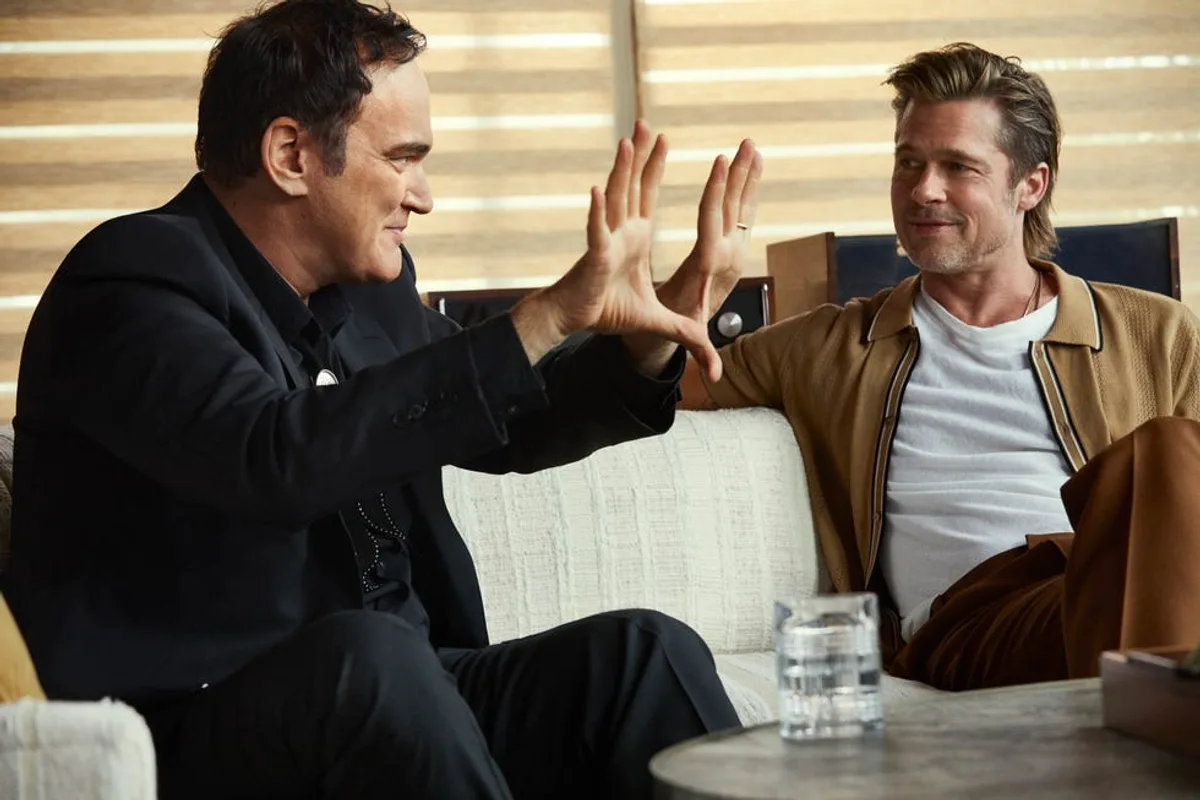
The idea of approaching Fincher came from Pitt.
Having worked with him on several films, the actor knew that Fincher was interested in Cliff Booth as a character.
Pitt asked Tarantino whether the director might be allowed to read the screenplay.
Tarantino responded with considerable enthusiasm, although he admitted that the prospect seemed almost too fortunate to become reality.
Fincher was not simply another director available to complete an existing project.
He had established a career associated with meticulous visual storytelling, complicated psychological conflicts and an unusually controlled approach to filmmaking.
The possibility of Fincher spending an extended period making a film from Tarantino's screenplay carried particular meaning for its author.
Tarantino explained that although his writing has received extensive recognition, he sometimes feels audiences and critics consider him primarily a director who writes material for himself.
Fincher's interest suggested that his screenplay could stand independently of his own directorial involvement.
The filmmaker also described being unusually careful during his earliest conversations with Fincher, fearing that excessive enthusiasm might somehow undermine the opportunity.
The comments portray an unconventional situation: a celebrated director behaving almost like an anxious screenwriter whose work has attracted the attention of another filmmaker he deeply respects.
Fincher and Pitt already share three important films
Pitt and Fincher's relationship began with Seven in 1995.
The film followed two detectives pursuing a murderer whose crimes were organized around the seven deadly sins.
Pitt played David Mills, a young detective whose confidence and emotional involvement became central to the thriller's devastating conclusion.
The pair reunited for Fight Club in 1999.
That film gave Pitt the role of Tyler Durden, a charismatic and destructive figure whose influence becomes increasingly complicated as the story develops.
Their third collaboration came with The Curious Case of Benjamin Button in 2008.
The fantasy drama explored an unusual life shaped by reverse aging, offering a markedly different artistic challenge from their earlier thrillers.
The Further Mis-Adventures of Cliff Booth will therefore be their fourth feature collaboration.
That history provides an established professional relationship, but the new film also introduces an unfamiliar situation.
Fincher is working with a character Pitt already portrayed under another director's guidance.
The actor arrives with years of personal understanding of Booth, while Fincher is responsible for shaping a new interpretation of the screenplay.
Pitt knew more about Cliff Booth than his new director
Fincher discussed that unusual dynamic in the same Empire interview.
The director explained that he rarely encounters an actor whose knowledge of a character is so much greater than his own before production begins.
Pitt had already developed Cliff Booth's behavior, reactions and personal history through his work with Tarantino.
Fincher, meanwhile, was approaching the character through a new story and a different filmmaking perspective.
The collaboration required the director to respect the actor's familiarity while maintaining the authority needed to develop the film.
Fincher described occasions when Pitt's understanding of Booth influenced their discussions about the character.
That does not establish a major production conflict.
The comments instead suggest a working relationship in which the actor's existing interpretation became an important creative resource.
The dynamic makes the film unusually interesting.
A director normally helps establish how an actor will interpret a new protagonist. Here, Fincher inherited a character whose essential screen identity had already been established by Pitt and Tarantino.
The challenge was to develop Booth further without losing the qualities that made him recognizable.
The story moves from 1969 to 1977
The Further Mis-Adventures of Cliff Booth takes place eight years after the events of Once Upon a Time... in Hollywood.
The original film explored Los Angeles in 1969 through actor Rick Dalton, portrayed by Leonardo DiCaprio, and his stunt double Cliff Booth.
Their professional relationship and friendship provided the emotional foundation for Tarantino's fictional version of late-1960s Hollywood.
The sequel moves to 1977, when the entertainment industry and the city surrounding it have changed.
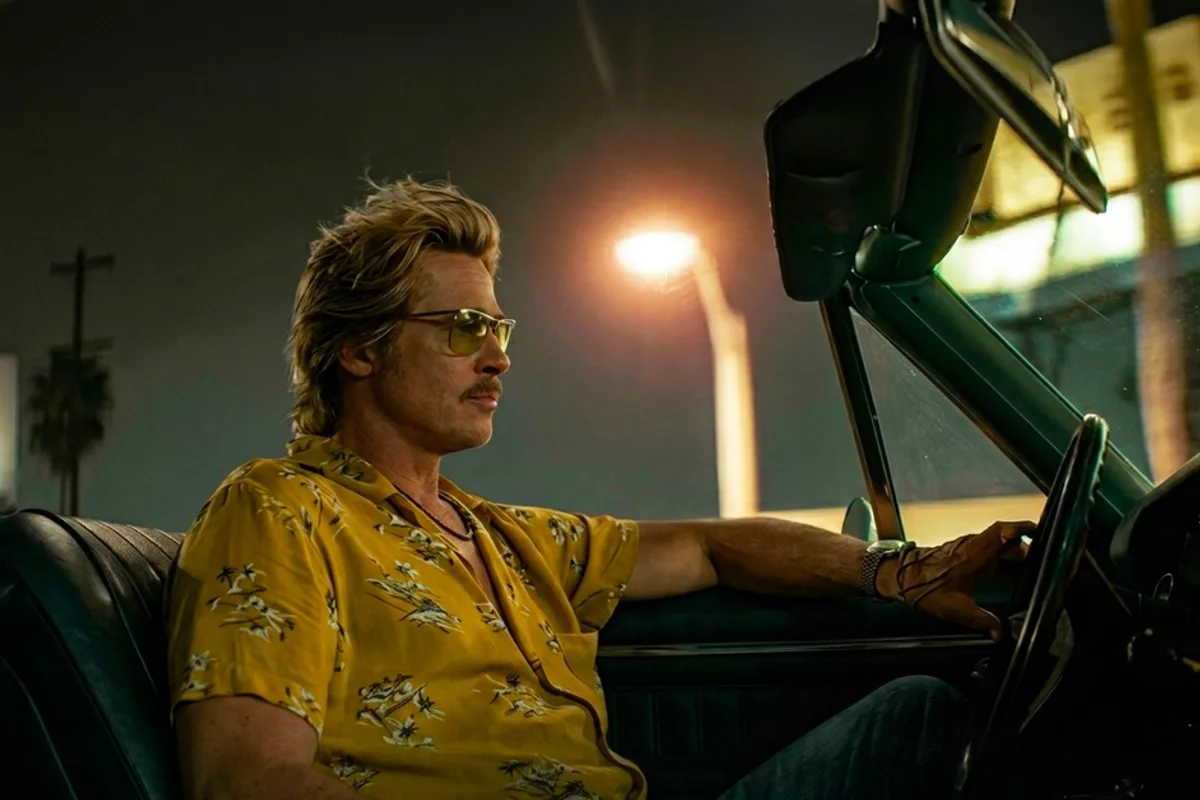
According to Netflix's official synopsis, Booth occasionally works as a bartender and a projectionist.
His main occupation, however, involves handling sensitive problems for people connected to the entertainment business.
He has become a fixer, a man capable of navigating situations that may require methods outside conventional legal boundaries.
The story includes murder, blackmail, theft and extortion.
That premise gives Fincher the opportunity to explore the criminal and social networks surrounding Hollywood rather than simply repeating a stuntman's experiences on movie sets.
The director has described his version as fundamentally a Los Angeles story.
That distinction suggests an interest in the city's personalities, relationships and social ambitions, not exclusively in the filmmaking industry.
A new ensemble surrounds Brad Pitt
Netflix has identified several major characters in the film.
Elizabeth Debicki plays Karen Crosby, a talent agent who contacts Booth on behalf of her client Charlie Peters.
Scott Caan portrays Charlie, a television star known for performing his own stunts.
That background gives the character an immediate connection to Booth's earlier career as a stuntman.
Carla Gugino plays Charlie's wife Toni.
Yahya Abdul-Mateen II appears as Roderick Hot Rod Harrison, a former professional football champion who has moved into acting.
The story also introduces Eddie and Fernando Verdusco, played by Matt Groove and JB Tadena, two gangsters whose activities threaten to complicate the lives of the other characters.
Peter Weller, Corey Fogelmanis and Karren Karagulian are also part of the cast.
The ensemble provides a combination of entertainment-industry figures and criminal personalities consistent with the film's 1977 setting.
Netflix has revealed the broad premise but not the complete relationships between the characters or the ultimate consequences of their conflicts.
The film therefore remains a forthcoming release rather than a story whose full narrative can already be assessed.
Two filmmakers with distinct creative identities
The combination of Tarantino's screenplay and Fincher's direction naturally invites comparisons between their artistic approaches.
Tarantino is closely associated with elaborate dialogue, unpredictable violence and stories deeply informed by film history.
Fincher has developed a reputation for carefully composed images, precise editing and psychological tension.
Those descriptions only capture part of their work.
Tarantino is capable of restrained suspense, while Fincher's films frequently contain humor and surprising changes of tone.
The difference remains significant because the new movie does not have two directors.
Fincher is responsible for directing The Further Mis-Adventures of Cliff Booth.
Tarantino wrote the screenplay and is also involved as a producer.
Fincher assembled several frequent collaborators, including cinematographer Erik Messerschmidt, production designer Donald Graham Burt and editor Kirk Baxter.
Trent Reznor and Atticus Ross composed the score, continuing their longstanding creative relationship with the director.
The resulting film may therefore offer a distinct interpretation of Tarantino's writing through Fincher's visual and editorial methods.
Whether the combination succeeds can only be judged after the completed movie is released.
Tarantino is preserving his tenth directorial film
The decision to hand the project to Fincher also affects Tarantino's stated plans for his filmmaking career.
He has repeatedly described his intention to stop directing after ten feature films.
His decision reflects a personal philosophy about how he wants his body of work to be remembered.
The Cliff Booth screenplay could have provided a relatively straightforward path toward that final directing credit.
But Tarantino wanted his next movie to take him into unfamiliar creative territory.
A continuation of Once Upon a Time... in Hollywood did not satisfy that ambition, even though he remained enthusiastic about the story itself.
By allowing Fincher to direct, he preserved the screenplay's opportunity to reach audiences without using the project as his own tenth film.
That does not establish a confirmed production schedule for whatever he chooses to direct next.
No theatrical release date or completed filming plan for Tarantino's tenth directorial feature should be inferred from the current interview.
IMAX on November 25, Netflix on December 23
Netflix has confirmed the film's release strategy.
The Further Mis-Adventures of Cliff Booth will begin an exclusive two-week IMAX theatrical run on November 25, 2026, at participating locations.
It will then premiere on Netflix on December 23.
The theatrical arrangement is particularly notable for a streaming-backed production directed by a major filmmaker.
It offers audiences an opportunity to experience the movie on large-format screens before its streaming debut.
However, an international IMAX announcement does not guarantee screenings at every theater or in every country.
Availability depends on participating venues and territorial arrangements.
Tickets have gone on sale in several markets, but the film has not yet begun its announced IMAX release as of November 5.
Its Netflix premiere is also still several weeks away.
The schedule provides a clear timeframe for audiences to discover how Fincher has interpreted Tarantino's characters and dialogue.
An unusual handover rather than a Hollywood feud
Tarantino's comments do not describe a professional relationship collapsing over creative disagreements.
They describe a filmmaker who wrote a script, an actor eager to return to a character and a decision not to direct that particular story.
Pitt suggested Fincher as an alternative, and Tarantino welcomed the possibility.
The arrangement ultimately allowed all three artists to remain closely connected to the project while taking different responsibilities.
Tarantino remains the writer. Fincher directs. Pitt returns to a role whose interpretation he helped establish in 2019.
Their combined involvement makes the production unusual, especially given how strongly Tarantino and Fincher are normally associated with their individual films.
The latest interview clarifies why the director stepped aside and how important Pitt's involvement was to the decision.
What it cannot yet establish is the artistic result.
That will become apparent when the film reaches participating IMAX screens on November 25 and Netflix on December 23.
The story behind the film is already distinctive. The remaining question is whether a Tarantino screenplay directed by Fincher will prove equally compelling on screen.