A Quentin Tarantino screenplay directed by David Fincher already sounds like an unusual meeting of cinematic sensibilities. Adding Trent Reznor and Atticus Ross to the combination makes The Further Mis-Adventures of Cliff Booth an even more intriguing creative experiment.
The composers' participation became official when Netflix unveiled a new poster on November 2, 2026. Their names appeared in the film's credits, confirming that the Nine Inch Nails musicians had supplied the score. Variety, Pitchfork and other publications subsequently reported the news.
For Fincher, it means returning to collaborators who have scored every feature he has directed since The Social Network. For Reznor and Ross, it is their sixth film with the director, but the material introduces a different challenge: a character originally created by Tarantino, transplanted into another filmmaker's interpretation of 1970s Hollywood.
The Fincher sound began with a movie about Facebook
When The Social Network arrived in 2010, Reznor and Ross were not yet the established film-composing partnership they would become. Reznor was internationally known as the driving force behind Nine Inch Nails, while Ross had developed a longstanding creative relationship with him through music production.
Their score for Fincher's drama about the origins of Facebook avoided many of the familiar conventions of prestige-film music. Electronic textures and persistent rhythmic patterns created a sense of anxiety beneath the film's conversations, arguments and increasingly fractured relationships.
The achievement earned them the Academy Award for Best Original Score. More importantly for the partnership's future, it established an approach that Fincher continued to explore across several very different films.
The Girl with the Dragon Tattoo called for colder and more abrasive textures. Gone Girl made unsettling use of deceptively gentle musical surfaces. Mank required a response to an entirely different cinematic period, while The Killer returned the director to a world of methodical violence and controlled psychological pressure.
These scores do not sound identical. Their shared quality lies in how closely the music interacts with Fincher's visual rhythms. Rather than simply announcing the emotion of a scene, it can change how the audience experiences the passage of time, an uncomfortable silence or an apparently ordinary conversation.
Cliff Booth gives that approach a new setting, one already associated with another director's unmistakable musical instincts.
Tarantino's jukebox meets Fincher's composers
Once Upon a Time... in Hollywood was inseparable from its use of period music. Tarantino drew on radio broadcasts and familiar recordings to construct a version of Los Angeles in 1969 that felt both historical and deliberately mythical.
The Further Mis-Adventures of Cliff Booth picks up eight years later, but Tarantino is no longer behind the camera. He wrote the new screenplay, leaving Fincher to shape the material into a film of his own.
That change creates an interesting musical question. Reznor and Ross are capable of working with historical settings without simply imitating the music of the period. Their score for Mank, for example, responded to old Hollywood through a distinctive orchestral language rather than their more familiar industrial textures.
The new film could make room for both original compositions and period recordings, but Netflix has not specified how those elements will be balanced. There has been no officially announced soundtrack tracklist or album release date.
What is confirmed is the creative continuity with Fincher, and that alone offers a more meaningful indication of the project's musical identity than assumptions about how a movie set in 1977 ought to sound.
Cliff Booth has a new profession in a changed Los Angeles
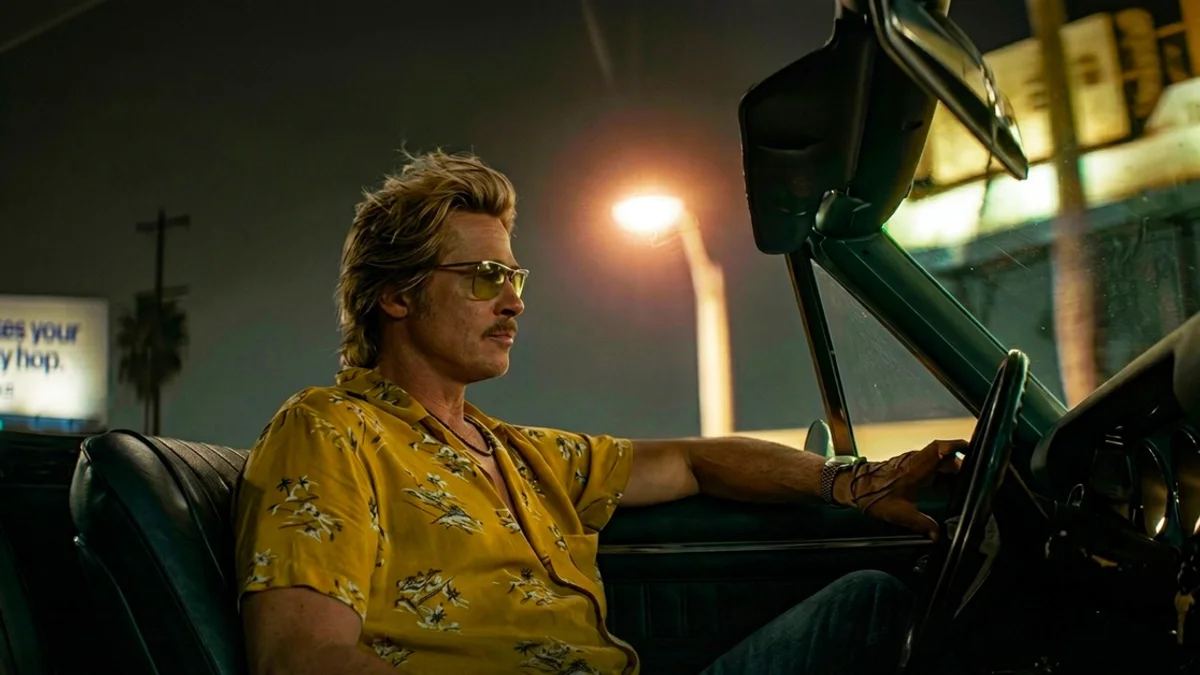
Brad Pitt returns to the role that won him the Best Supporting Actor Oscar for Quentin Tarantino's 2019 film. Cliff is no longer primarily Rick Dalton's stunt double and close companion. In 1977, he has found work handling problems for the entertainment industry, sometimes through methods that sit outside the law.
Netflix describes him as a Hollywood fixer who also takes jobs tending bar and working as a projectionist. His practical skills remain valuable even as the film industry around him changes.
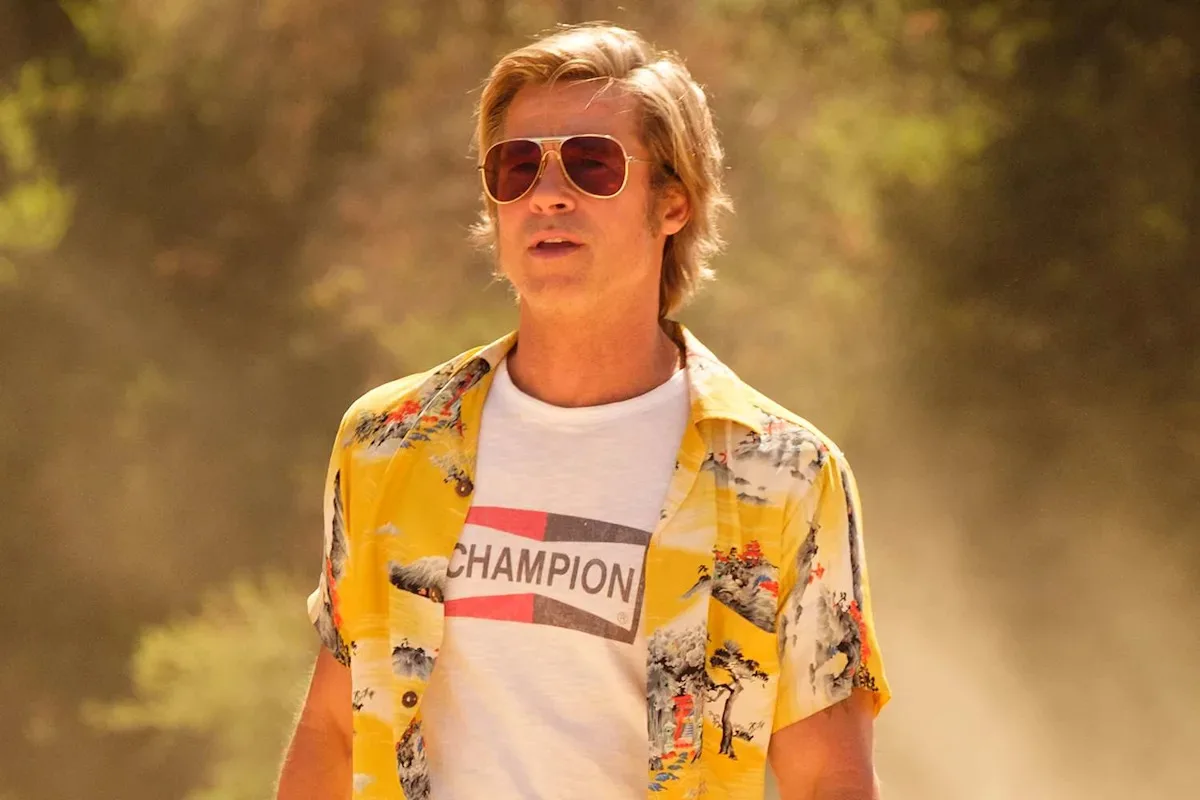
His latest assignment begins with talent agent Karen Crosby, played by Elizabeth Debicki. She contacts Booth on behalf of Charlie Peters, a television star portrayed by Scott Caan who is known for performing his own stunts.
The story introduces Charlie's wife Toni, played by Carla Gugino, and Roderick "Hot Rod" Harrison, portrayed by Yahya Abdul-Mateen II, a former professional football star who has moved into acting. The criminal landscape also includes the Verdusco brothers, played by Matt Groove and JB Tadena.
Murder, blackmail, theft and extortion are central to Netflix's official description. The film moves away from the original's alternate-history fairy tale and toward a crime story involving the increasingly complicated relationships of people working in entertainment.
The period matters. By 1977, Hollywood was changing in ways that affected performers, television stars, agents and the industry figures working behind the scenes. A stuntman who once depended on a single actor's career now survives by solving other people's problems.
Fincher has his own idea of what this story is about
In an interview published by Netflix, Fincher pointed to Hal Ashby's 1975 film Shampoo as an influence that came to mind during production. His comments suggest an interest in the social environment of Los Angeles and the odd collection of people drawn into its entertainment business.
This is an important distinction from simply making another movie about stuntmen. The story appears interested in people whose careers, ambitions and identities no longer fit comfortably within the industry around them.
Tarantino's writing has often embraced sprawling conversations, sudden changes in tone and characters who seem to exist well beyond the immediate requirements of the plot. Fincher's filmmaking, by contrast, is frequently associated with meticulous visual composition, deliberate editing and an unusually controlled sense of atmosphere.
The director's familiar collaborators strengthen that continuity. Erik Messerschmidt is the cinematographer, Kirk Baxter is the editor, Donald Graham Burt is responsible for production design, and Ren Klyce handles sound design.
Bringing Reznor and Ross into this same creative environment means the soundtrack becomes part of a broader production team that already understands Fincher's working methods.
A score with room to surprise
The composers' work beyond Fincher illustrates why this assignment should not be reduced to expectations of another dark electronic soundtrack.
Their music for Pixar's Soul earned them another Academy Award, shared with Jon Batiste. Challengers, directed by Luca Guadagnino, explored a very different approach built around propulsive electronic energy and the physical rhythm of competition.
These projects demonstrate a willingness to change musical language depending on the material. A Los Angeles crime story set in 1977 is not automatically suited to the same sonic atmosphere as Gone Girl or The Killer.
The audience has yet to hear enough of the new film's original score to assess its direction. Netflix has confirmed who composed the music, not how prominently particular themes or styles will feature.
For a film shaped by two directors with distinct approaches to cinematic sound, that uncertainty is part of its appeal.
IMAX first, Netflix in December
The Further Mis-Adventures of Cliff Booth is scheduled to begin an exclusive two-week IMAX theatrical engagement on November 25, 2026. Netflix will then release the film on its streaming platform on December 23.
The new promotional poster arrived as tickets for participating IMAX screenings went on sale. Its retro design places Brad Pitt's character and the film's supporting ensemble at the center of the marketing, while the credit block formally confirms Reznor and Ross.
The theatrical presentation also offers a different setting for experiencing their music. Their scores frequently use subtle layers of sound, rhythmic pulses and low-frequency textures that can take on a distinctive presence in a large auditorium. Whether this particular soundtrack exploits those qualities remains to be heard.
The creative combination is now firmly established: Tarantino provides the screenplay, Fincher directs, Pitt reprises Cliff Booth, and Reznor and Ross complete their sixth feature-film collaboration with the director.
The film opens in IMAX on November 25 before reaching Netflix on December 23, 2026.