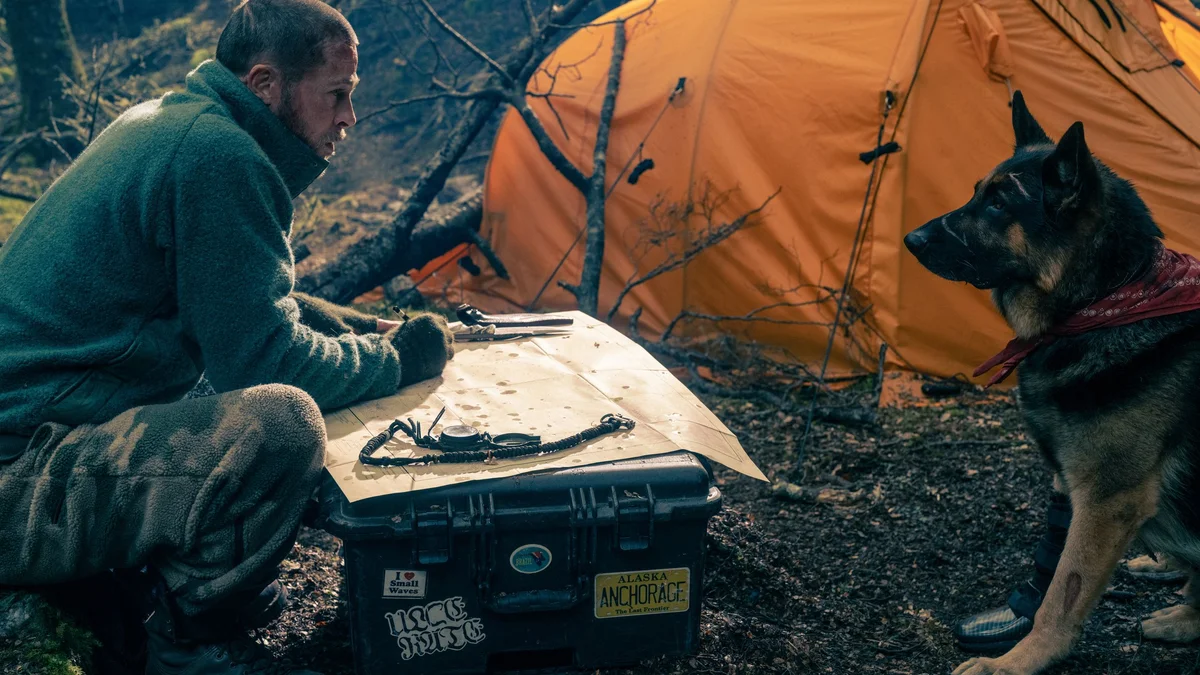
The main Odin performer is Uber, a German Shepherd with real mountain-rescue experience in New Zealand. In a behind-the-scenes featurette released on August 6, Pitt calls him number one on the call sheet and the star of the movie.
Pitt also gives away something more useful about the production. When Uber changes his attention or responds unexpectedly, Pitt follows him and improvises. That, he says, is how they built scenes together.
Uber came with experience, but not a Hollywood routine
Ayer's team searched New Zealand for a dog capable of handling demanding wilderness locations. Uber belonged to a mountain rescue first responder and came from working-dog stock used for law enforcement, military and emergency services.
There were four dogs in total. Uber was the primary performer, while his sons Seeka, Ryker and Hondo also worked on the production. Ayer told GQ that the trainers had about 12 weeks to prepare them, rather than the roughly 20 weeks he would normally expect for a job this complicated.
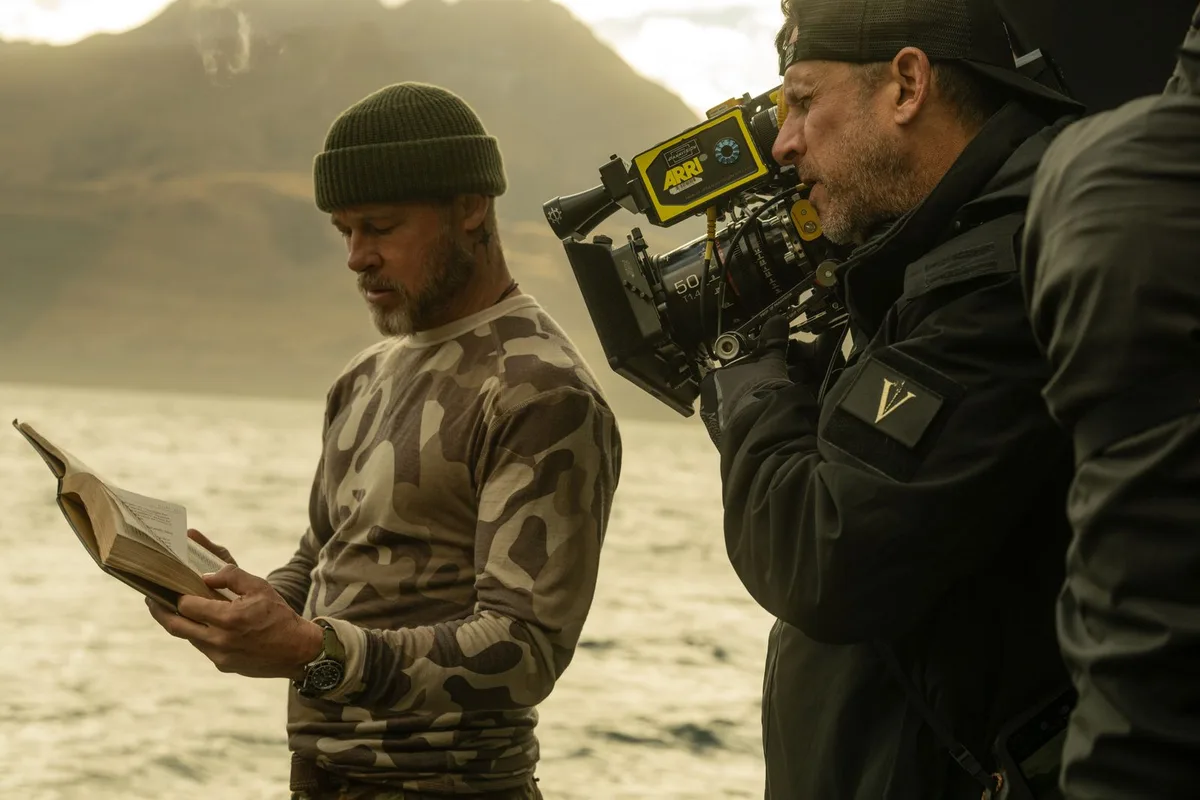
Training could only control so much. Ayer frequently operated a camera himself in rough terrain and described the dog as an extra source of pressure because an animal will respond to the environment rather than to the production schedule.
Ayer wanted two survivors, not an owner and a pet
That distinction runs through the way he talks about Cameron Alexander's screenplay. James is a veteran Special Forces operator. Odin is his combat partner. A plane crash strands both of them in the Alaskan wilderness, and the survival story repeatedly has one rescuing the other.
Ayer has described them as co-equals and called the film a love story. He was drawn to the screenplay because beneath the wilderness hazards he saw grief and healing rather than a simple succession of attacks, falls and bad weather.
Making Odin a fully formed character required Pitt to react to him rather than perform through him. Ayer says the history between the two characters needed to be visible, something animal films can lose when the human performer and the dog never seem to occupy the same emotional space.
The simple movie became the difficult one
A man, a dog and mountains sounded manageable until the production reached the mountains. Heart of the Beast was shot predominantly on New Zealand's South Island, including remote glacial locations where access required extensive coordination with conservation authorities.
One location allowed only three helicopter loads of equipment. For another shot, Pitt and the dog were flown onto a ridge and photographed walking through the landscape. Ayer has said Pitt performed almost all of the physical material himself, with doubles required for only a handful of shots.
Cinematographer Mauro Fiore had to preserve the scale of those locations while the dramatic material stayed unusually intimate. Ayer had just made action pictures built around crowds of opponents and large set pieces. Here, there was nowhere for the central performance to hide.
Fury gave Pitt a tank. This time he gets Uber
Heart of the Beast is Ayer and Pitt's first film together since Fury in 2014. Ayer sees the difference between the projects as part of the appeal. The war film surrounded Pitt with a tank crew, combat and machinery; the new movie repeatedly reduces the equation to one actor, one camera and one dog.
Ayer says the result exposed a side of Pitt's performance he had not seen before, describing the work as unusually raw and vulnerable. Pitt, meanwhile, keeps directing the attention back toward Uber.
Heart of the Beast also stars J.K. Simmons and Anna Lambe. Paramount Pictures France will release the film in French theaters on September 23, with the U.S. opening following on September 25.