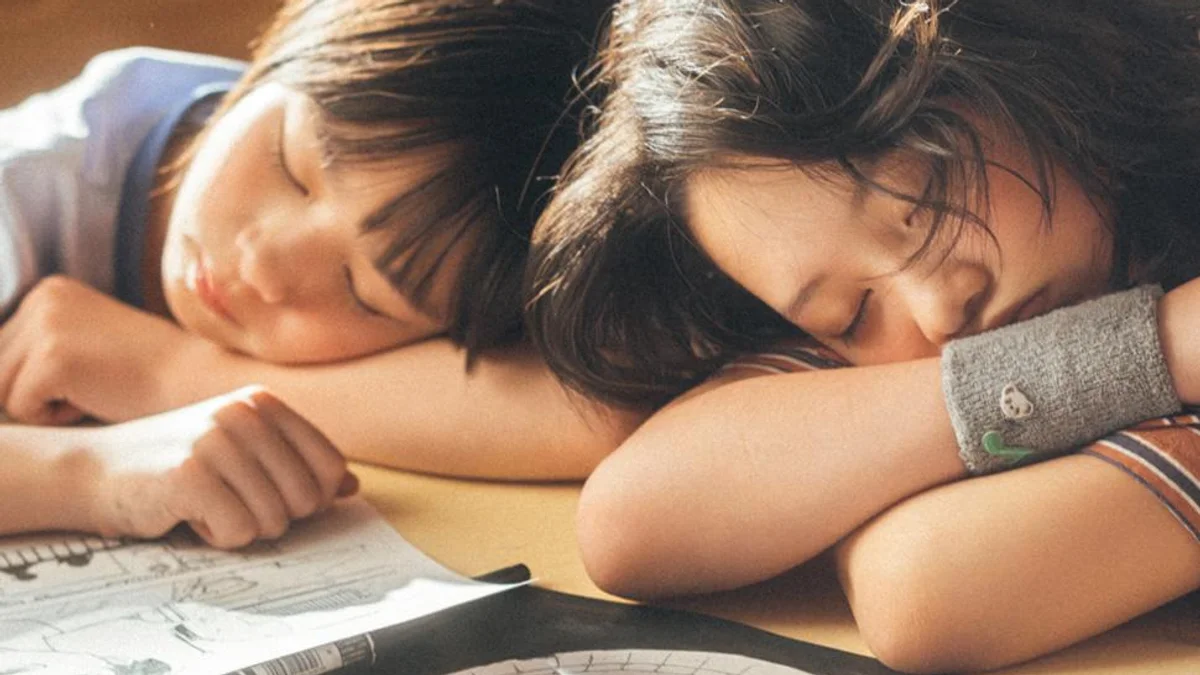
Look Back begins with an artistic crisis of the sort only a child can experience with complete seriousness. Fujino is good at drawing. Everyone at school tells her so. Her four-panel comics appear in the school newspaper, and she has already built a small identity around being the talented one.
Then Kyomoto's work appears beside hers.
The reclusive classmate rarely attends school, but her drawing is technically far beyond Fujino's. Pride becomes jealousy, jealousy becomes practice, and eventually the competition becomes the foundation for a friendship that stretches across thirteen years.
Kore-eda lets the act of drawing carry the passage of time
The film's most distinctive idea is not particularly flashy. Kore-eda pays attention to how drawing sounds and how that sound changes as the characters grow.
Early pencil marks are hesitant and scratchy. Technique becomes quicker and more confident. Later, traditional tools begin giving way to digital ones. The soundscape tracks artistic development without requiring somebody to announce that Fujino and Kyomoto have improved.
It is an elegant choice for a story in which drawing is not a hobby sitting beside the drama. Drawing is the relationship.
The performers had to learn the work, not just imitate it
Natsuki Deguchi and Aju Makita play the older Fujino and Kyomoto, with Fuuri Nanase and Rokka Okada portraying their childhood versions. The performers trained extensively in manga drawing before and during production.
Deguchi and Makita spent around four months practising before filming began. Some of the work created by the cast appears on screen, according to reporting around the Venice premiere.
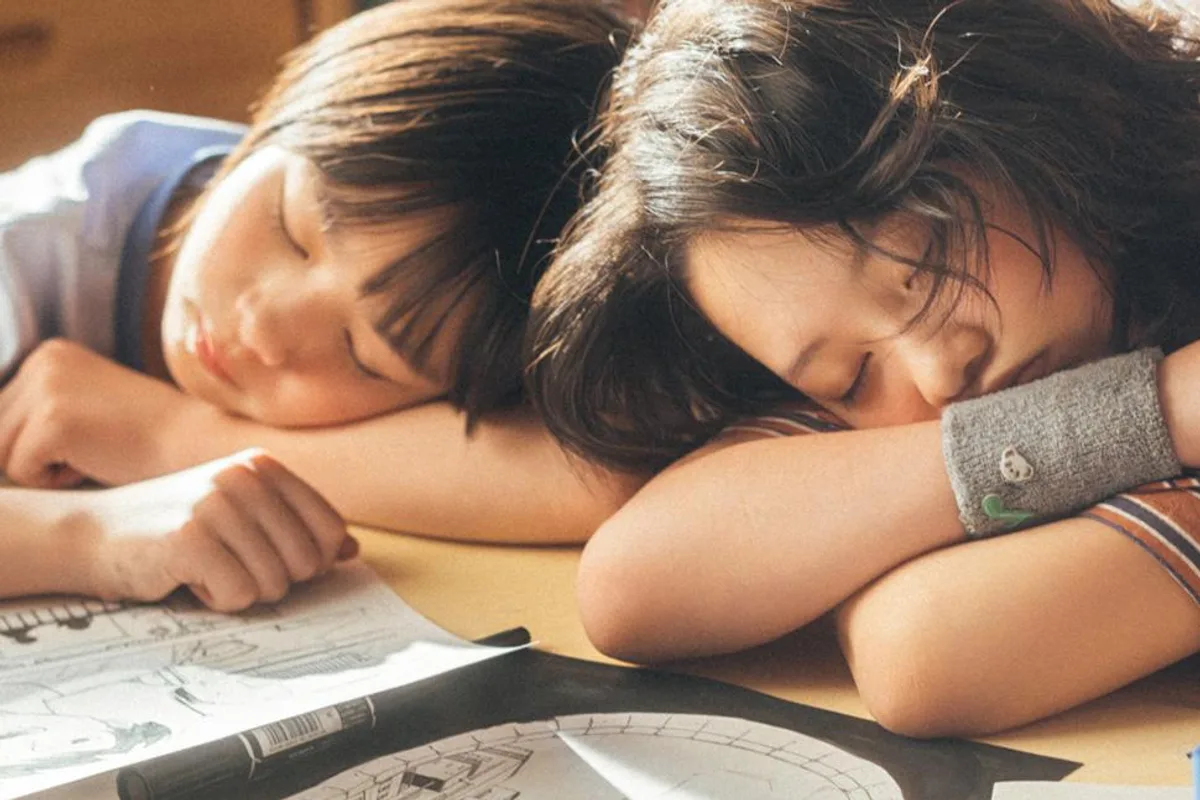
That preparation matters because Kore-eda spends time watching the characters work. Hands remain visible. Bodies slump over desks. Repetition starts to look tiring rather than magically productive.
Fujimoto found Kore-eda before Kore-eda found a movie
The director has described discovering Look Back almost accidentally during the pandemic, after seeing the back-facing figure on its cover at a bookstore in Shinagawa Station. He bought the volume and read it that night.
What stayed with him was the urgency behind Fujimoto's work — the feeling that its creator needed to make this particular story in order to move forward.
That makes Kore-eda an interesting fit. Look Back comes from the author of Chainsaw Man and Fire Punch, but it is built from comparatively modest material: two children, drawing desks, small-town streets, changing seasons and a friendship altered by ambition and loss.
Kore-eda has spent much of his career making enormous emotional consequences emerge from spaces about that size.
This is Fujimoto's first live-action adaptation
Look Back was first published through Shonen Jump+ in 2021 and drew 2.5 million views on its first day. It has since been released across dozens of international markets.
Kiyotaka Oshiyama already turned the manga into an acclaimed animated feature in 2024, meaning the new film arrives after audiences have seen another highly regarded interpretation of the same material.
Kore-eda has avoided treating live action as the supposedly definitive version. His film is shaped around physical performance, seasons, location photography and the texture of work rather than an attempt to reproduce animation shot for shot.
A manga adaptation is competing for the Golden Lion without an asterisk
The cultural shift around the project is almost as interesting as the adaptation itself. Look Back is not appearing at Venice in a side programme devoted to comics or genre cinema. It is one of the films in the main competition for the Golden Lion.
Kore-eda spoke in Venice about how manga once carried a different cultural expectation for his generation — something readers were supposedly meant to leave behind as they grew older. That distinction has weakened dramatically.
Here, a Palme d'Or-winning filmmaker has adapted Tatsuki Fujimoto, brought the result to one of Europe's most prestigious festivals and encountered very little need to defend the source material as something worthy of serious cinema.
The 100-minute film opens in Japan on September 11 and is also heading to Toronto, London and Busan.
Look Back began with two girls trying to get better at drawing. In Venice, that story is competing for a Golden Lion.