Some creative partnerships make sense immediately. Others come with a peculiar sense of history repeating itself. Paul W.S. Anderson's new involvement with Nether Station and Nether Vortex belongs firmly in the second category.
The filmmaker behind Event Horizon is set to direct adaptations of Kevin J. Anderson's cosmic horror novels, books that were themselves partly inspired by his 1997 film. Nearly three decades after exploring a spaceship that had apparently traveled somewhere far worse than ordinary space, Anderson is heading back into the unknown.
Deadline reported the agreement on November 3, 2026. Jonathan Wakeham, whose credits include To Catch a Killer and Midas Man, will write both adaptations. Anderson will also produce alongside Jeremy Bolt, Weird Tales president John Harlacher and the company's film executive Tony Eldridge.
These are development commitments, not announcements that cameras are already rolling. Casting and filming plans remain undisclosed, and neither film has a confirmed release date.
The unlikely legacy of Event Horizon
Event Horizon was not a major theatrical success when it opened in 1997. Its reputation developed gradually, helped by home video and a growing appreciation for its aggressive combination of science fiction, supernatural horror and industrial Gothic imagery.
The premise involved a rescue mission sent to investigate a missing experimental spaceship that had mysteriously returned. The vessel's revolutionary propulsion technology had apparently opened access to another dimension, with catastrophic consequences for its original crew.
The movie's reputation rests partly on the visual identity of that ship. Metallic corridors, towering mechanical structures and cathedral-like interiors created an environment that seemed designed to overwhelm the people trapped inside it.
That marriage of science and the supernatural helped distinguish Event Horizon from more conventional extraterrestrial monster movies. It was less interested in humanity discovering another species than in the possibility of encountering something that existed beyond familiar concepts of reality.
Kevin J. Anderson has openly acknowledged the film's influence on Nether Station. The writer described his fascination with the terror of isolation in space and explained that he drew on his own fears and paranoia while developing the novel.
There is an appealing circularity to the new adaptations. The original film helped inspire a book, and the filmmaker responsible for that film is now preparing to interpret the book for another audience.
That history does not make Nether Station a sequel or a continuation of Event Horizon. The two stories belong to separate fictional universes.
An expedition into the remains of impossible civilizations
At the center of Nether Station is Cammie Skoura, a gifted neurodivergent astrophysicist who joins an expedition to investigate an extraordinary anomaly in the distant solar system.
The anomaly, known as Nether, is a wormhole with potentially enormous scientific implications. Researchers hope it could offer a route toward Alpha Centauri and transform humanity's understanding of interstellar travel.
Instead, the expedition discovers evidence that other civilizations reached the region long before humans did. Ancient structures, enormous ruined complexes and temples suggest the existence of alien societies that disappeared in the remote past.
The mystery is not simply what happened to those civilizations. It is what they encountered and whether their discoveries exposed them to something that remains dangerous.
This is the territory of cosmic horror, a genre associated with H. P. Lovecraft and the idea that human beings occupy an insignificant place in a universe populated by forces beyond their comprehension.
The books combine that tradition with the structure of a science-fiction expedition. The protagonists begin with scientific questions, only to discover that learning more about the universe may be considerably more dangerous than remaining ignorant.
Cammie's perspective is central to the story. Her neurodivergence forms part of the character's identity, and the film announcement emphasizes her intelligence and unusual way of approaching the world. How the adaptation will handle those qualities remains to be seen.
A different kind of challenge for Paul W.S. Anderson
Anderson's reputation has been shaped largely by action-oriented genre filmmaking. He directed four of the six Resident Evil films starring Milla Jovovich, after launching the series in 2002, and his wider filmography includes Mortal Kombat, Alien vs. Predator and Monster Hunter.
Those projects demonstrate his familiarity with elaborate visual environments, dangerous creatures and large-scale action sequences. Yet Nether Station may require a different balance of ingredients.
Cosmic horror depends heavily on withholding information. A massive alien structure can be impressive, but its ability to frighten an audience may depend on how little the characters understand about it.
Event Horizon used confinement and the suggestion of unseen horrors to create tension even before its more explicit nightmare sequences. The Nether novels provide a larger exploratory framework, with mysterious ruins and discoveries spread across distant regions of space.
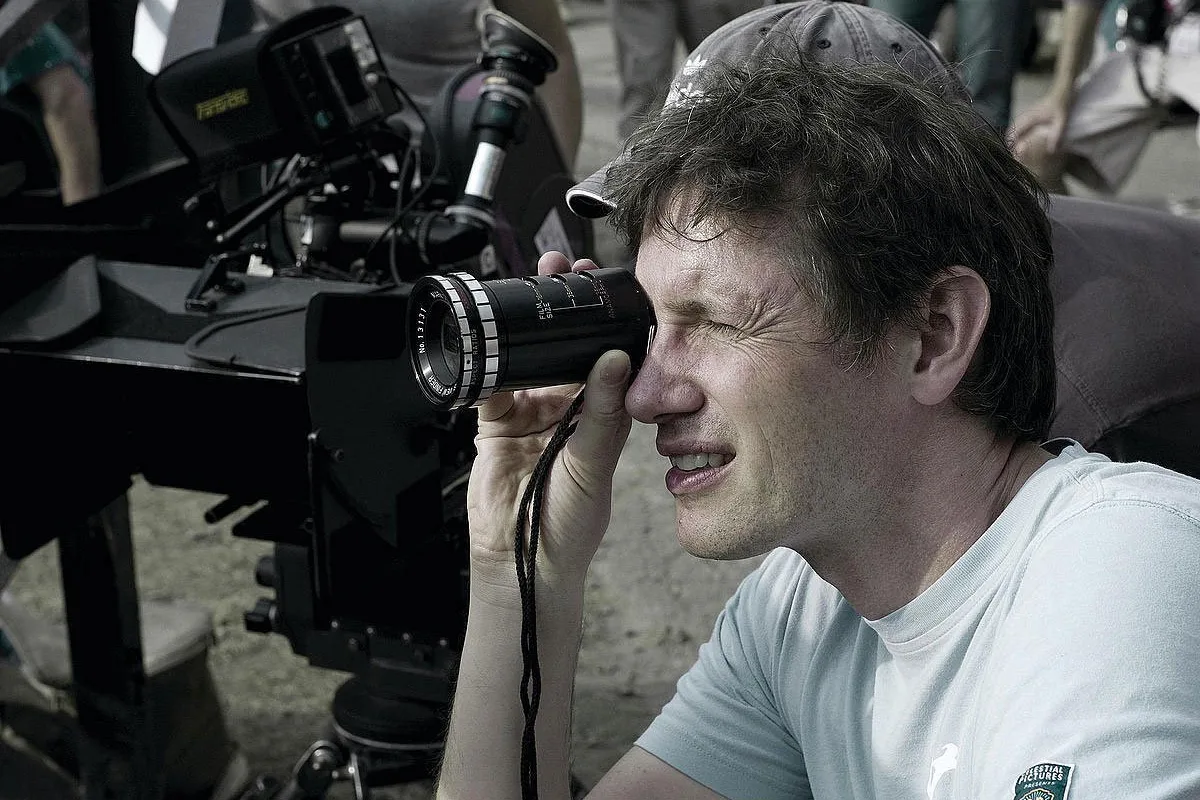
The director has expressed enthusiasm for Kevin J. Anderson's work and for the character of Cammie. He said he had read Nether Station and the advance material for its sequel, while discussing the broader fictional universe with the author.
The return of producer Jeremy Bolt also connects the project to the director's earlier career. Bolt previously worked with Anderson on Event Horizon and other productions, making this a reunion involving more than just the film's central themes.
Nether Vortex expands the story beyond the first expedition
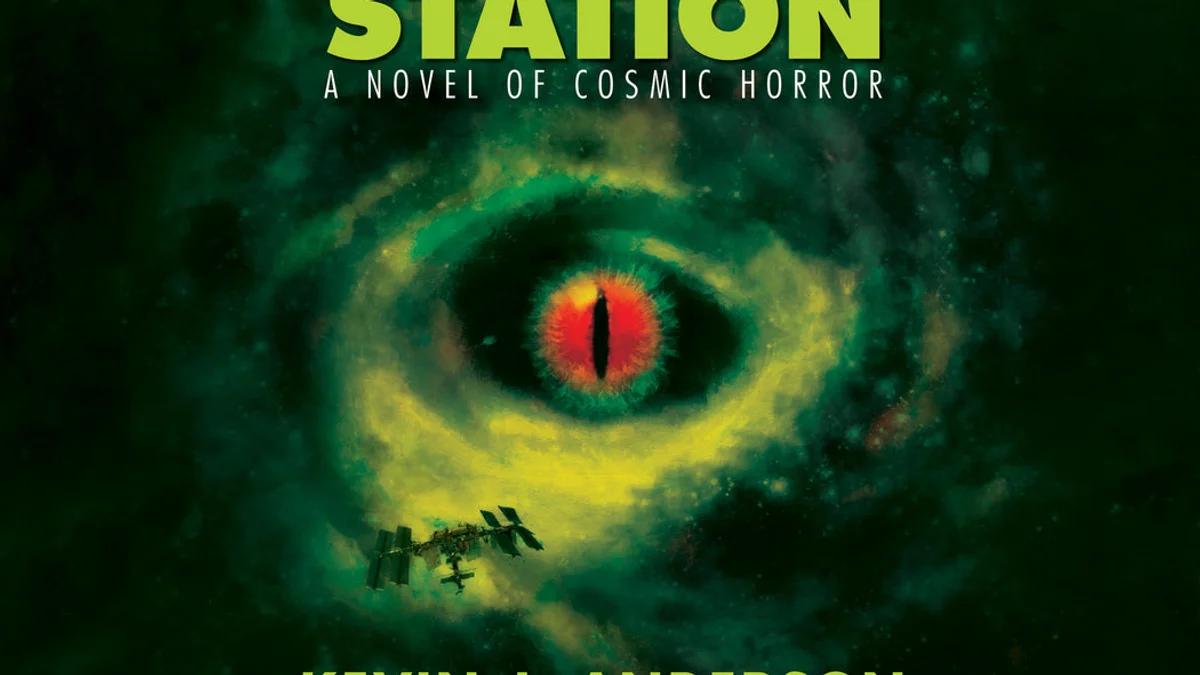
Nether Station was published on October 29, 2024, through Blackstone Publishing's Weird Tales Presents imprint. The novel subsequently earned award recognition, including nominations associated with the Colorado Book Awards and the Dragon Awards.
The second book, Nether Vortex, followed on October 27, 2026, just days before the adaptation announcement.
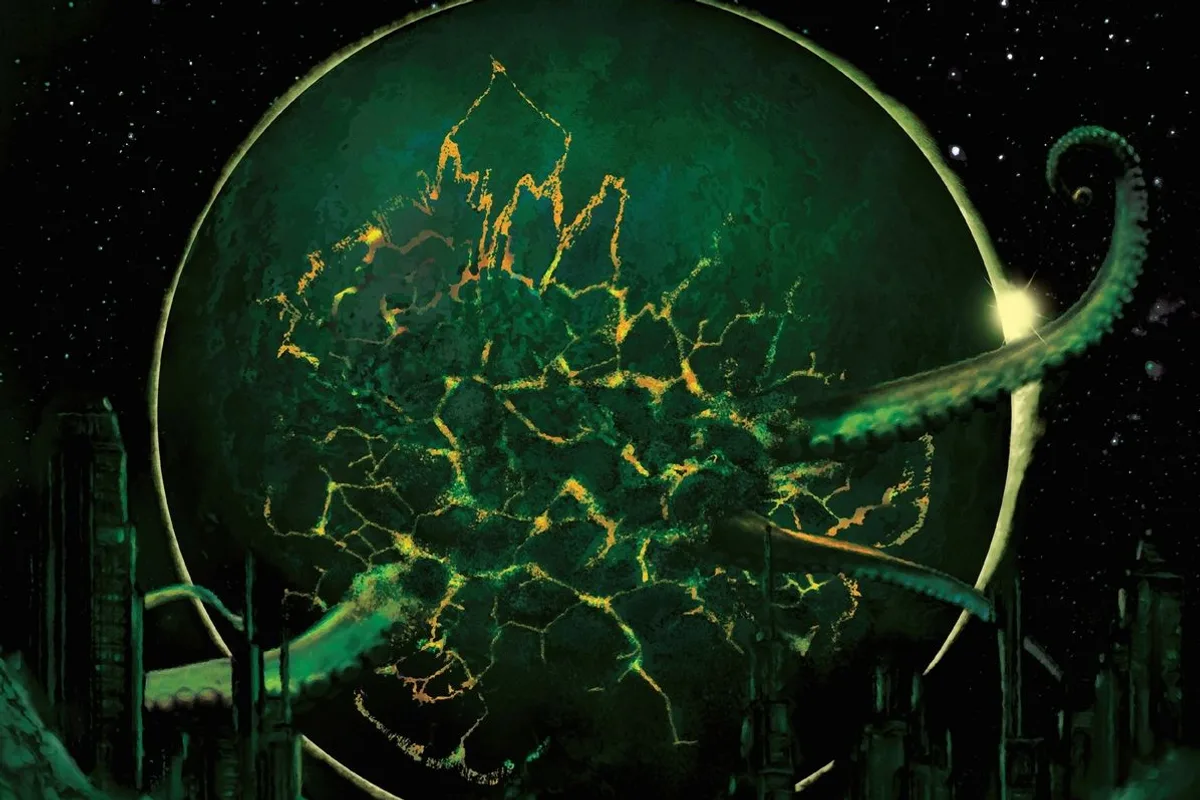
The sequel advances the timeline several years and explores the consequences of the earlier expedition. Its premise involves a missing station crew, a surviving figure returning with a warning and an ancient danger whose influence may extend toward Earth.
That broader scope offers the potential for a connected pair of films with different narrative demands. The first story establishes the mystery, while the second expands the consequences of what was discovered.
However, the announcement does not confirm whether the movies will be produced back-to-back, how closely their structures will follow the books, or whether a distributor has already been secured.
Wakeham has been hired to write both screenplays. The job will involve translating a substantial amount of scientific speculation, literary world-building and cosmic dread into stories that function on screen.
What cosmic horror gains and loses on screen
The central difficulty of adapting Lovecraftian fiction is that its most disturbing ideas are often described as impossible to visualize or understand. Literature can leave those images unresolved. Cinema eventually has to decide what the audience will see.
Anderson knows how to construct environments intended to dominate their inhabitants. Event Horizon's spacecraft was designed around imposing structures that made its crew appear vulnerable and small. That visual relationship between people and architecture could be especially relevant to the enormous alien ruins in Nether Station.
The new films could explore that contrast between scientific discovery and overwhelming supernatural implication. A successful adaptation would not necessarily depend on revealing increasingly enormous monsters. It might instead preserve the feeling that every new answer exposes a more disturbing question.
There is no confirmed information about production design, visual effects methodology or budget. It would be premature to assume that the films will reproduce Event Horizon's style or rely on a particular approach to creature effects.
Anderson's recent career has continued to involve fantasy and action, including In the Lost Lands. Nether Station and Nether Vortex therefore represent a return to a more specific kind of science-fiction horror rather than a wholesale change in his professional interests.
The projects are announced, not scheduled for release
The adaptations currently have a director, screenwriter and producing team. There is no announced cast, and the filmmakers have not confirmed when either production will begin.
No theatrical or streaming distributor has been publicly identified in the initial reporting, and there are no official images from the films themselves. The existing book illustrations provide a visual reference for the source material rather than a preview of the movie adaptations.
Anderson has also been connected with other potential projects, including a new adaptation of the video game The House of the Dead. The relative production schedules of these films have not been established.
The immediate questions are therefore practical ones: when the first film will enter production, who will portray Cammie Skoura, and how the two stories will be organized for the screen.
For now, both Nether Station and Nether Vortex remain in development with no confirmed filming dates or release windows.