
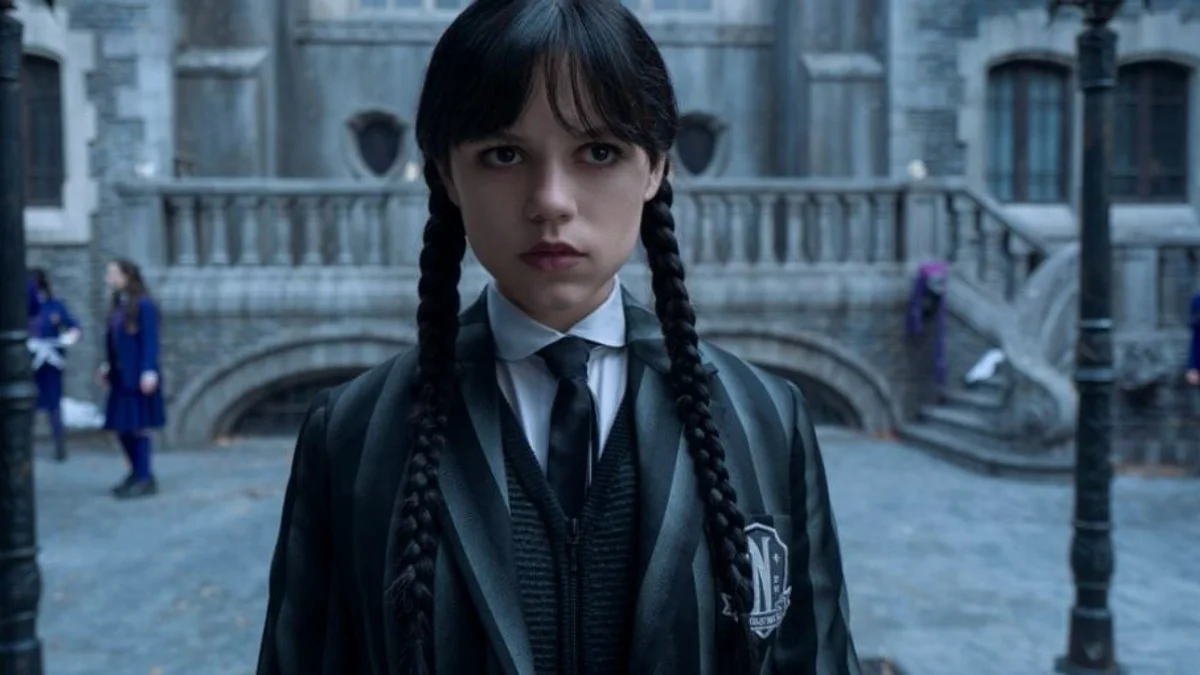
The smartest detail in Wednesday may be how rarely Jenna Ortega blinks.
Her character can remain almost perfectly still while everyone around her performs enthusiasm, panic or embarrassment at full volume. Ortega waits, adjusts her stare and drops a sentence into the conversation like a small coffin.
An extraordinary amount of the series works because of that contrast.
Jenna Ortega understands that Wednesday should not become nice
The obvious adaptation trap was turning Wednesday Addams into a sarcastic teenager who eventually reveals that she is secretly sweet underneath.
The series occasionally approaches that territory, but Ortega preserves something more useful.
Wednesday can care about someone and remain difficult. She can save a friend without suddenly developing an appetite for hugs.
That consistency is essential to the comedy.
Season 1 puts a conventional teen drama around a profoundly unconventional girl
Nevermore Academy is an efficient premise. Surrounding Wednesday with werewolves, sirens, gorgons and psychics creates a school strange enough to accommodate an Addams.
It also introduces familiar machinery.
School rivalries, clubs, dances, mysterious boys and romantic triangles sometimes make the series feel far more conventional than its protagonist.
There is a funny contradiction in watching a character who despises conformity trapped inside recognizable YA television structure.
The murder mystery suits her better than romance
Season 1 improves considerably whenever Wednesday is allowed to investigate.
Jericho's murders, Nevermore's history, the creature attacks and her family's past give her paranoia and fascination with death somewhere productive to go.
The romantic triangle is much less convincing.
There is nothing inherently wrong with Wednesday experiencing attraction. The issue is how mechanically the subplot sometimes behaves, as if another Netflix teen drama has temporarily wandered into her show.
Season 2 wisely reduces that emphasis.
Enid is the character who reveals Wednesday most effectively
Emma Myers' Enid becomes far more important than any romantic interest.
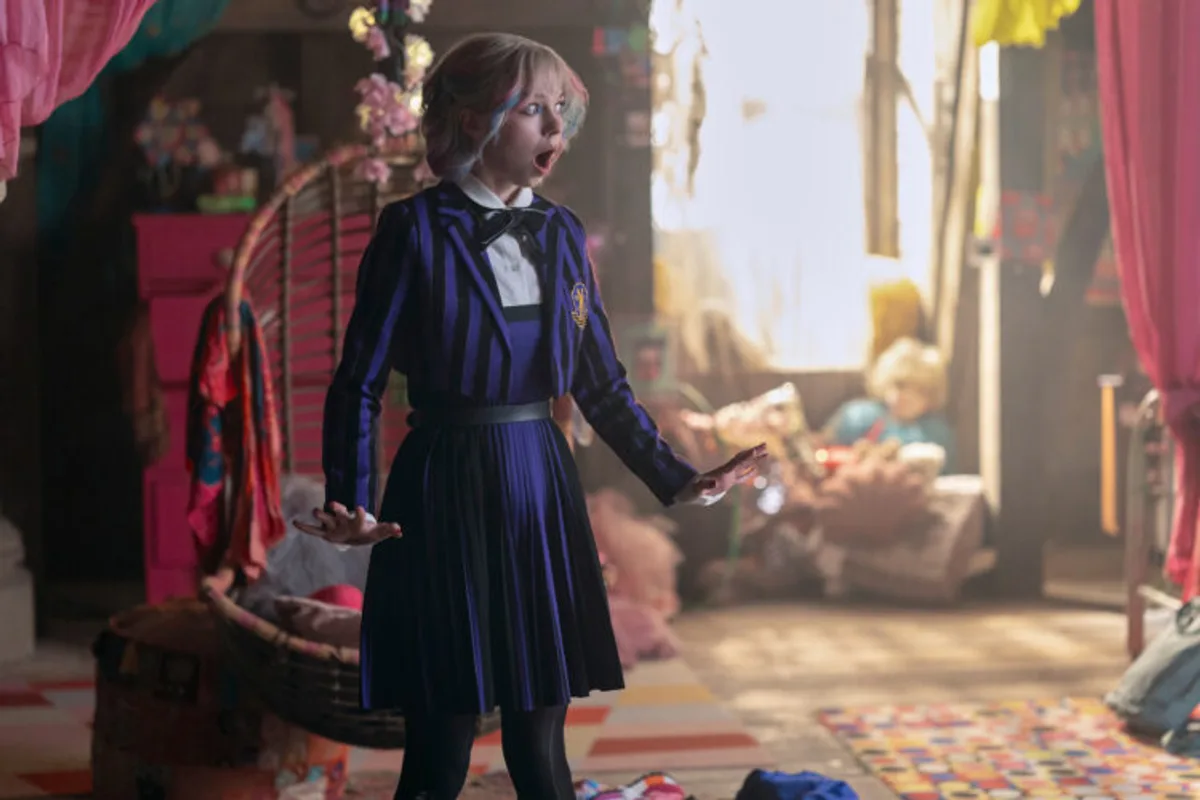
She loves color, talks freely and expresses emotions Wednesday would prefer to dissect rather than acknowledge.
A weaker version of the friendship would gradually make them alike.
Wednesday avoids that.
Enid becomes better at challenging her roommate. Wednesday becomes capable of attachment without becoming Enid.
Season 2 understands the relationship particularly well by placing Enid's fate inside Wednesday's visions and forcing the supposedly detached detective to confront how much that possibility terrifies her.
Season 2 finally knows what to do with the Addams family
Keeping Wednesday away from home was necessary for Season 1 to establish an independent story.
It also removed one of the franchise's strongest ideas: a family considered grotesquely dysfunctional by conventional society that is often remarkably loving on its own terms.
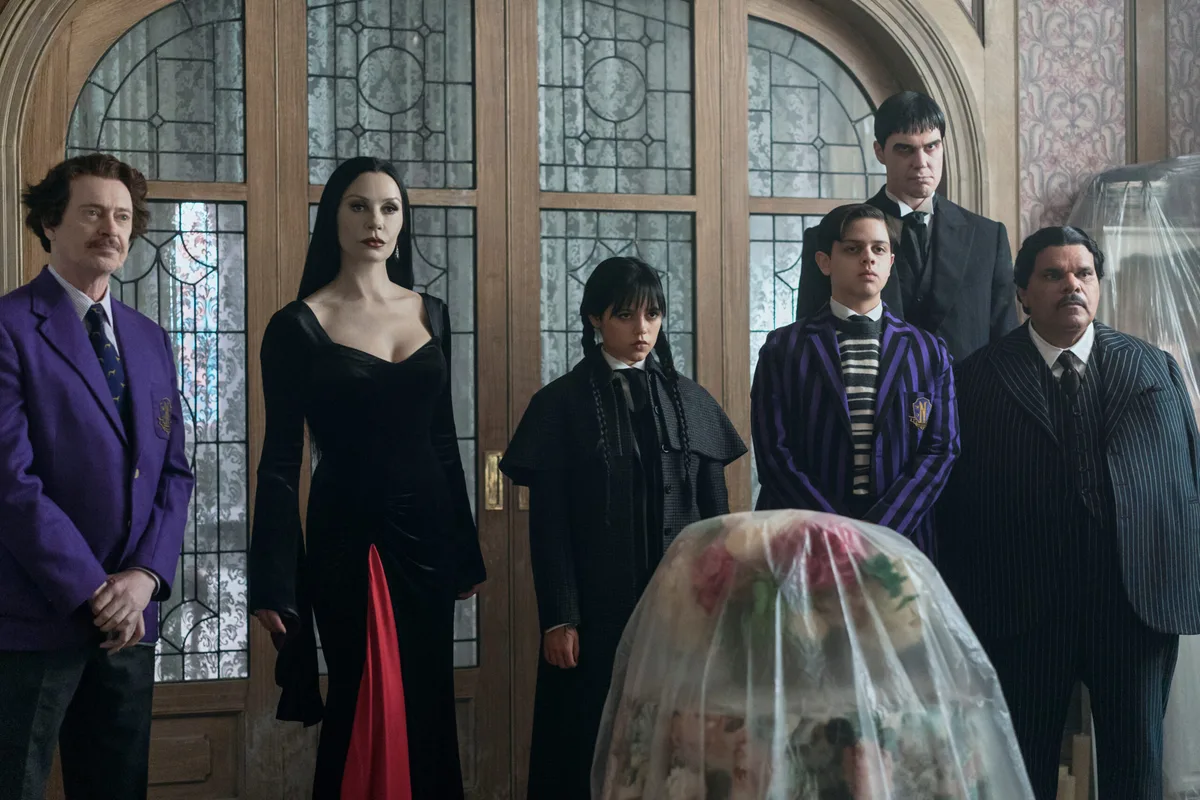
The second season makes the family structurally important.
Pugsley attends Nevermore. Morticia and Gomez become more involved. Grandmama expands the family tensions. Thing remains capable of stealing scenes without possessing a face.
Most importantly, Wednesday behaves differently around them.
She may consider herself an independent predator at school, but Morticia can still make her look exactly like a daughter annoyed by her mother.
The mother-daughter conflict is richer than another supernatural clue
Jenna Ortega and Catherine Zeta-Jones have a productive contradiction to play.
Wednesday insists that she is nothing like Morticia. The series repeatedly demonstrates how much that certainty depends on denial.
Season 2 connects Wednesday's psychic problems more closely to family history, giving their conflict more substance than ordinary teenage rebellion.
Tim Burton gives Nevermore texture rather than merely darkness
The production design matters enormously.
Netflix's own Season 2 production material details an extensive focus on sets, costumes, prosthetics, creatures and tactile props.
Burton's influence works best through shape: pointed architecture, strange machinery, awkward silhouettes and objects that look handmade rather than through a generic dark color grade.
Enid's aggressively colorful spaces provide a particularly effective visual counterargument to Wednesday's black-and-white preferences.
Season 2 is more Addams, more horrific and considerably more crowded
Critical reception improved. Rotten Tomatoes lists Season 2 at 87 percent positive, compared with 74 percent for Season 1.
The reasons are visible.
Romance recedes. The Addams family expands. Horror receives more room. Steve Buscemi joins Nevermore, while the mythology surrounding Wednesday's powers becomes deeper.
The expansion has a cost.
There are now enough students, family members, monsters, mysteries and returning characters competing for attention that some plotlines feel compressed rather than developed.
RogerEbert's coverage became noticeably less enthusiastic about the second half, and several critics similarly identified narrative overcrowding as the season's main weakness.
Not every surprise needs to become a twist
Wednesday naturally thrives on secrets.
The strongest mysteries make earlier scenes richer once the answer becomes clear.
The weaker ones simply withhold enough information to create a late reveal.
Season 2 occasionally crosses that line as its plot keeps adding layers.
Nevermore can still feel suspiciously familiar
The magical-school comparison is unavoidable.
Ancient academy, supernatural student groups, mysterious faculty, secret histories and powers that divide the pupils into recognizable categories all belong to familiar genre grammar.
Variety's defense is persuasive: familiarity does not erase the specificity of the show's atmosphere and visual detail.
Nevermore itself is not revolutionary. Wednesday Addams is unusual enough to prevent it from becoming generic.
The best character development does not repair Wednesday
Across two seasons, Wednesday becomes more aware that other people matter to her.
Crucially, the series does not treat affection as a cure for her personality.
She remains morbid, controlling, arrogant and frequently exhausting.
Growth happens in her actions long before it appears in anything she is willing to say.
That feels exactly right.
Season 3 now has an expansion problem to solve
Netflix has already renewed the series for a third season. In April 2026, the streamer revealed that the next chapter will include a detour to Paris.
None of that future material affects the assessment of the completed first two seasons.
It does identify the show's next challenge.
Wednesday's universe keeps becoming larger. The series now needs the discipline to decide which characters and mysteries deserve the attention rather than simply adding another wonderfully unpleasant thing to Nevermore.