
It actually commits to the noir part
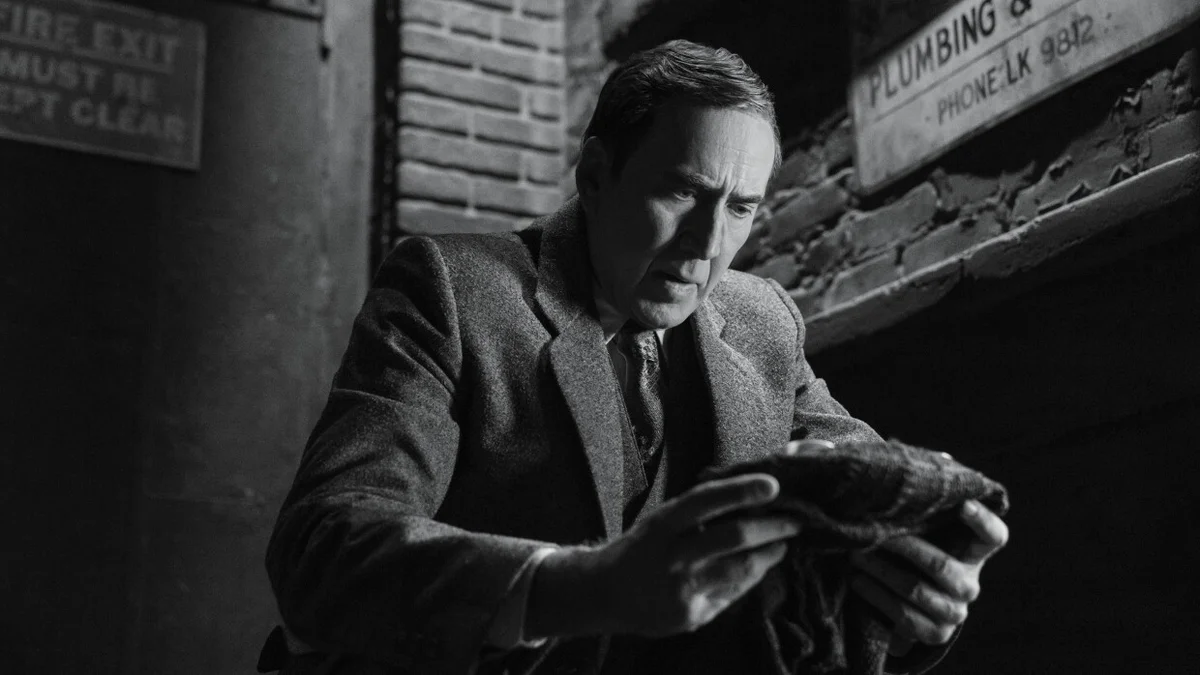
The easiest thing Spider-Noir could have done was borrow the wardrobe of classic noir and then behave like ordinary superhero television. The review corpus repeatedly praises it for going further. Ars Technica highlights the cinematography and production design, The Guardian responds to its confident genre play, and RogerEbert.com finds the series visually striking even while calling the overall result uneven.
Prime Video offers two presentations: True-Hue Color and Authentic Black & White. Both are intentionally finished versions rather than a simple user-side filter, but monochrome gives the show its strongest identity. Hard lighting, smoke, wet pavement and deep interiors become part of the storytelling rather than retro furniture.
The eleven Emmy nominations are revealing here. Cinematography, production design, sound, music, makeup, visual effects and stunt work all appeared among the nominated crafts. Spider-Noir's most convincing argument is often sitting directly on the screen.
Cage is both the solution and the argument
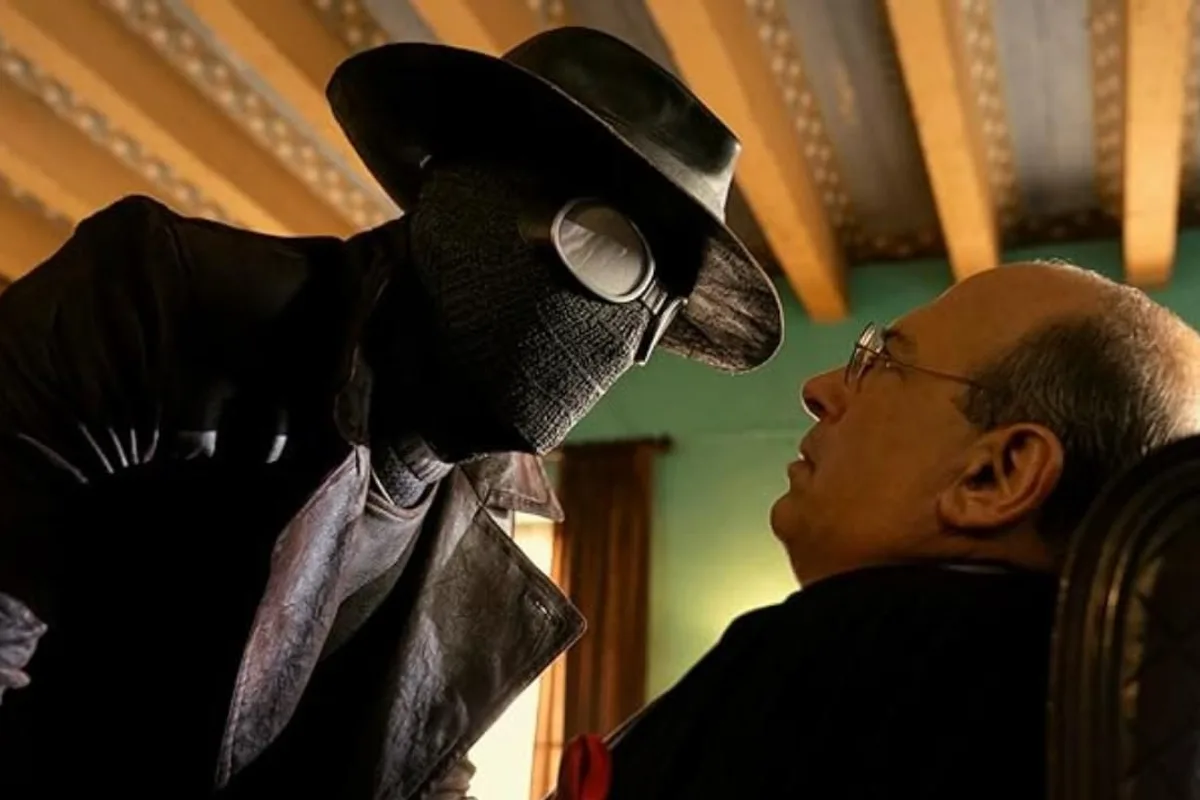
Ben Reilly is an exhausted private investigator who once operated as New York's masked Spider. Nicolas Cage approaches him through old-Hollywood detective rhythms, broad physical comedy, wounded melancholy and sudden bursts of pure Cage eccentricity.
Critics disagree sharply on whether that works. TV Guide, Ars Technica, The Guardian and TheWrap treat Cage as the engine of the show. The A.V. Club sees the same choices as a distracting chain of impressions rather than a coherent performance. Richard Roeper lands somewhere more useful: some swings miss badly, while others demonstrate exactly why Cage remains such a singular screen presence.
The role can contain that instability. Ben is not supposed to glide through this version of New York as an effortless icon. He is damaged, occasionally ridiculous and still physically dangerous. Cage can move between those states before a conventional performance would have finished signaling the transition.
The ensemble gives the experiment some actual human weight
Li Jun Li's Cat Hardy initially arrives wearing the silhouette of a classic femme fatale, then gets enough interior life to complicate the reference. Lamorne Morris gives reporter Robbie Robertson an energy that pulls scenes away from Ben's self-pity. Karen Rodriguez's Janet is another recurring bright spot, sharpening the private-eye-office material whenever the show threatens to enjoy its cigarette-smoke atmosphere too much.
Brendan Gleeson has the presence required for Silvermane. The character written around him is less formidable. Screen Rant and IGN France both identify the villains as one of the weaker parts of the season, and that criticism becomes harder to ignore as the conspiracy expands.
The mystery is competent; the packaging is exceptional
The eight episodes build outward from apparently routine detective work into mob politics, superhuman threats and Ben's buried history as the Spider. Twists arrive frequently enough that the season rarely becomes inert, and Tom's Guide found the plotting particularly effective as binge television.
Not every critic was persuaded. The Hollywood Reporter saw stretches of nondescript storytelling surrounding the more entertaining material. The Playlist was considerably harsher, arguing that the show repeats Sony's habit of mistaking an eccentric corner of Spider-Man mythology for a complete dramatic foundation.
That is the season's real limitation. Its story is functional enough to carry eight episodes, but its images, performances and tonal collisions are much more memorable than the mechanics of the investigation.
Superhero television benefits from being allowed to look this strange
Spider-Noir becomes most enjoyable when detective fiction, comic-book absurdity and horror imagery are allowed to occupy the same scene without anyone apologizing for the combination. Powers do not cause the series to abandon its visual grammar. Action remains framed as part of this grimy artificial 1930s world.
The approach can become self-conscious. There are moments when the dialogue seems delighted simply to sound like hard-boiled dialogue, and the period references occasionally announce themselves too loudly.
Still, polish is not the same thing as personality. Plenty of expensive superhero television has the former. Spider-Noir has the latter.
Eight episodes are all it gets
The season ultimately reached a 92% critical score on Rotten Tomatoes from more than one hundred reviews and received eleven Emmy nominations, the largest total for any Prime Video series in 2026.
Prime Video nevertheless canceled the series in early September. There will be no second season. That leaves Spider-Noir as an unusually self-contained artifact: an extravagant genre experiment with a fairly ordinary mystery at its center, a divisive lead performance, and a visual identity strong enough that almost nobody reviewing it could ignore the way it looked.