
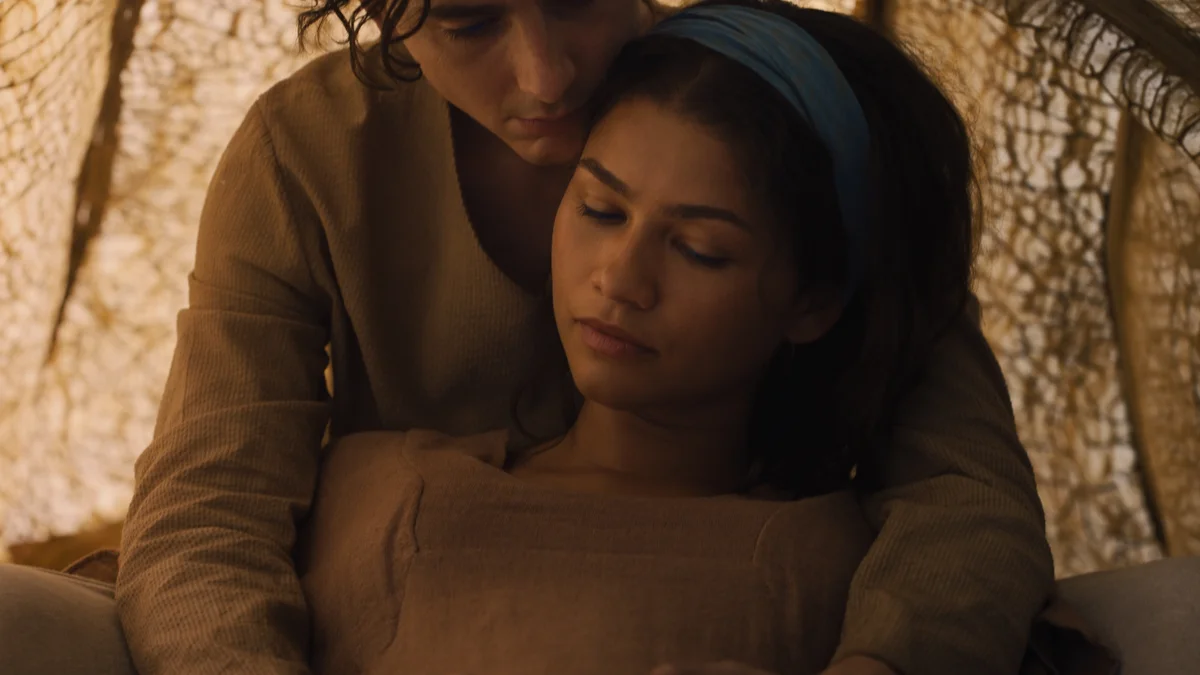
Villeneuve has drawn a clean distinction between the three films. The first was meditative and contemplative, following a young man discovering an unfamiliar world. Part Two became a war movie. Part Three, he says, is faster, more action-driven, more intense and more emotional.
That progression follows Frank Herbert rather neatly. The first two films adapted the rise of Paul Atreides. Dune Messiah begins with the dangerous part already accomplished.
Seventeen years changes the dramatic question
Dune: Part Three jumps forward 17 years. Paul is Emperor, his prescient abilities make him extraordinarily difficult to challenge directly, and the violence unleashed through his ascent has spread far beyond Arrakis.
Part Two could measure progress geographically. Paul crossed the desert, joined the Fremen, attacked the Harkonnens and finally confronted the Emperor. The new movie cannot build around the same line because Paul already occupies the throne.
Villeneuve instead describes him as a ruler dealing with the consequences of too much power and trying to escape the cycle of violence around him. Other people are trying to overthrow him.
That is thriller machinery. Power stops being the destination and becomes the room everyone is trapped inside.
A conspiracy is harder to kill than an army
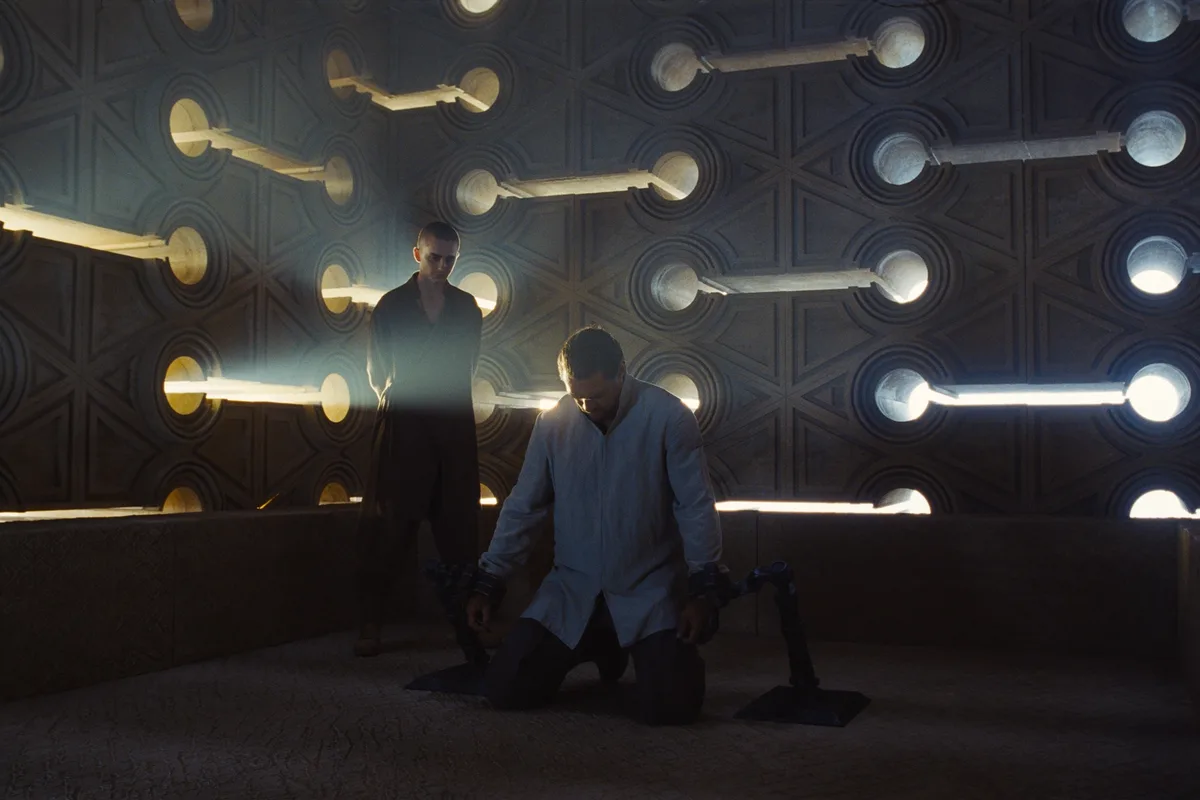
The material released so far makes the change fairly visible. Robert Pattinson's Scytale is tied to a plan for regime change. Jason Momoa returns as Hayt, brought close to Paul through a peace proposal that immediately carries the possibility of a trap.
Paul's ability to see possible futures does not remove the tension. It complicates it. His opponents know what kind of ruler they are trying to destroy, and the story can build suspense around the limits and burdens of foresight rather than pretending Paul has suddenly become easy to surprise.
None of this means Villeneuve has abandoned spectacle. The seven-minute opening shown at CinemaCon begins on another world with Fremen forces entering a battle that quickly turns catastrophic. The difference is what comes after the battlefield.
Paul and Chani are still the movie's heartbeat
Villeneuve keeps returning to that phrase when describing the third film. However large the political structure becomes, Paul and Chani remain its emotional center.
Seventeen years have transformed the relationship from the point where Part Two left it. They now carry shared history, family and the accumulated pressure of Paul's position. Villeneuve says studying how their love changes under that weight is one reason the film feels unusually personal to him.
He has called Dune Messiah his favorite book in Herbert's series, describing it as dark and beautiful. He has also called Part Three one of his most personal films, if not the most personal.
That is a slightly unexpected description for a production filled with armies, imperial politics and enormous-format cameras. His explanation is much smaller: two people trying to hold on to a relationship while the world built around them makes that increasingly difficult.
The hero story has been turned around
Timothée Chalamet has pointed to Herbert's famous discomfort with readers treating Paul as a conventional heroic figure. Messiah pushed harder against that interpretation by examining what happens when charismatic leadership becomes something millions of people organize their lives around.
Villeneuve had already begun that correction before the third film. Part Two ends with victory and immediately makes the victory uncomfortable. Chani leaves. Paul launches the next stage of the war. The political triumph and the emotional cost occur almost in the same breath.
Part Three no longer needs to ask whether Paul can become powerful enough. It can ask what remains of him after he did.
Villeneuve does not want three versions of the same Dune
The director has repeatedly said he did not want to walk in his own footsteps. That approach is becoming the organizing principle of the trilogy rather than a slogan.
Dune discovered a world. Part Two conquered it. Part Three begins with a man powerful enough to see the future trying to find a way out of the future he helped create.
Dune: Part Three opens in French theaters on December 16, 2026.