
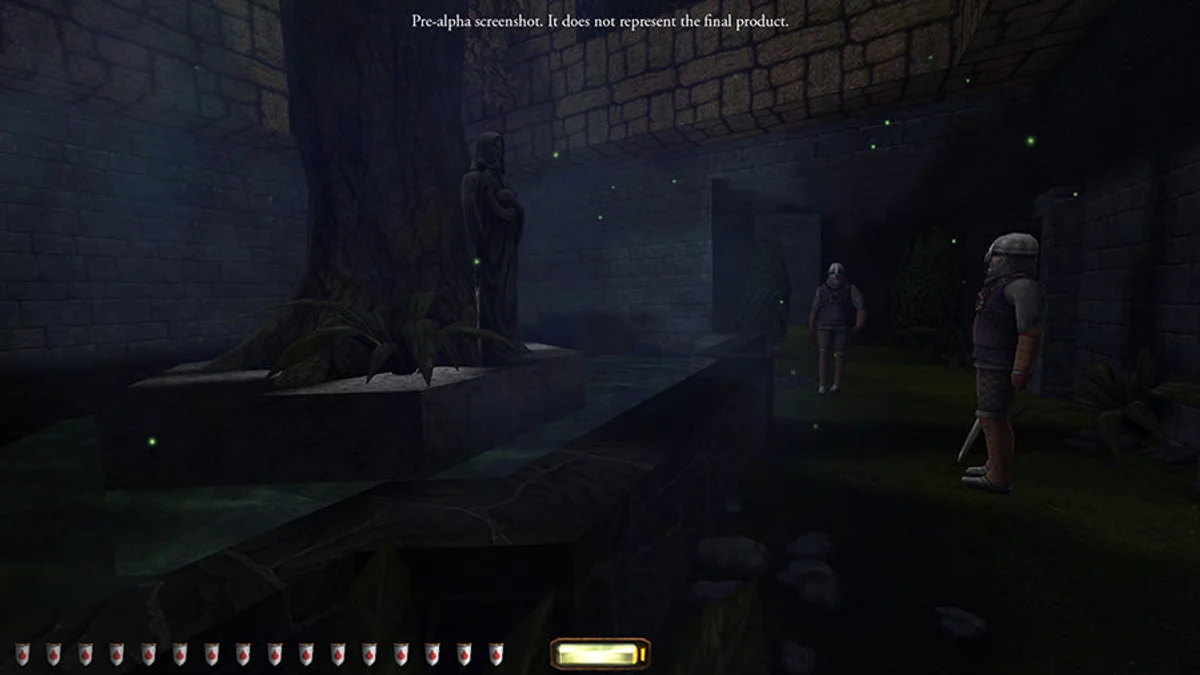
Nightdive showed an extended section of Thief: The Dark Project Remastered during the PC Gaming Show Tokyo Direct, three months after first announcing the project.
It would be easy to reduce the update to a classic game now capable of running at up to 4K and 120 fps.
That would miss the more interesting reason this particular restoration matters.
The protagonist was not designed to dominate a room
By 1998, first-person games had spent years teaching players that entering a new room primarily meant finding and eliminating whatever threatened them.
Garrett reverses that relationship.
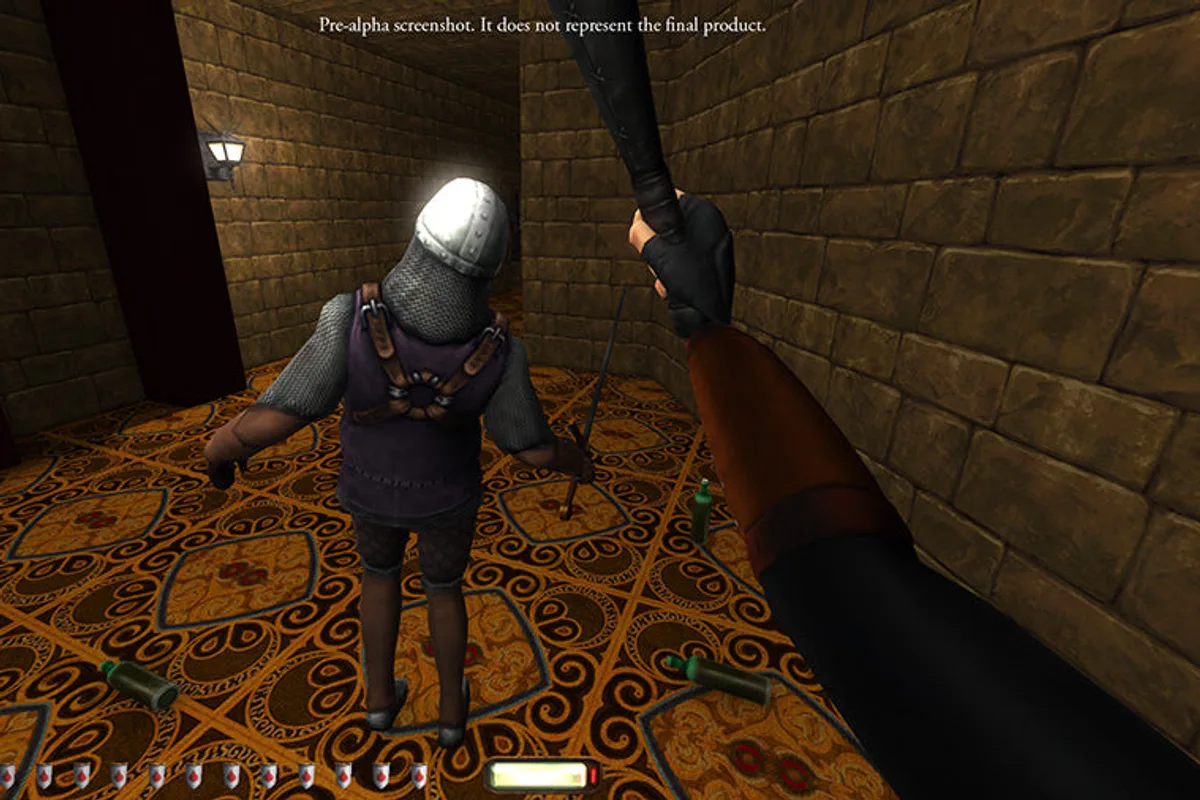
He can fight, but the sword is never the comfortable answer. One alerted guard is a problem. Several are a disaster. The blackjack works best when the victim never knows a thief is present.
That vulnerability changes environmental perception. A column becomes cover, a carpet becomes quiet ground and a torch becomes an obstacle.
Sound becomes an invisible geography
One of Thief's defining ideas is something resolution cannot modernize: space is not understood only through sight.
Guards talk during patrols. Footsteps reveal movement behind doors. Floor materials determine how much noise Garrett produces.
Players therefore build part of the level in their minds from sounds belonging to spaces they cannot yet see.
It is a different conception of stealth from simply reading vision cones on a minimap.
Light is more than gothic atmosphere
Thief's City combines medieval architecture, industry, strange machinery and religion. Darkness obviously supports that aesthetic.
It is also a rule.
The Light Gem communicates roughly how visible Garrett is, giving illumination a measurable mechanical consequence.
A dark corner is therefore not merely visually appropriate. It changes what the player is allowed to do.
Versions of that idea would spread through stealth games for decades afterward.
Nightdive has to preserve a sensation, not merely a level list
That is why a technically faithful remaster could still get Thief wrong.
Make spaces too bright, animations too clean or characters too easy to read and some of the tension quietly disappears.
Reproduce every 1998 character model exactly, on the other hand, and new players without nostalgia inherit limitations that no longer serve the design.
The Tokyo footage suggests Nightdive is aiming between those extremes. Faces and environments gain definition while the City remains dirty, dark and deliberately difficult to parse at a glance.
The remaster also preserves an unusual community history
Built-in custom campaign support on PC has particular cultural importance here.
Thief's community did not merely replace textures and produce a handful of maps. Fan missions and full campaigns have extended the game's design language for almost three decades.
Nightdive could have restored the original as a closed historical object. Custom campaign support instead acknowledges that part of Thief's history was written after Looking Glass by the people playing it.
The Tarnished Mirror now adds another official layer
The remaster will also contain a new campaign called The Tarnished Mirror.
Nightdive is still withholding most details and plans a larger reveal for November 2.
The symbolism is difficult to miss: a series whose long survival depended heavily on its community is receiving new official material again.
Thief: The Dark Project Remastered remains scheduled for Winter 2026, with no exact release date.
Nearly thirty years later, Thief does not need anyone to invent historical importance for it. Just look at how many modern games now consider it completely normal for a guard to hear your footsteps.