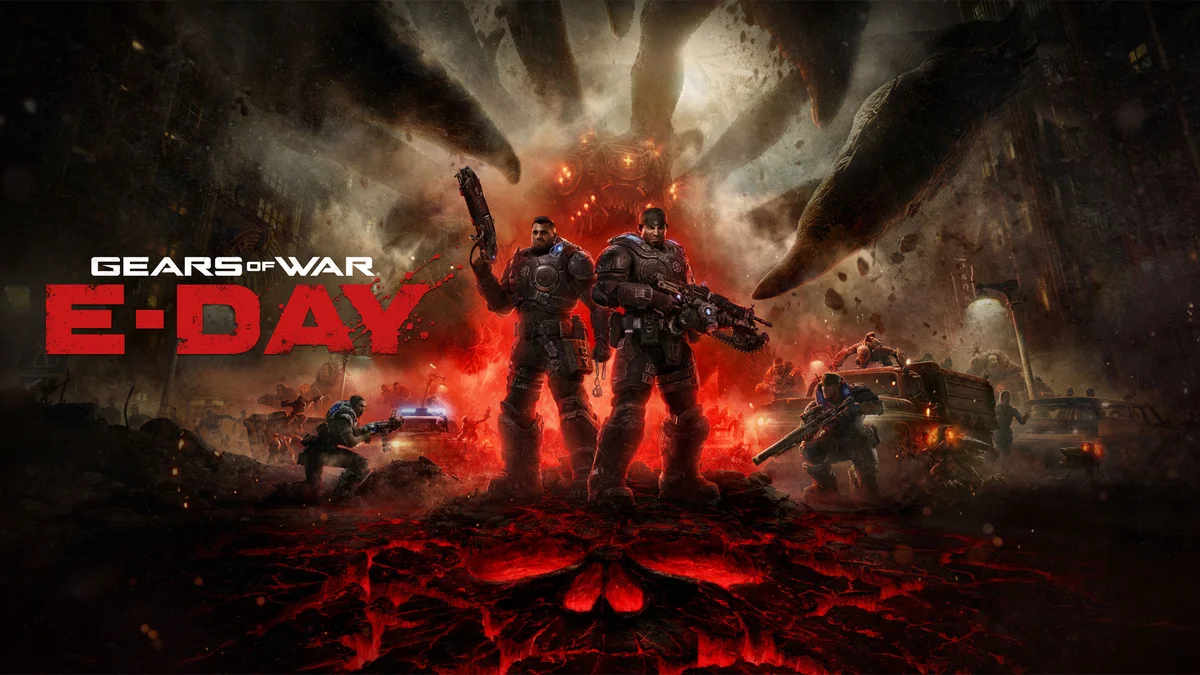
In Gears of War, the end of the world has often been part of the scenery. Cities were already destroyed, armies had already suffered devastating losses, and soldiers knew how to fight creatures emerging from below. E-Day explores the period before that familiarity: the first shock, the confusion and the decisions made when nobody understands what is happening.
Released on October 6 for Xbox Series X|S and PC, Gears of War: E-Day takes place fourteen years before the original game. Returning to the past is a familiar strategy for long-running franchises. When a continuing narrative becomes difficult to extend, its creators revisit the beginning. Here, however, the ambition is more specific. The Coalition is not merely presenting a legendary invasion. It wants that legend to become frightening again.
Making the Locust Terrifying Again
Across multiple games, the Locust have become recognizable enemies. Players know their shapes, weapons and combat behavior. The characters of E-Day have none of that knowledge. When a creature emerges from the ground, it does not fit into a familiar tactical category. It is something incomprehensible and deeply threatening.
The campaign focuses on the opening days of the invasion in Kalona. Civilians struggle to understand the disaster while military forces attempt to organize a response. This perspective brings the story closer to disaster movies and war cinema than to a conventional conflict between established armies.
A Brotherhood Built on Grief
The relationship between Marcus Fenix and Dominic Santiago is one of the franchise's enduring emotional foundations. E-Day explores a time before that bond reached its familiar form. Both men are veterans of the Pendulum Wars, but the arrival of peace has not resolved their personal losses.
Their shared grief over Carlos Santiago, Dom's older brother and Marcus's friend, provides an important dramatic starting point. His story was previously explored in the broader Gears of War universe and now helps anchor the prequel. The Coalition also worked with Karen Traviss, author of Gears of War novels, to connect the new campaign with established narrative material.
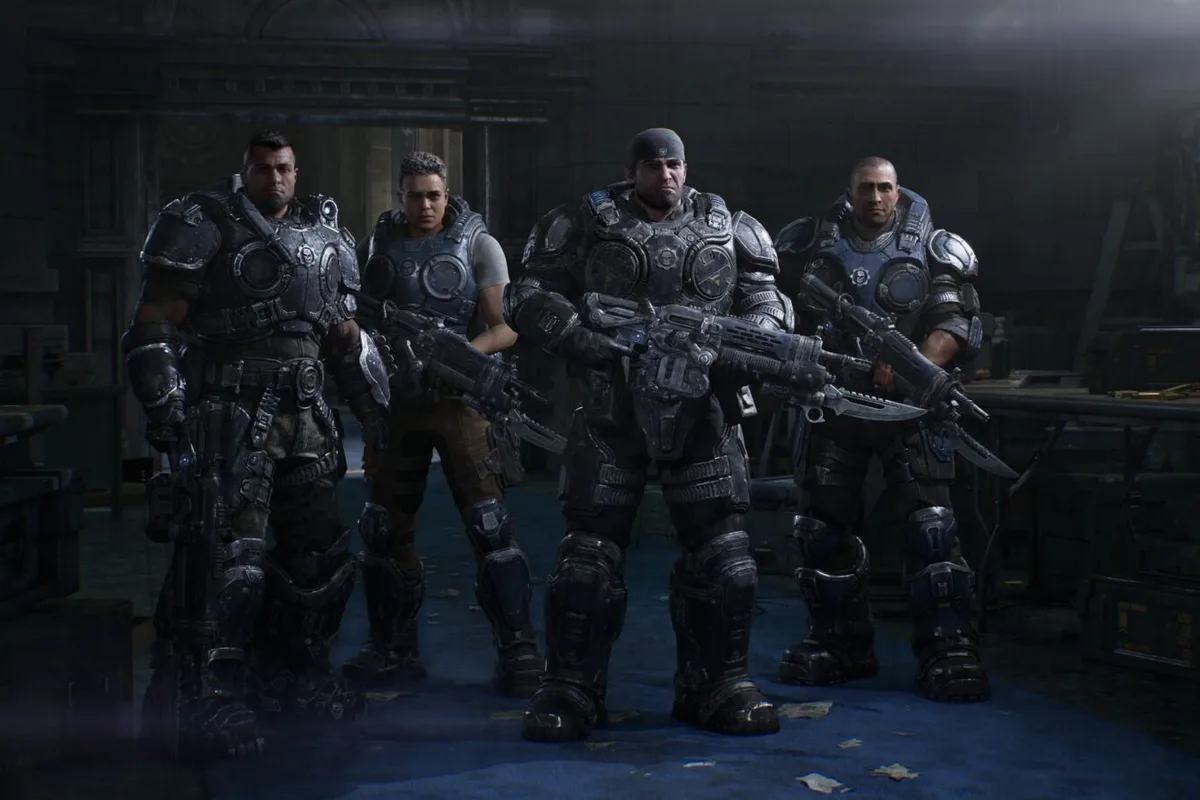
Two newcomers, Mags Carter and Lucas Reyes, complete Bravo Squad. Rather than replacing the original heroes, they offer different experiences of the same catastrophe. The campaign remains closely attached to this group instead of constantly switching viewpoints to explain the invasion on a global scale.
Kalona Becomes a Character of Its Own
Kalona is almost as important as the people moving through it. The Coalition has explained that its fictional city draws inspiration from Vancouver's urban environment. Residential areas, industrial facilities and major infrastructure form a location designed to feel geographically connected.
Earlier entries used ruined environments to show the consequences of destruction. E-Day depicts places that are still inhabited when disaster strikes. A familiar street becomes a battlefield, and an entire city changes while its inhabitants struggle to survive.
That visual continuity is supported by a complete rebuild using Unreal Engine 5. According to The Coalition, the environments and animations were recreated for this production. The technology serves a storytelling purpose: making destruction more immediate, progressive and tangible.
The Spectacle Remains, but Its Meaning Shifts
The familiar Gears formula remains intact, including cover-based shooting, heavy weapons, close-range combat and cooperative play. The campaign supports up to four players online and two-player split-screen on console. Horde Siege and competitive Versus modes also preserve the series' multiplayer identity.
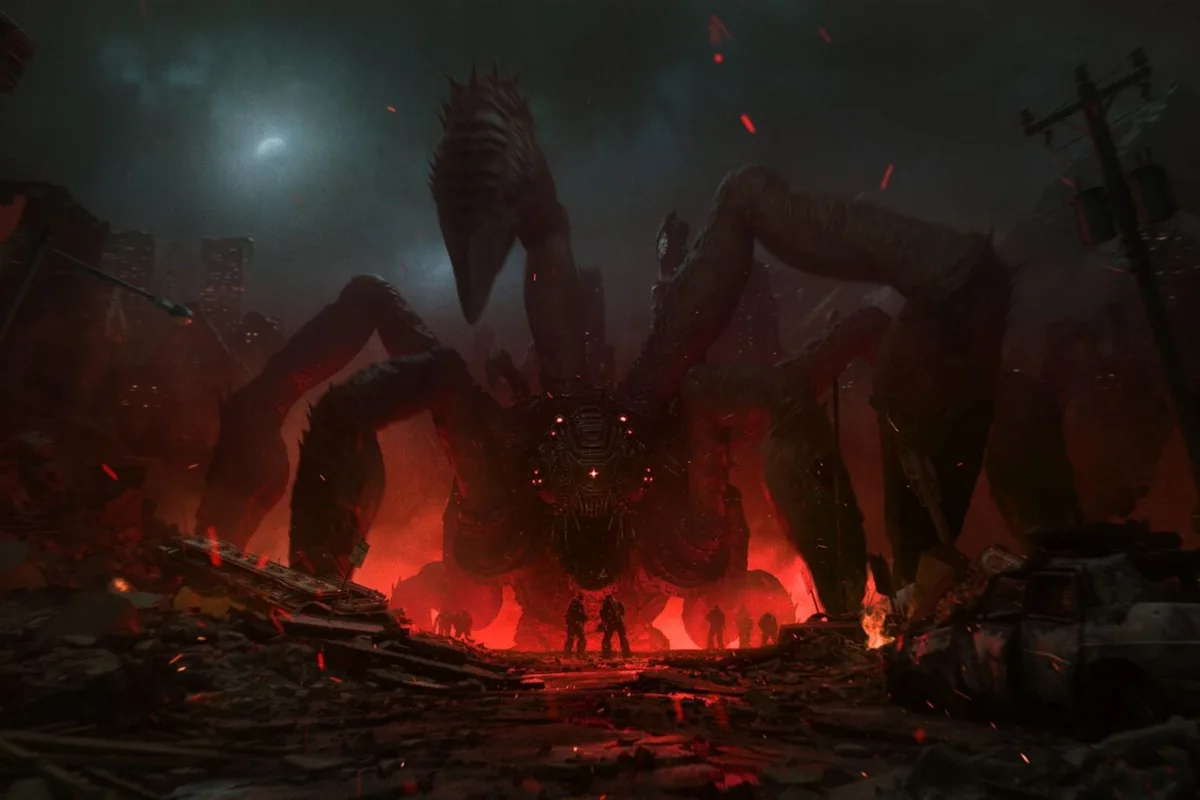
The campaign's dramatic foundation is nevertheless different. Its characters are not fighting a war whose rules they already understand. They are discovering a new enemy while their world collapses around them. The spectacular violence of Gears therefore carries a more immediate tragic weight.
E-Day raises an interesting question for major video game franchises. Can returning to the origins genuinely renew a fictional universe, or does it merely provide another opportunity to revisit popular characters? The Coalition is betting on the former, treating Marcus and Dom's history as more than a nostalgic selling point.
The prequel does not erase later installments or resolve the future of the main timeline. Instead, it revisits what made Gears of War compelling in the first place. Beneath the armor and behind the chainsaws, this has always been a series about people trying to remain together while everything around them falls apart.