
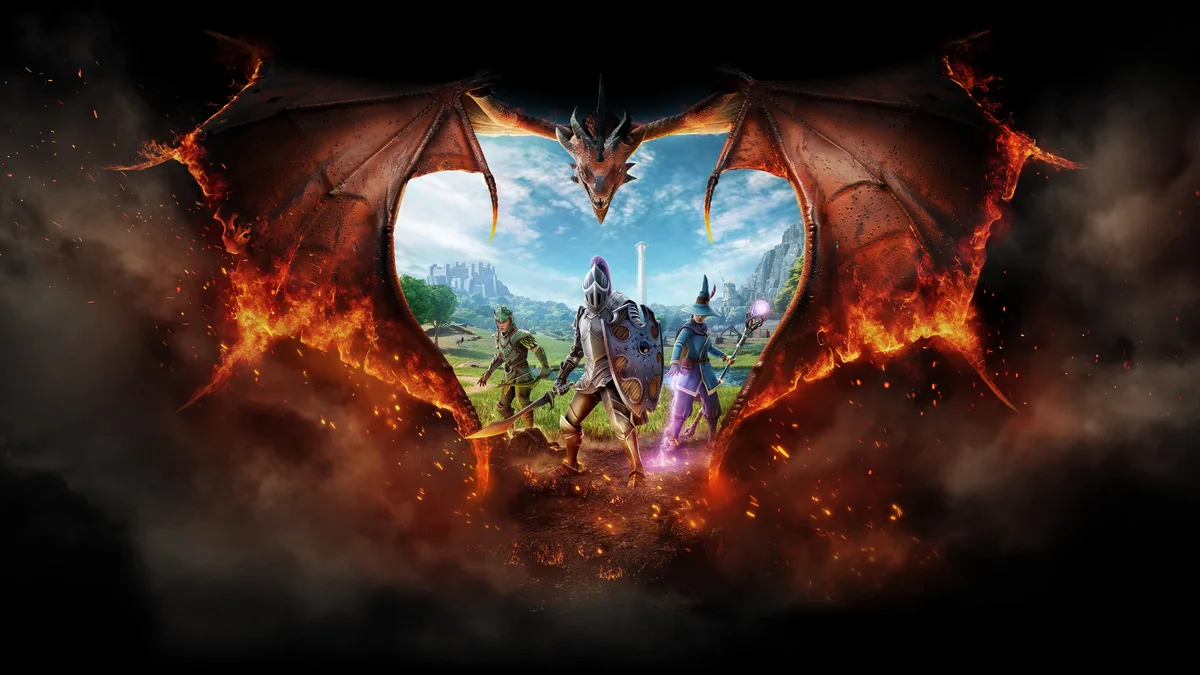
Ashenfall is more than a RuneScape reference park
Dragonwilds could have survived on familiar monsters, names and jokes pasted onto a fashionable survival framework. Ashenfall is more interesting when it moves away from that temptation. Its regions, ruins and conflicts have their own identity, while references to Gielinor remain frequent enough to reward veteran recognition without demanding encyclopaedic knowledge.
Jagex deliberately positions the game as an easier entry point into RuneScape's universe. The narrative follows that principle. A newcomer only needs to understand that an expedition failed, dragons dominate this forgotten continent and Kuldra sits above them. Twenty-five years of lore become additional texture instead of homework.
Pocket Tactics particularly responds to the eccentric characters, British humour and musical continuity. Reorchestrated RuneScape themes sit alongside new compositions, making the connection to the older games audible even when the landscape looks completely different.
The regions carry more story than the central plot
The main quest is straightforward by design. It introduces threats, pushes the player through Ashenfall and eventually points toward Kuldra. Several reviews treat it as secondary to exploration, while COGconnected describes the story itself as thin. Dragonwilds rarely finds its strongest writing in exposition.
Its regions do more work. Poisonous swamps, death-scarred landscapes, Umbral Sands and occupied fortresses establish histories through geography before quests explain them. Lore books, side characters and local objectives then fill in the gaps. Off the Shelf Media similarly finds the central plot solid rather than exceptional while responding more strongly to the world-building around it.
That structure suits survival play. A trip for ore, a recipe or a new building location can become the memorable event of an evening. Pocket Tactics goes further, arguing that these self-generated adventures are effectively the game's real story. Players looking for heavily staged drama may therefore find Kuldra surprisingly remote for long stretches.
Progression becomes characterisation
RuneScape has always allowed identity to emerge through skills instead of locking it inside a predefined biography. Dragonwilds retains that idea. Woodcutting, ranged combat, construction or magic become visible histories of what a character has actually spent time doing.
Co-op strengthens that model because a group can naturally divide labour without formal classes. One player may build while another gathers or specialises in a combat style. Solo play exposes the opposite side of the design: one person must perform every supporting job, which Gfinity identifies as a major source of 1.0 friction.
Kuldra ends a saga, not Ashenfall
Version 1.0 finally closes the story that Early Access had been building. Scorned Wilderness leads into the raid against Kuldra and gives the launch saga an actual ending. Jagex has been explicit that this conclusion is a milestone rather than a final chapter for the world.
That distinction feels entirely appropriate for RuneScape. Kuldra can be defeated while Ashenfall remains isolated, ancient magic still obstructs its future and additional sagas, regions and quests are already part of the longer plan.
Dragonwilds is not a character-driven narrative RPG in disguise. Its central story is functional rather than extraordinary. The stronger achievement is a setting with enough history, humour and musical identity to make gathering resources feel like travelling through somewhere specific rather than clearing another procedurally assembled survival map.