
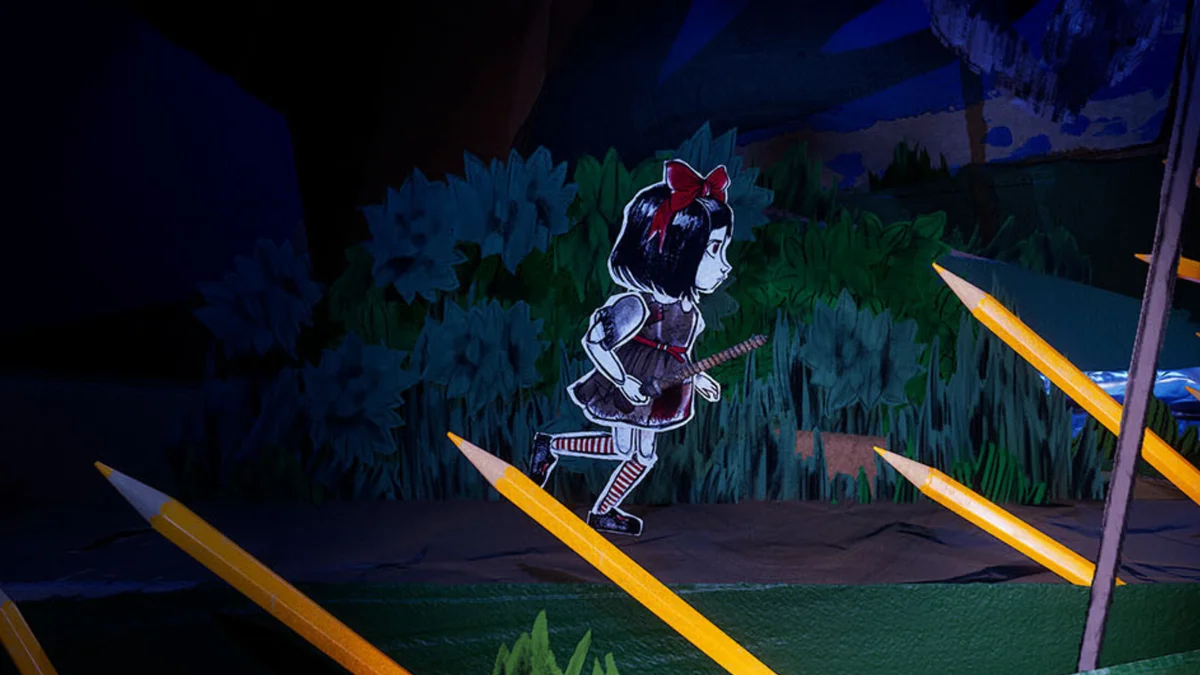
Italian indie studio 906 Games revealed Cutout at Gamescom on August 26, with Big Blue Sky Games publishing.
The immediate hook is mechanical. Lena can sever enemy arms and legs, then graft them onto her own body.
What makes the project more unusual is how closely that system aligns with the production's wider aesthetic.
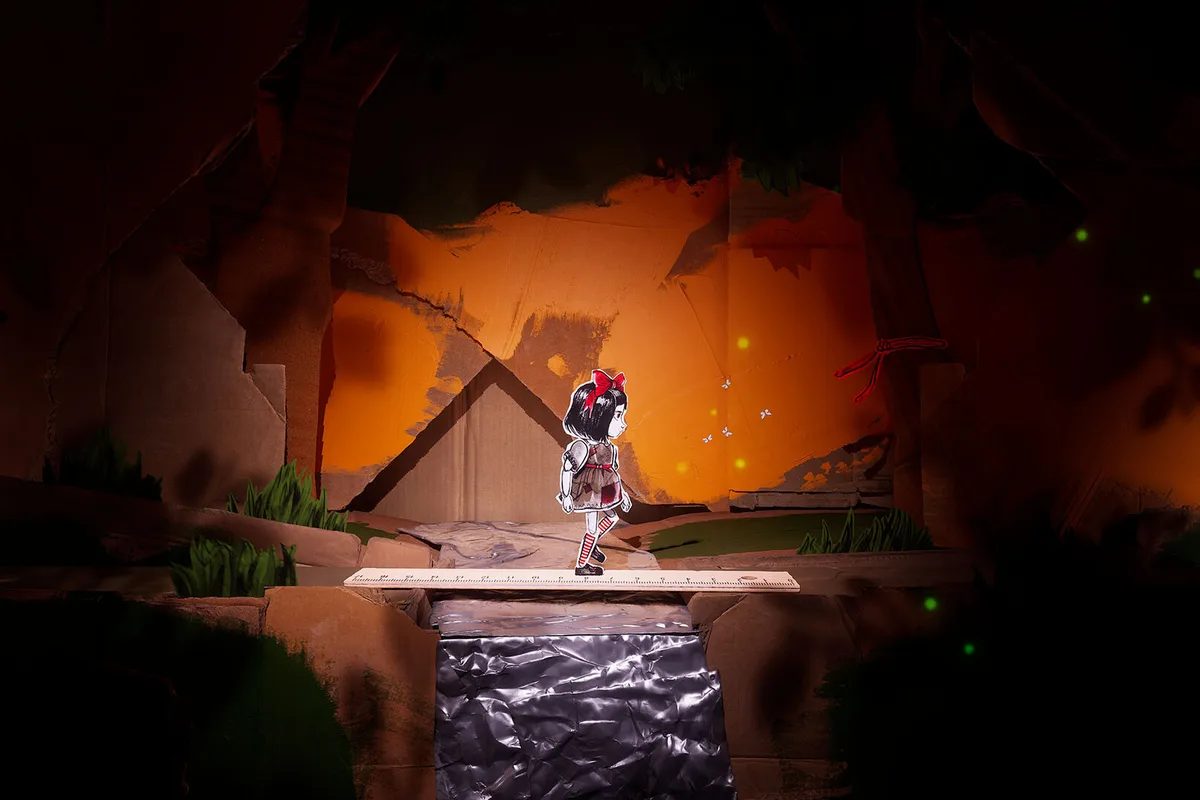
The world is supposed to look assembled on a workbench
Characters are cut from paper. Paths and structures resemble pieces of cardboard, foil, pencil, glue and ordinary craft materials.
906 Games describes the environments as handcrafted dioramas assembled from the sort of objects somebody might discover in an attic or junk drawer.
Paper is therefore not just a rendering style. It provides the world's physical language: things tear, burn, separate and can be reconstructed.
Its art director came to games through fashion
Cutout's visual direction is led by 906 Games co-founder Giulio Perez.
Before moving into games, Perez spent more than a decade working in fashion, including work associated with brands such as Versace and Gucci.
That background feels particularly appropriate for a game where changing a character's appearance can literally mean replacing part of her anatomy.
Costume and character build collapse into the same system.
The soundtrack deliberately embraces imperfect technique
Co-founder and composer Sergio Missaglia is approaching the music with a similar philosophy.
Although classically trained, Missaglia says he has recorded compositions using instruments he had never played before, including broken instruments found in secondhand stores.
The objective is to capture something rawer and closer to outsider music rather than filtering every sound through established technique.
Whether that works across an entire game will only become clear at release, but the process matches Cutout's intentionally imperfect material world.
906 Games is explicitly calling the project generative-AI free
The studio added a notable production statement to its announcement.
906 Games says every asset was made by people and that generative AI was not used for the game's art, animation, music or writing.
That statement carries unusual relevance here because physical craft is already the central marketing language. Cutout is not merely reproducing the visual appearance of collage; the studio is also drawing attention to the human production process behind it.
Even dismemberment behaves like craft
Cut & Paste Combat lets Lena attach severed enemy limbs to herself. Arms can provide attacks, while legs can introduce movement abilities.
Enemies can reverse the exchange by tearing away one of Lena's parts and using it themselves.
Her body is therefore another handmade object inside the world: temporary, modifiable and never entirely secure.
The paper construction also changes how the violence reads. Steam states that enemies break apart like paper rather than displaying blood, gore or realistic injury.
The fairy tale underneath the craft is considerably darker
Lena is the final child born from a dying forest.
A tyrannical king previously stole the forest's heart to create a sceptre granting power over the land and its people. After the king's death, Lena joins the race to recover it.
Her motivation is personal as well as political. She wants the acceptance the nearby village has denied her, while the forest that created her remains in pain.
906 Games says choices throughout the story will help determine which path she follows and who she ultimately becomes.
The finished diorama is planned for 2027
Cutout is currently listed for a 2027 PC release through Steam and the Epic Games Store.
Gamescom visitors received the first playable demo, and 906 Games says closed playtests are also planned during development.
For now, its defining image is already unusually clear: a paper child dismantling a monster, attaching one of its limbs to herself and walking deeper into a forest made from the same fragile materials.