Tenebris Somnia launches October 16 on PC, PS5, Xbox Series X|S and Nintendo Switch 2.
Its PC Gaming Show Tokyo Direct appearance focused less on unveiling another mechanical system and more on how Andrés Borghi, Saibot Studios and New Blood are producing its filmed horror.
Those sequences are not attempting to imitate a modern rendered cutscene. Tenebris Somnia changes medium completely.
A doorway can literally separate two kinds of image
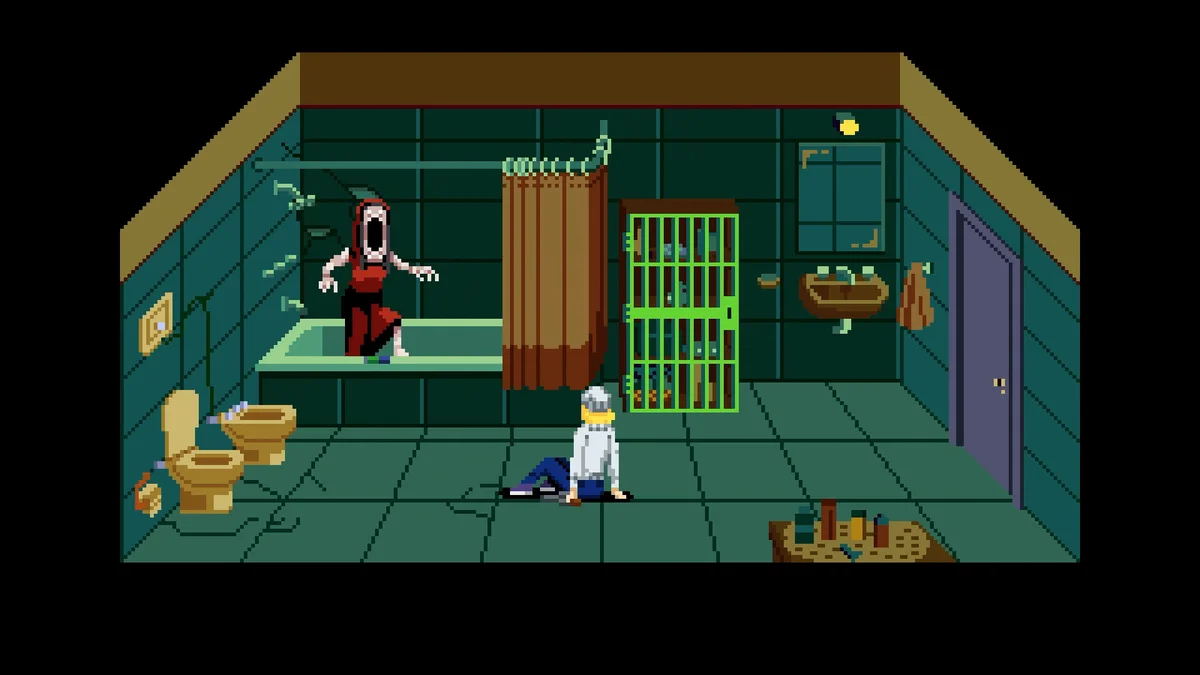
During exploration, characters and monsters exist as extremely simple 2D sprites.
A narrative moment can then cut to real actors performing inside physical environments.
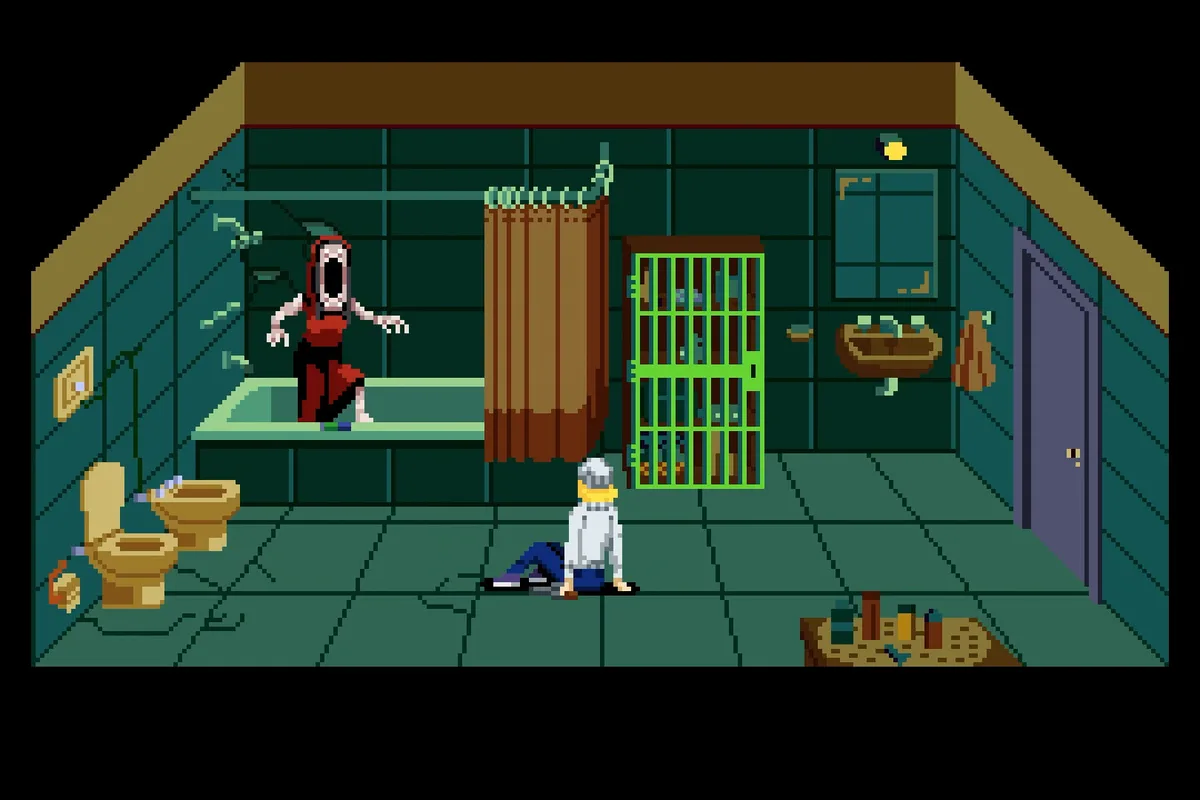
That transition produces a different effect from older FMV games that used filmed footage largely because equivalent scenes could not be rendered convincingly in real time.
Here, the visual gap is part of the staging. The physical actor and creature are supposed to intrude on a world that was abstract only seconds earlier.
Practical effects matter because they have weight
New Blood and Saibot emphasize the physical construction of the monsters: makeup, prosthetics, wet materials and bodily transformations made for the camera.
The production says it uses practical effects wherever possible.
That introduces imperfections digital imagery often tries to remove. A prosthetic physically pulls against an actor's skin, material reflects the actual set lighting and a costume has enough mass to change movement.
In horror, those limitations can become advantages because viewers instinctively understand that the object occupies the same space as the performer.
The Argentine crew is not filming a few inserts between development sessions
The filmmaking side gradually became a substantial parallel production.
Saibot described building a full set inside a large warehouse in 2024 for an entire week of shooting involving more than 30 people.
That group included actors, technicians and production staff, with additional filming sessions already completed earlier in the year.
Steam now describes the cinematics as the work of a professional, award-winning film crew from Argentina.
Live action in games is old; the way it is being deployed here is less familiar
The 1990s produced a long history of FMV games in which actors frequently were the primary visual presentation.
Tenebris Somnia is not simply recreating that model.
Most play takes place inside an interactive retro survival horror game. Live action is reserved for selected narrative moments and gains its force from interrupting that continuity.
Film becomes a rupture rather than the permanent environment.
A realistic monster becomes more effective after first being reduced to a symbol
The game benefits from a simple piece of visual grammar.
A sprite supplies enough information to communicate an unsettling silhouette. The viewer mentally completes whatever the low resolution cannot describe.
Then the cinematic can contradict that internal image with something much more specific: multiple faces, displaced mouths, damaged skin or physical transformations the 2D representation could never explain.
The shock therefore comes from more than gore. It comes from moving abruptly from interpretation to physical matter.
All of this remains attached to a relatively intimate story
Behind the creature work, New Blood describes Tenebris Somnia as an emotional story centered on a troubled relationship.
That smaller human scale gives the project something to build around beyond a catalogue of elaborate horror makeup.
The cinematics are described as containing several important secrets of the narrative, so they are expected to carry more than monster reveals.
October 16 will show whether its two languages — minimalist sprite and filmed body — remain complementary across an entire game.
For now, their collision is already strange enough to make a half-open door carry far more weight than it should.