
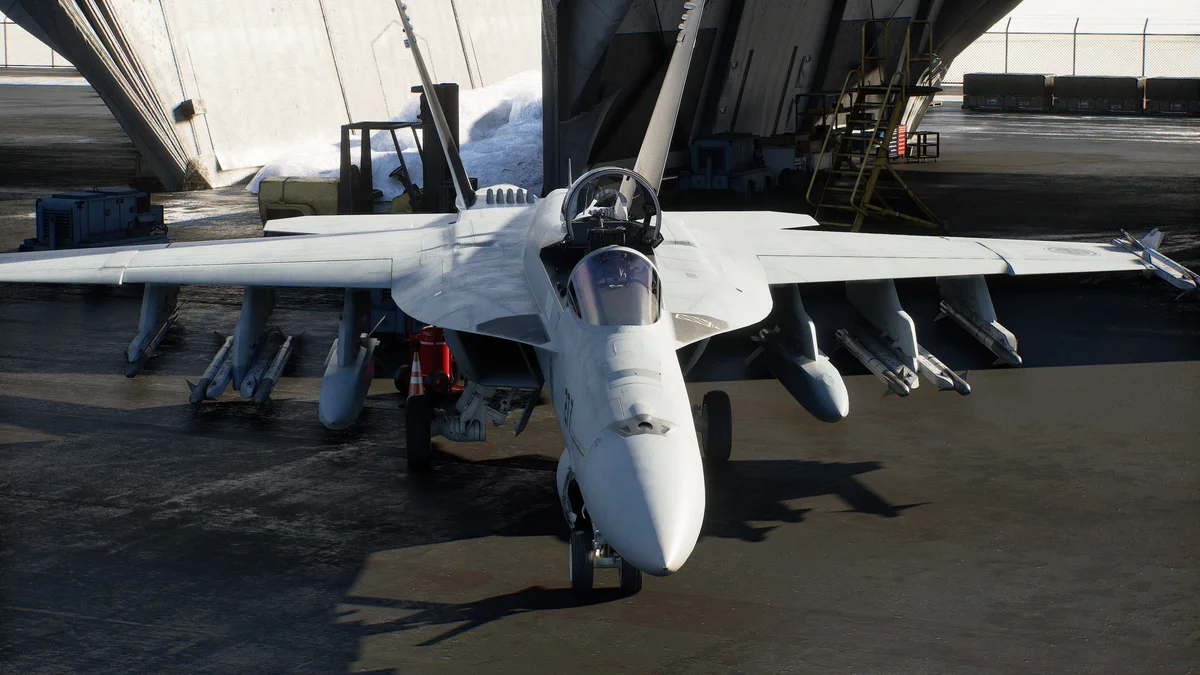
A hero manufactured before becoming heroic
Ace Combat has always enjoyed creating legends out of a jet, a callsign and enough missiles to alarm any competent logistics officer. Wings of Theve turns that habit into its subject. The Federation of Central Usea is collapsing under Sotoa's invasion, and the celebrated Wings of Theve begins as propaganda: a pilot transformed into a symbol to keep hope alive.
When that symbol disappears, Rex inherits it. The lie has to outlive the man embodying it. That replacement immediately gives the silent protagonist a more interesting function than the usual anonymous prodigy: every victory feeds an identity belonging as much to the information war as to the pilot.
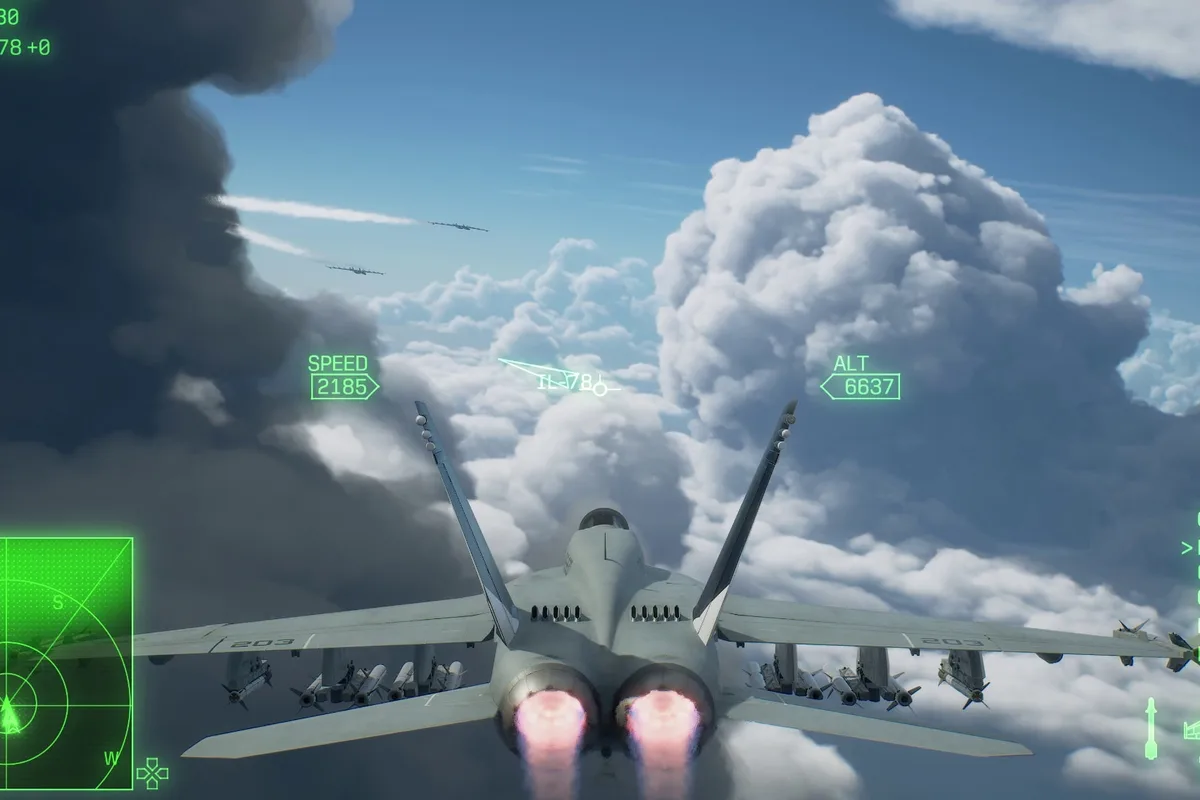
Joker Flight exists between missions
The clearest change arrives once the aircraft lands. Cutscenes largely adopt a first-person perspective and put Rex among Joker Flight rather than observing them from a distance. Tasha, Coster and the other squad members become more than useful voices on the radio; scenes aboard the Endurance make room for relationships, jokes and anxieties.
Occasional yes-or-no responses do not turn the narrative into a branching story. Their real purpose is to remind players that Rex physically occupies the room. That works as a way of connecting the protagonist to the group, but the illusion of participation quickly reaches its limit when responses barely alter a scene's direction.
Ace Combat discovers it really likes cutscenes
That proximity comes at a cost: Wings of Theve talks a lot. Its opening can spend long stretches away from the cockpit, and some conversations continue explaining an idea after the point has already landed. In a game whose missions move with such urgency, the contrast can be severe.
The excess does not erase the ambition. Propaganda, nationalism, symbolic power and misinformation give the conflict a background extending beyond territorial reconquest. The story never becomes restrained — asking that of Ace Combat would be like asking its aircraft to carry a sensible number of missiles — but this time its melodrama rests on a more engaging group.
A war that works better with faces
The narrative is most divisive around its length and conclusion. While Joker Flight's relationships increasingly find their rhythm, some late developments and stretches of dialogue become overloaded.
What remains is still more cohesive than a sequence of briefings linking battles together. Wings of Theve directly connects the reputation built in the air to the legend the FCU broadcasts on the ground. The silent pilot still does not speak, but the world finally has plenty to say to them.