
The impossible works because the weapons look ordinary
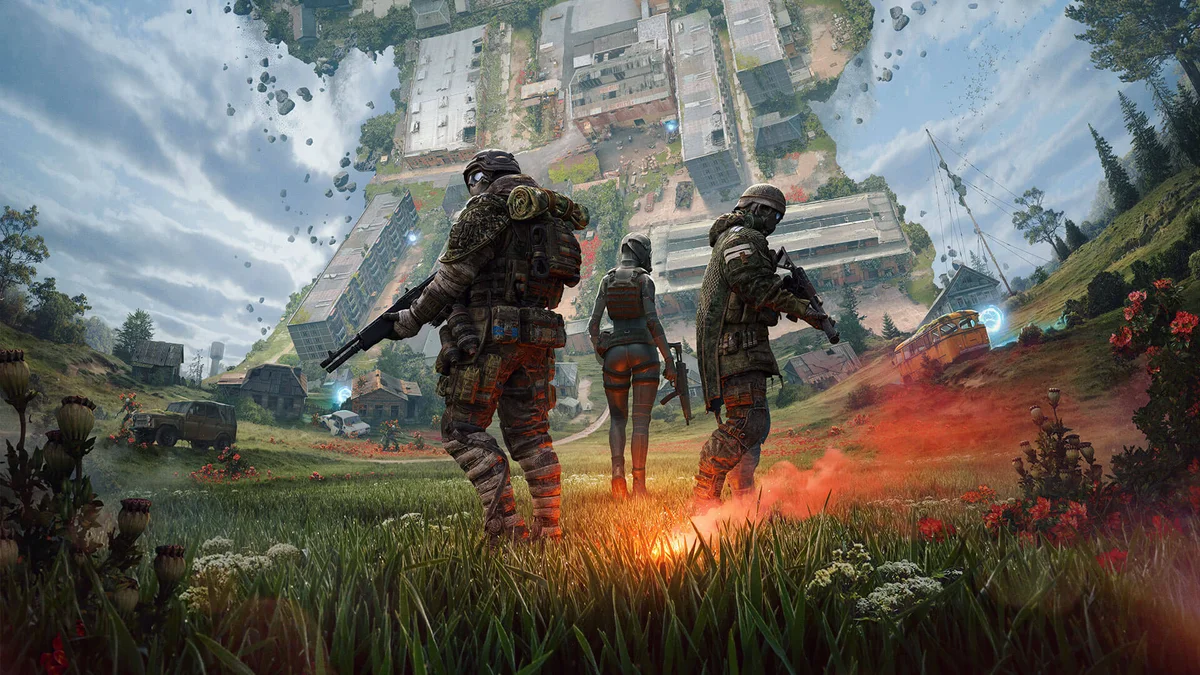
The visual trick at the centre of Active Matter is contrast. Its rifles, optics, concrete rooms and tactical clothing insist on physical credibility. The world around them has no such obligation. A corridor can remain perfectly mundane until gravity or geometry decides otherwise.
That tension gives the game a recognizable silhouette. NoobFeed describes worn industrial spaces, rust, darkness and Soviet brutalism as central to its visual language. Candey+ reaches a similar conclusion from the anomaly effects and lighting. The important part is that neither requires an enemy player to make the locations interesting.
Story arrives as evidence
There is a premise: an operative trapped in a time loop, unstable zones cut from different realities, active matter at the centre of the collapse and a Monolith tied to progression. Active Matter rarely turns that material into conventional dramatic scenes.
Instead, fiction sits in Codex entries, investigations, contracts and environmental evidence. That is a sensible fit for a game whose basic rhythm depends on entering and leaving dangerous spaces repeatedly. It allows the player to absorb the setting without pausing a raid for a lecture.
It also means the lore is stronger than the character drama. The game has plenty to explain about its universe and relatively little reason to become attached to a conventional cast. Locations and phenomena often do the expressive work.
Its soundtrack is unusually serious about atmosphere
The launch version contains more than one hundred tracks from independent composers and guests. Akira Yamaoka is among them, with original pieces commissioned specifically for the game. His involvement makes intuitive sense for a world built on unease, but the broader soundtrack deliberately avoids locking itself into a single musical language.
Audio also has a less glamorous job. Extraction games need footsteps, gunfire and environmental warnings to communicate reliably. Candey+'s PS5 review praises those functional cues; NoobFeed is more critical of footstep consistency. Both are useful observations because atmosphere and competitive information are competing for the same speakers.
Horror without becoming a conventional horror game
Matter Team explicitly invokes SCP-inspired entities and phenomena. That influence is clearest when a creature behaves like a problem with rules rather than an ordinary target. The resulting horror is less about staged shocks than the suspicion that the room itself may not behave correctly.
Active Matter still returns to guns, loot and menus because it remains an extraction shooter. Its most memorable quality is that those familiar systems now occupy a world capable of making them feel briefly inadequate.
A rifle is useful. It is not an answer to architecture folding over your head.