
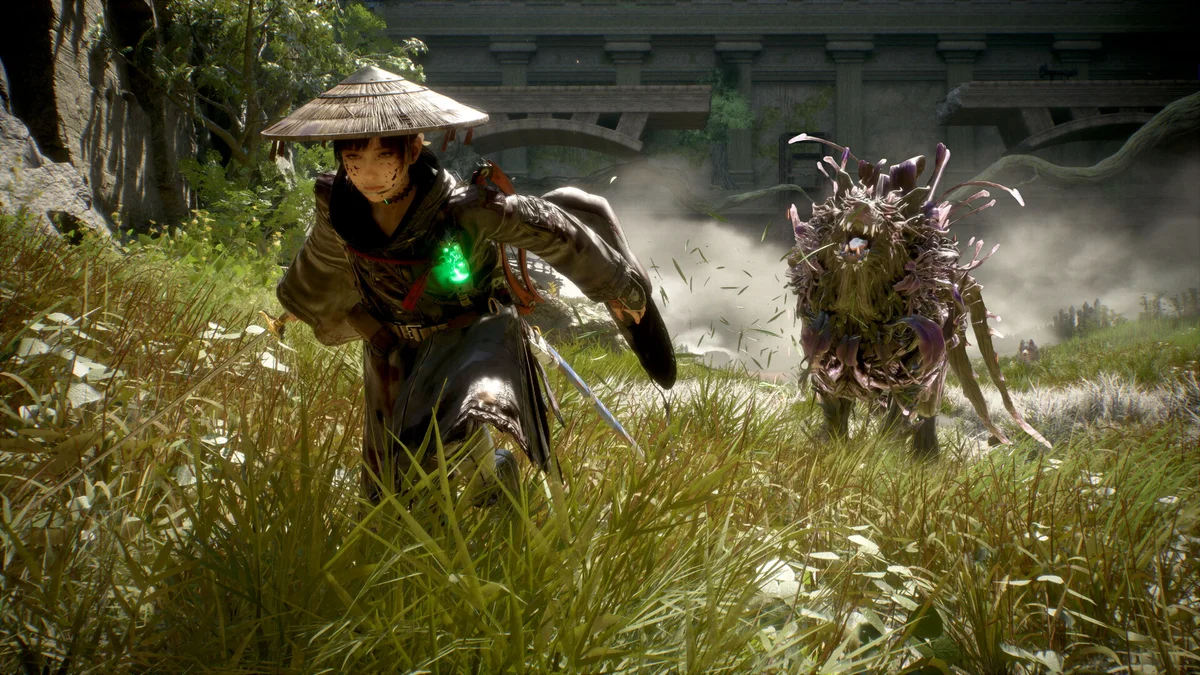
Emma begins as an absence
The Blight has taken Emma's memories and emotions. Her role as a Sealer then requires her to absorb power from the same corrupted beings she is ordered to destroy.
Koo is one of those beings.
The relationship carries the central contradiction
Game Freak explicitly builds the story around two characters who should be enemies. TechRadar finds their journey deeply affecting, while PCGamesN praises the broader themes of memory and connection.
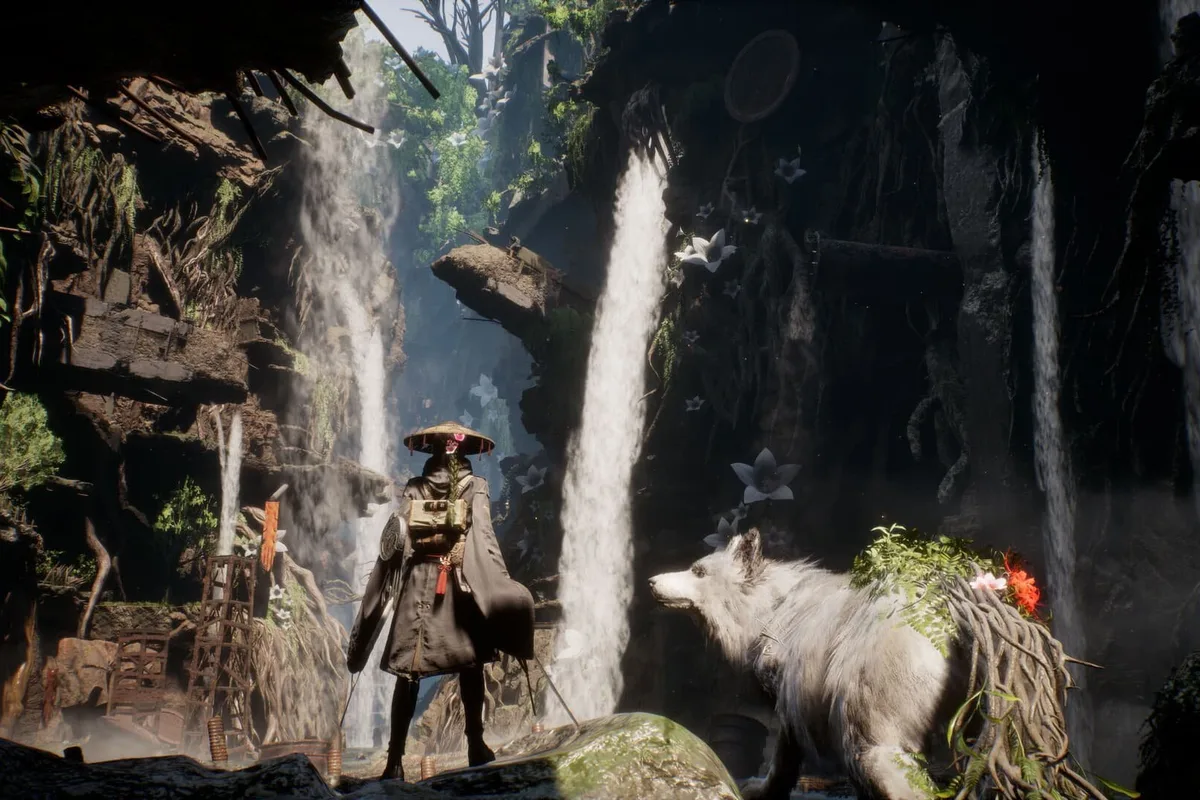
GameSpot responds very differently, arguing that Emma's flat performance and stiff animation undermine scenes that demand emotional involvement.
An emotionless protagonist is difficult to dramatise
The characterisation has a clear narrative justification. The challenge is communicating missing emotion without simply creating an unexpressive protagonist.
Critical disagreement here is substantial. PCGamesN interprets Emma's gradual development as meaningful. GameSpot and Slant Magazine see much of the character work as hollow.
The future is built from human damage
Japan in 4026 is overgrown by a form of nature that has itself been corrupted. Ruins, machines, mutant forests and organisms carrying the Blight repeatedly blur technological and biological boundaries.
The Guardian reads this setting as a reflection on ecological collapse and humanity's repetitive appetite for destruction. Robots carrying traces of human consciousness extend that anxiety into questions about what survival actually means.
Small endings often work better than big scenes
Dying machines and scattered remnants provide short fragments of memory throughout the journey. These encounters give the devastated landscape emotional context without requiring elaborate cinematic staging.
That quieter storytelling is less vulnerable to the stiff animation criticised elsewhere in the review corpus.
Repetition becomes both theme and weakness
The Guardian finds the later journey increasingly monotonous, while GameSpot criticises reused bosses and repeated area structures.
Thematically, cycles of violence and environmental destruction suit repetition. As pacing, the same idea becomes much harder to defend.
Hope survives the bleakness
Beast of Reincarnation does not end its ecological and technological anxiety with simple nihilism. Flowers, companionship and Emma's slow reconnection with emotion keep pulling the story toward resilience.
Whether that arc succeeds depends heavily on how much the player accepts its deliberately muted protagonist. The disagreement among critics is unusually revealing rather than incidental.