
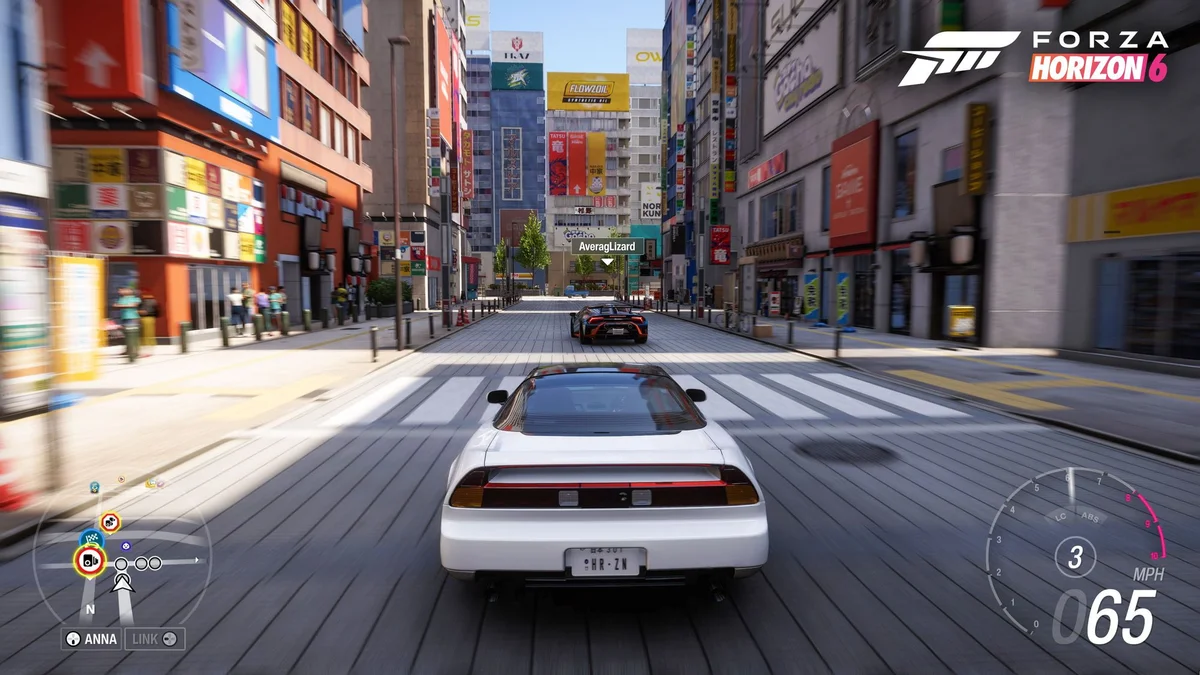
Forza Horizon 6 does not recreate Japan.
It recreates the ideal memory a car enthusiast might assemble from Tokyo at night, touge videos, Daikoku meets and Mount Fuji glimpsed through a windscreen.
That distinction matters because Playground Games has rarely researched a location this intensely.
The studio knew the danger of familiarity
The team travelled through Japan with 360-degree cameras, gathered road and building references, captured vegetation and recorded environmental audio across all four seasons.
The Guardian reports how seriously Playground treated the risk of believing it understood Japan through existing media alone.
Nine Japanese artists also produced original murals for the game.
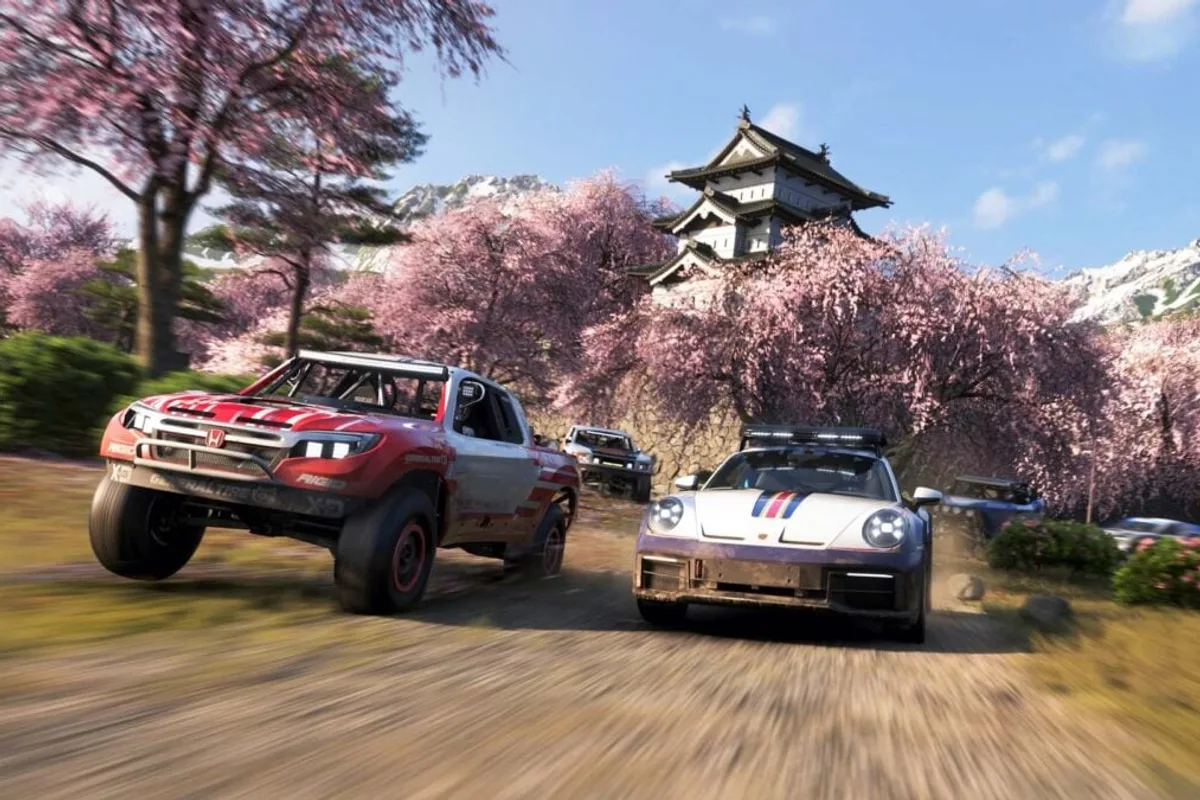
Car culture provides the stronger authenticity
Daikoku-inspired gatherings, C1-style roads, touge battles and an enormous JDM presence are not merely decorative references.
Car Meets, Time Attack Circuits and Drag Meets live directly inside the shared world, allowing players to inspect builds and join activities without conventional matchmaking.
These systems make automotive culture social rather than simply historical.
Tokyo immediately reveals the illusion
The Guardian identifies the most obvious problem. Buildings and landmarks may be recognisable, but the city lacks the crowds, noise and human density associated with Tokyo.
Shibuya without people can feel less authentic than a mountain road assembled from several different real locations.
Real geography is deliberately folded
Places separated by enormous distances are compressed into a useful driving landscape.
The goal is not geographical fidelity. It is to move quickly between urban expressways, rural roads, mountain passes and views of Fuji without sacrificing Horizon's open-world rhythm.
Discover Japan turns tourism into an activity
Guided drives and the Collection Journal encourage attention to landmarks beyond racing.
PC Gamer finds some of these activities lightweight, but the contradiction is revealing: Horizon wants the player to appreciate a country while supplying cars capable of crossing it at absurd speed.
Sound carries more cultural weight than usual
The soundtrack includes more Japanese artists, while extensive seasonal field recordings give environments different sonic identities.
In spaces where human density cannot be simulated convincingly, engine acoustics, surfaces and ambient sound become even more important to the illusion.
The player starts small again
Beginning as a tourist rather than an established superstar gives the location a little room before the game begins constantly celebrating the player.
The narrative remains simple, but the restored progression is more appropriate to a story about arriving somewhere unfamiliar.
Horizon still turns countries into automotive utopias
Traffic, economic pressure and any serious conflict around cars are almost absent. Every road is available, every local enthusiast is welcoming and the landscape rearranges itself for pleasure.
Forza Horizon 6 is therefore carefully researched without being remotely realistic.
It is not Japan. It may be one of the finest driving fantasies built from Japan.