A.R.E.S. does most of the acting
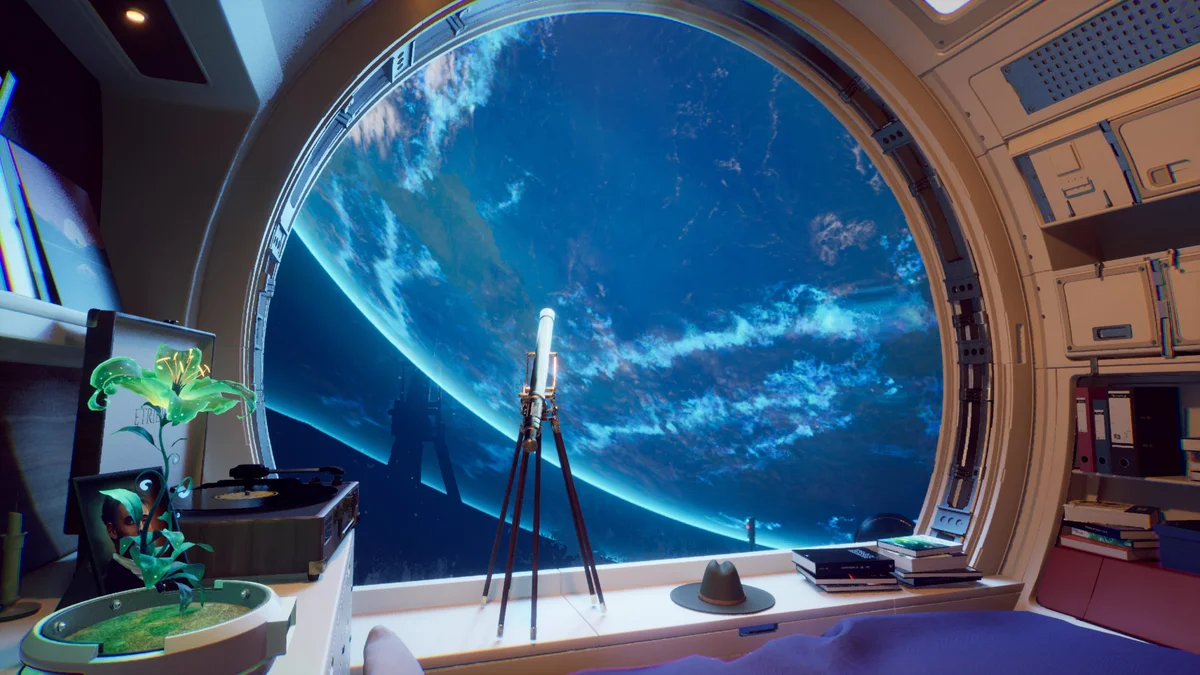
Rivage leaves Miranda physically alone for much of its mystery, but the station rarely feels anonymous. Bedrooms, workspaces, abandoned notes and personal clutter turn absent crew members into people before the plot has fully explained what happened to them. Environmental storytelling is not decoration here; it is a substantial part of the cast.
That approach is reinforced by the voice work. Audio logs and recorded fragments give emotional weight to material that could otherwise have become a stack of exposition. The station accumulates personality through repetition: returning to a familiar room with a new piece of information can change what its ordinary objects appear to mean.
The mystery is stronger when it stays quiet
Rivage does not need many large cinematic sequences because its most effective storytelling happens in fragments. A message on a terminal can introduce strain between crewmates. A bedroom can expose an obsession. The contrast between the immaculate science-fiction surfaces and the increasingly troubled history behind them gives A.R.E.S. a useful tension without pushing the game into conventional horror.
Critical opinion becomes less unified around the eventual payoff. Some reviews praise the developing relationships, later revelations and the way the mystery resolves. Others argue that the time-loop premise itself remains dramatically underdeveloped, or that the journey becomes too convoluted for the ending to justify all of its friction.
What is much less disputed is the world surrounding that ending. Rivage has a strong sense of place, and its rooms communicate function and personality rather than simply changing the wallpaper between puzzles.
Puzzle pacing becomes story pacing
The obvious complication is that every dramatic beat sits behind a puzzle game. When a solution lands naturally, the next discovery feels earned and the narrative moves with it. When a clue is obscure or a challenge demands knowledge the player may not have, the story effectively stops until the mechanical roadblock is gone.
The loop can make that delay meaningful by reinforcing Miranda's isolation and familiarity with the station. It can also turn suspense into logistics. Another reset, another route through rooms already understood, another door that needs power.
Rivage never entirely solves that conflict. Its setting, performances and accumulated traces of the missing crew are strong enough that the mystery keeps pulling forward anyway. The people who are gone remain the most persuasive reason to continue looking.