Owlcat's smartest narrative choice is giving you power immediately
Many RPGs ask players to kill rats before trusting them with the world. Rogue Trader skips the ritual. The death of Theodora von Valancius rapidly places the protagonist at the head of a dynasty, a colossal voidship and populations whose lives can change because of a sentence. Power is not an endgame reward here. It is the premise.
That status opens exactly the right doors for telling a Warhammer 40,000 story. An ordinary Imperial citizen has almost no freedom to negotiate with xenos, challenge institutions or approach forbidden powers without being executed. A Rogue Trader possesses enough privilege to get close to the system's contradictions without every conversation automatically ending in fire.
The writing repeatedly exploits that freedom with remarkably dry black humor. Bureaucrats turning military celebrations into grotesque administrative exercises, public brutality treated as routine procedure and protocol surrounding obvious atrocities do more for the tone of 40K than another hundred decorative skulls ever could.
Dogmatic, Iconoclast or Heretical: none of the tracks really keeps your hands clean
Convictions could have been three morality bars. In Rogue Trader's setting, they become something more useful. Dogmatic choices accept much of the Imperium's brutal logic; Heretical choices move toward Chaos; Iconoclast decisions frequently represent the compassionate or pragmatic alternative without changing the fact that the protagonist rules an intensely unequal structure.
RPG Site correctly highlights how naturally this morality is embedded in the rules of the world. Basic compassion can provoke resistance from people who sincerely interpret mercy as ideological weakness. A choice that would be the obvious heroic answer in another fantasy RPG can become a political act here.
The writing is strongest when it refuses to make those decisions into clean blue and red buttons. Situations ask what the player is willing to sacrifice, which institutions deserve preservation and how long a useful but morally repellent ally can remain useful. Grimdark stops being an art direction and becomes a narrative constraint.
Companions turn factions into people instead of encyclopedia entries
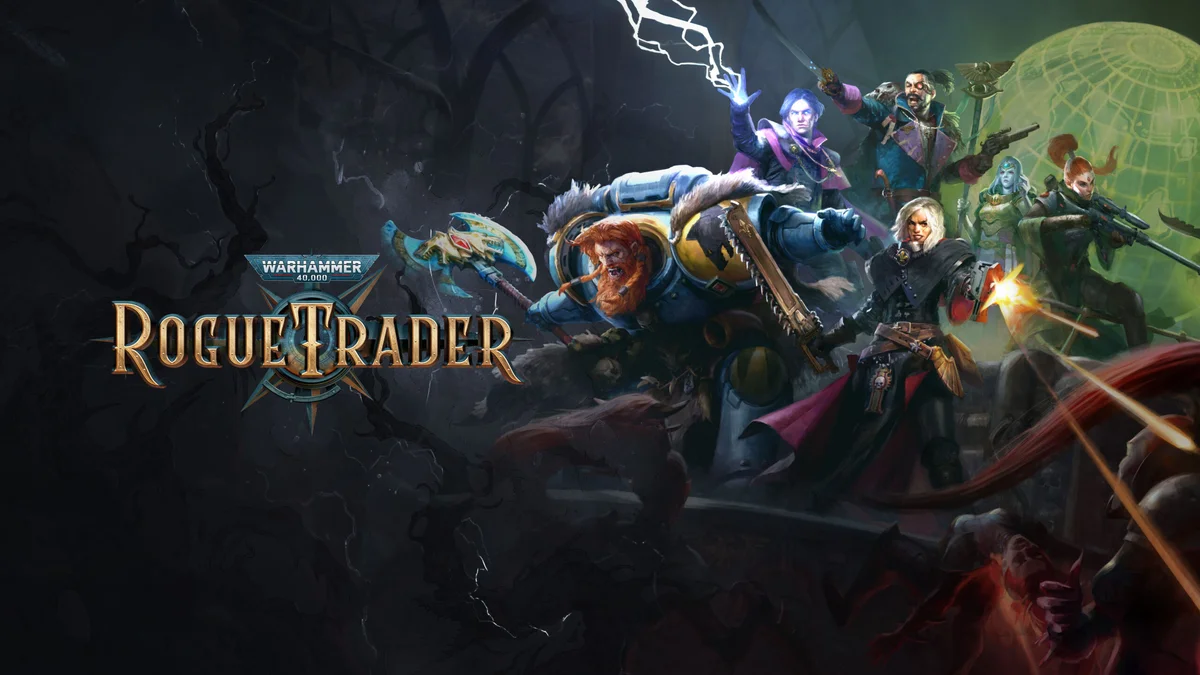
Pasqal does not explain the Adeptus Mechanicus like a glossary page; his priorities, language and near-liturgical relationship with technology make it tangible. Argenta carries the zeal of the Adepta Sororitas. Cassia makes the Navigator condition useful, fascinating and unsettling at once. Yrliet forces an Imperial dynasty to deal with an Aeldari without reducing the encounter to a military briefing.
That variety matters because Rogue Trader also welcomes players who have never opened a codex. Windows Central and RPG Site, writing from different levels of prior Warhammer knowledge, both found the game surprisingly approachable despite the density of the setting. Important terminology receives contextual explanations, while companions become windows into cultures rather than lore dispensers.
The trick works because those characters are not sanded down for newcomers. They retain prejudices, loyalties and hard ideological limits. Caring about them does not require approving of the civilization that created them. Quite often, the tension comes from doing both at once.
Chapter 2 makes an entire sector feel like your responsibility
The campaign finds its broadest rhythm when the Koronus Expanse opens. Main objectives, trade, colonies, rumors and personal quests stop forming a line and begin colliding. The protagonist finally feels like someone whose day might move from a dynastic dispute to a planetary crisis and then to an argument between two members of the retinue.
Chapter 3 abruptly closes several of those doors. There is genuine dramatic value in stripping away authority and resources after teaching the player to rely on them; it creates vulnerability the story could not otherwise achieve. The contrast is severe, however, and the final acts never fully recover Chapter 2's freedom.
RPG Site praised how late revelations tie together details introduced much earlier. That is one of the plot's better qualities: events that seemed like local problems or background texture acquire another meaning once the final pieces arrive. The campaign is uneven, but it is not random.
An entry point that refuses to sanitize the 41st millennium
Rogue Trader could have become a safe tutorial for Warhammer 40,000. Instead, it explains enough about the Warp, the Imperium, xenos and its institutions to keep newcomers oriented while preserving the systemic violence, fanaticism and bleak comedy that make the setting distinctive.
NME praised the worldbuilding and moral dilemmas even in the buggy launch version. Windows Central emphasized how effectively the cast presents competing facets of the universe. That shared observation matters more than the volume of references: Rogue Trader does not require prior 40K expertise, but it never apologizes for being deeply 40K.
That is precisely why its small human moments land so well. Tenderness, compassion or unexpected loyalty are not happening inside a universe designed to reward those things. They survive in spite of it.