
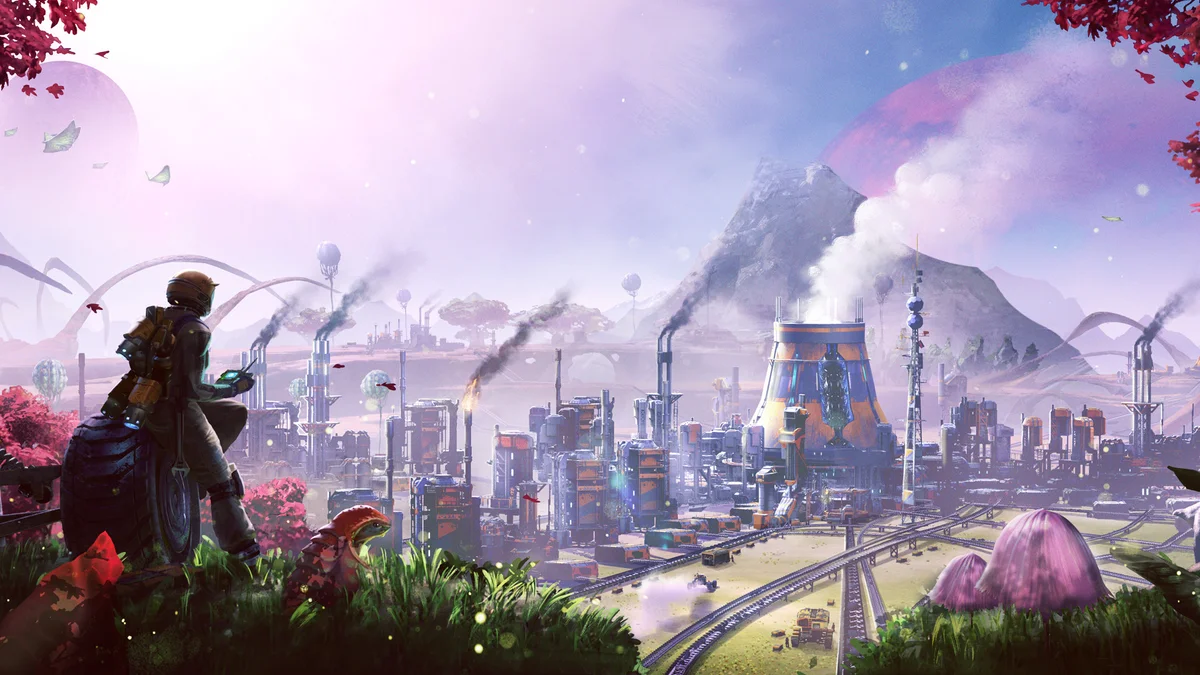
FICSIT rarely congratulates the player.
It mostly announces that another absurd quantity of industrial components is now required.
Satisfactory could therefore have become an anxious productivity satire. Strangely, it is often one of the most relaxing games in the genre.
Labour becomes calming because the method remains personal
Objectives specify outputs, not architecture.
A factory can become a perfect grid, follow the shape of a cliff or collapse into conveyor spaghetti created under immediate pressure.
PC Gamer's enthusiasm for the building process reflects this freedom. Industrial repetition becomes creative because the player owns the solution.
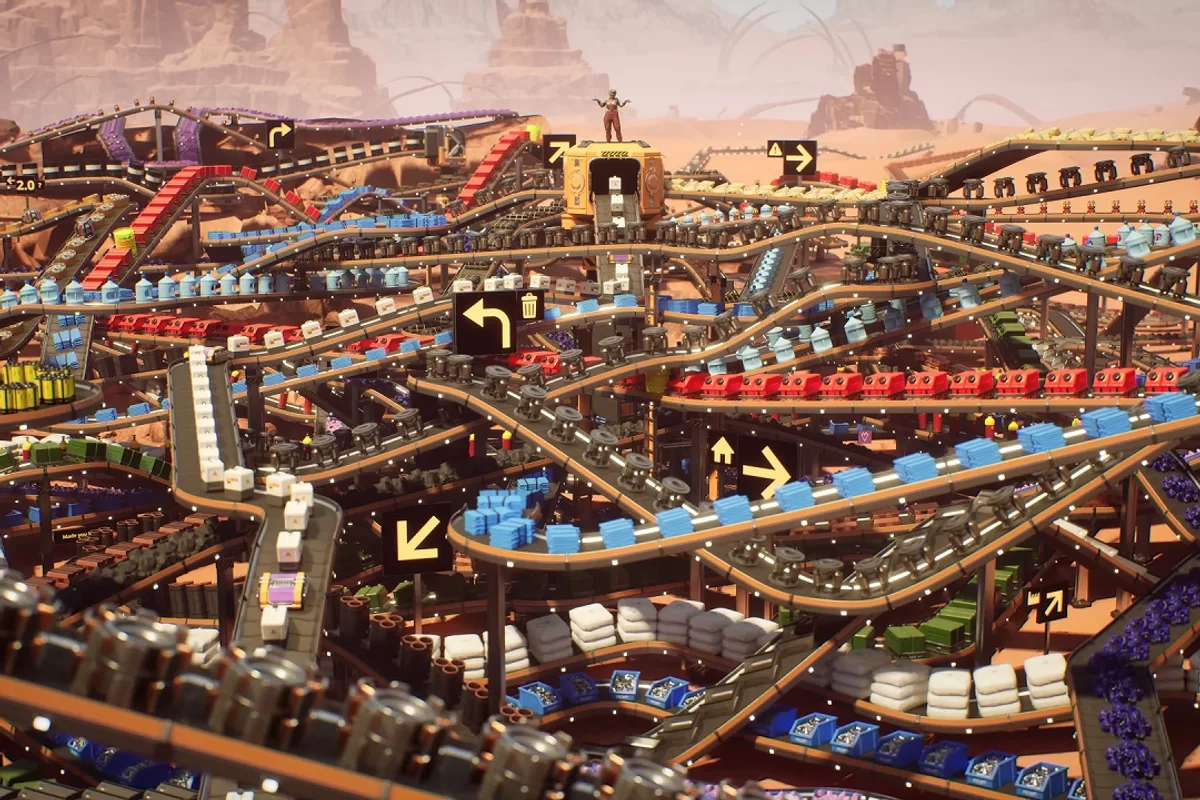
Factories eventually become architecture
Foundations, walls, windows, lighting and cosmetic structures gradually turn machinery into designed space.
Once efficiency stops being mysterious, many players begin pursuing beauty instead.
Community factories that resemble stations, towers or cathedrals reveal how far the game expands beyond its explicit production goals.
The environmental satire remains deliberately soft
FICSIT is transparently exploitative, but the planet rarely makes the player confront industrialisation as a moral problem.
Resource nodes are effectively inexhaustible and ecological damage does not become a systemic reckoning.
The corporate satire supplies humour without seriously threatening the pleasure of expansion.
ADA makes bureaucracy funny
FICSIT's artificial intelligence delivers progress updates with cold corporate absurdity.
IGN highlights the humour and personality surrounding progression. ADA works particularly well because she rarely abandons the language of an organisation that views human effort as another input.
The 1.0 narrative knows not to dominate
Alien artifacts and Project Assembly create a more explicit destination.
GameStar considers the story shallow, but that restraint also protects the sandbox. The game provides an ending without pretending the authored plot is more important than the factory surrounding the player.
Old factories become autobiographical
Returning to an early production line can feel like reading old handwriting.
Inefficient belts and strangely placed machines record what the player understood at that moment.
Satisfactory makes learning physically visible without requiring a character level.
Co-op turns organisation into a social language
One player builds rail, another handles power and somebody else returns from exploration to discover the entire entrance has moved.
IGN strongly praises playing with friends, and shared construction creates a unique problem: understanding systems designed by somebody else's brain.
Nature remains a counterpoint rather than an equal system
The handcrafted world is colourful and beautiful enough to provide genuine relief from machinery.
Its fauna and combat cannot sustain the same mechanical interest over hundreds of hours.
Nature is most valuable as the space the factory has not reached yet.
Satisfactory is ultimately about making order personal
FICSIT asks for production.
Players respond by creating architecture, transport networks and personal rituals that no objective required.
That is why the game can feel warm despite its corporate dystopia. The finished landscape becomes a record of decisions rather than merely a spreadsheet with buildings.