The original implied motion; the sequel animates it
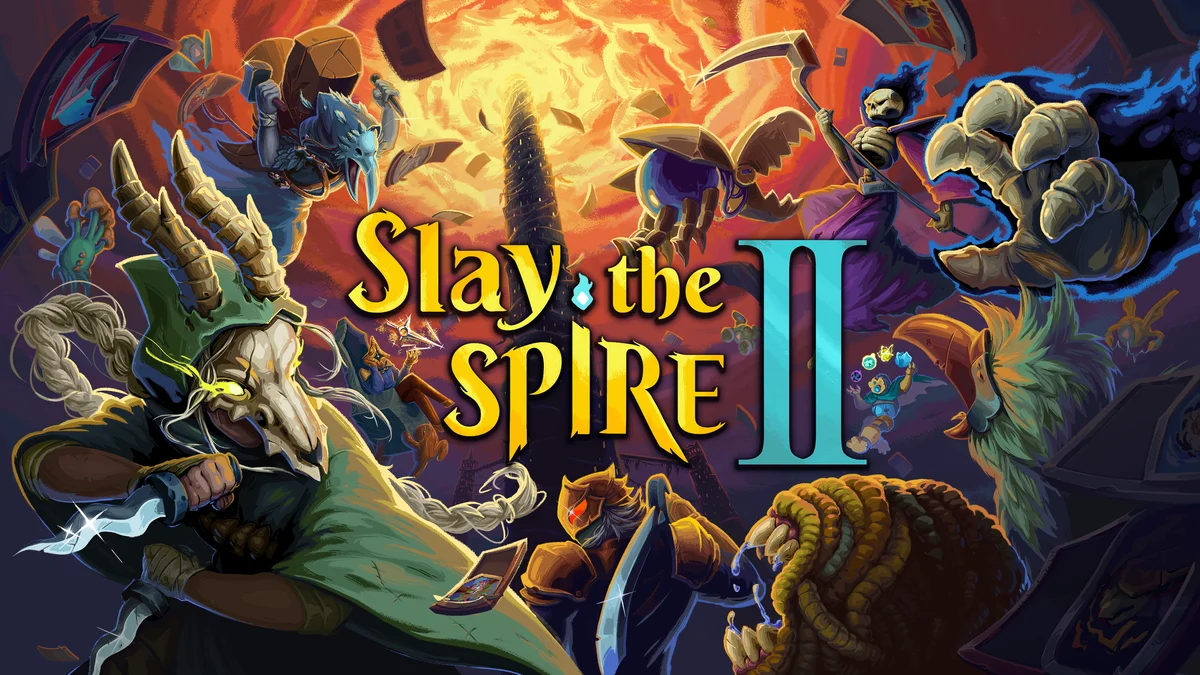
Mega Crit described its new visual goals early in development: more playful, crisp, lively, cinematic and colorful. Those ambitions are immediately visible in combat. Characters no longer spend most of their existence waiting as static illustrations between card effects. Attacks, forms, transitions and reactions give them genuine physical presence.
RPGFan highlighted the richer animation and sound, while Thinky Games points to Marlowe Dobbe's ability to improve clarity without abandoning the original's peculiar shapes. That balance matters. Making Slay the Spire conventionally beautiful could have erased its personality; leaving it visually rigid would have made the sequel feel timid.
Instead the world becomes more polished without becoming polite. Monsters still look wrong in exactly the right ways.
Necrobinder and Regent finally behave like performers
The two new characters benefit most from the expanded presentation. Necrobinder shares the battlefield with Osty, an enormous reanimated hand whose movement effectively gives her a second body. Regent approaches the tower with a theatrical royal silhouette whose exaggerated authority suits a character built around deliberate preparation and escalation.
GamesRadar+ noted at launch that their visual personality helps the mechanically more complicated pair settle naturally into the roster. Design and animation reinforce one another: Necrobinder needs to look physically connected to Osty because her cards are mechanically connected to it.
Ironclad, Silent and Defect also receive far more expressive treatment, but they remain reunions. The new pair are introductions.
The Spire remembers more than it used to
The sequel takes place one thousand years after the original. The tower has reopened, Neow remains central to the cycle, and its ancient inhabitants provide a wider historical frame. Rather than convert the game into a conventional story campaign, Mega Crit distributes that fiction across systems.
Timeline fragments, Ancients, character backstories and the Bestiary added during Early Access all expand the archive. Random events also carry more bespoke art and personality. GamesRadar+'s review specifically notes how those events feel more embedded in the world even while retaining their mechanical role as difficult choices.
That fragmented approach remains a good fit for a roguelike. Lore can accumulate across dozens of runs without forcing the fiftieth climb to sit through the same dramatic explanation as the first.
The story cannot be reviewed as finished because it is not finished
The largest narrative caveat is explicit. Slay the Spire 2 does not yet have its intended final ending. Mega Crit has discussed wanting the eventual victory to be more extravagant, while the current Architect sequence remains part of an unfinished Early Access structure.
Temporary card artwork is another visible reminder of development. Mega Crit has deliberately kept rough placeholder pieces in circulation while finished art is produced. Oddly, that incompleteness does not make the broader art direction feel incoherent. It makes the production process unusually visible.
The world can therefore feel finished long before its narrative does.
Co-op changes the emotional texture of the climb
Slay the Spire was an intensely solitary ritual. The sequel allows four climbers to share turns, routes and a map that players can literally doodle on while somebody else overthinks a decision.
That is not conventional storytelling, but it changes how the cast occupies the world. The first Spire separated its heroes. The second finally allows them to exist in the same climb, support one another and create small social stories the authored lore never needs to predict.
Slay the Spire 2 still tells its fiction in fragments. It simply has far more visual, musical and social ways to make those fragments stick.