
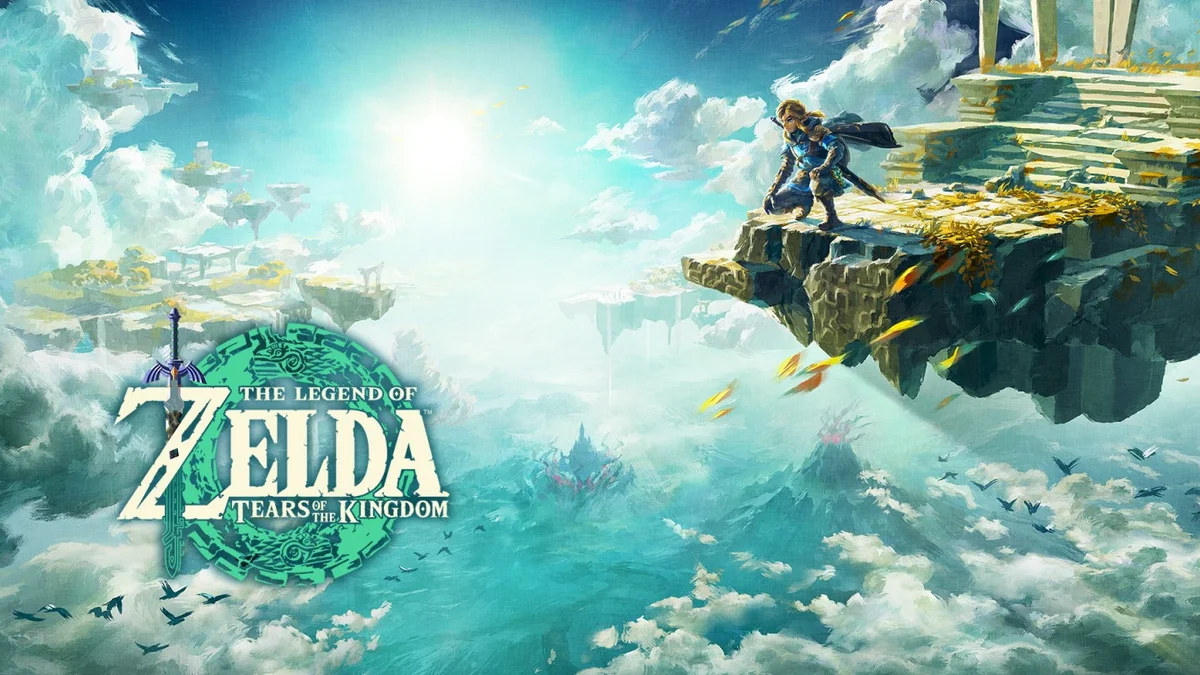
Hyrule remembers the previous game
Returning to Breath of the Wild's map is not presented as a reset. Towns are rebuilding, familiar characters have new responsibilities, roads lead to altered landmarks and communities behave as if several years of history happened rather than waiting in suspended animation for another adventure.
That makes recognition useful. The pleasure is often not discovering a completely unknown place but understanding what happened to somewhere already known.
The mystery belongs to Zelda
Tears of the Kingdom again places important scenes in the past, but the Dragon's Tears are carrying a more sequential story than Breath of the Wild's memories did. They reach into Hyrule's founding era through Rauru, Sonia and Ganondorf, while Zelda increasingly becomes the emotional center of those events.
GameSpot's review is particularly strong on this point: the central search for Zelda gradually changes meaning as the fragments accumulate. Some of the game's most memorable imagery comes from that shift.
A nonlinear world is awkward at keeping a secret
The structure can damage its own drama. Geoglyph memories may be found out of sequence, allowing a later revelation to arrive before scenes intended to prepare it. The open world then continues quests whose characters know less than the player.
Breath of the Wild was better protected against this because its memories mostly reconstructed a disaster already established in the premise. Tears of the Kingdom asks a nonlinear delivery system to support a more conventional mystery.
The supporting cast gets to participate
Regional quests give Tulin, Sidon, Riju and Yunobo meaningful roles in resolving their communities' crises, and the resulting temples possess much clearer personalities than Breath of the Wild's Divine Beasts.
There is an odd contrast after those quests. The Sages are distinct characters, yet several explanatory sequences repeat very similar information and staging. A game so comfortable with improvisation becomes surprisingly rigid when reciting this part of its mythology.
Three Hyrules, not one enlarged map
The sky, surface and Depths are separated by more than altitude. Golden ruins and open air make the sky feel almost sacred. The surface is a recognizable kingdom in recovery. The Depths remove natural light and transform navigation into the gradual creation of visibility.
The Depths are the thinnest narrative layer. Their scale promises a second buried civilization's worth of material, while much of the actual space relies on repeated encounters, resources and landmarks.
It eventually pulls the threads tight
The critical corpus differs on smaller frustrations but converges on the game's capacity for extraordinary set pieces and discovery. The Guardian emphasized its sheer imaginative pleasure; GameSpot highlighted both the personal stories created through play and Zelda's emotional arc; the Washington Post praised the scale of the final act.
Tears of the Kingdom sometimes loses dramatic precision because it refuses to take freedom away from the player. When it finally concentrates its music, movement and mythology into a single climax, that trade becomes easier to forgive.