
A walk with friends contains long stretches that conventional games would normally edit out.
Someone slows down. Someone else wanders off. A conversation drifts away from whatever the group was supposedly doing. Big Walk treats those intervals as material rather than waste.
The island gives conversation somewhere to happen
The Guardian praises the Australian-inspired landscape as both beautiful and playful. Puzzles occupy the island without consuming it, leaving stretches where there is no immediate task demanding attention.
Those gaps are important. Constant objectives would reduce communication to instructions.
Distance becomes social staging
Proximity chat means a disappearing friend also becomes a disappearing voice. Walls, corridors and walkie-talkies alter how people can hear one another.
PC Gamer sees the mechanic as the foundation for an emergent language that develops over the course of a session. Familiar friends begin acquiring new habits inside the game's rules.
The characters keep beauty from becoming solemn
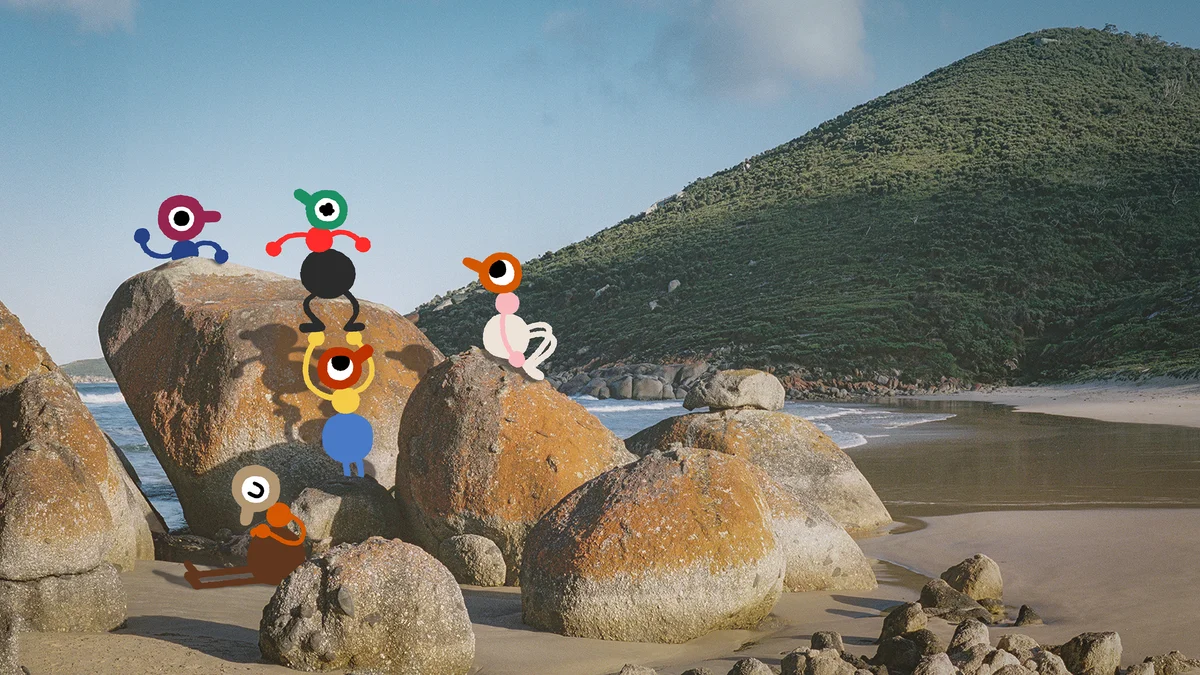
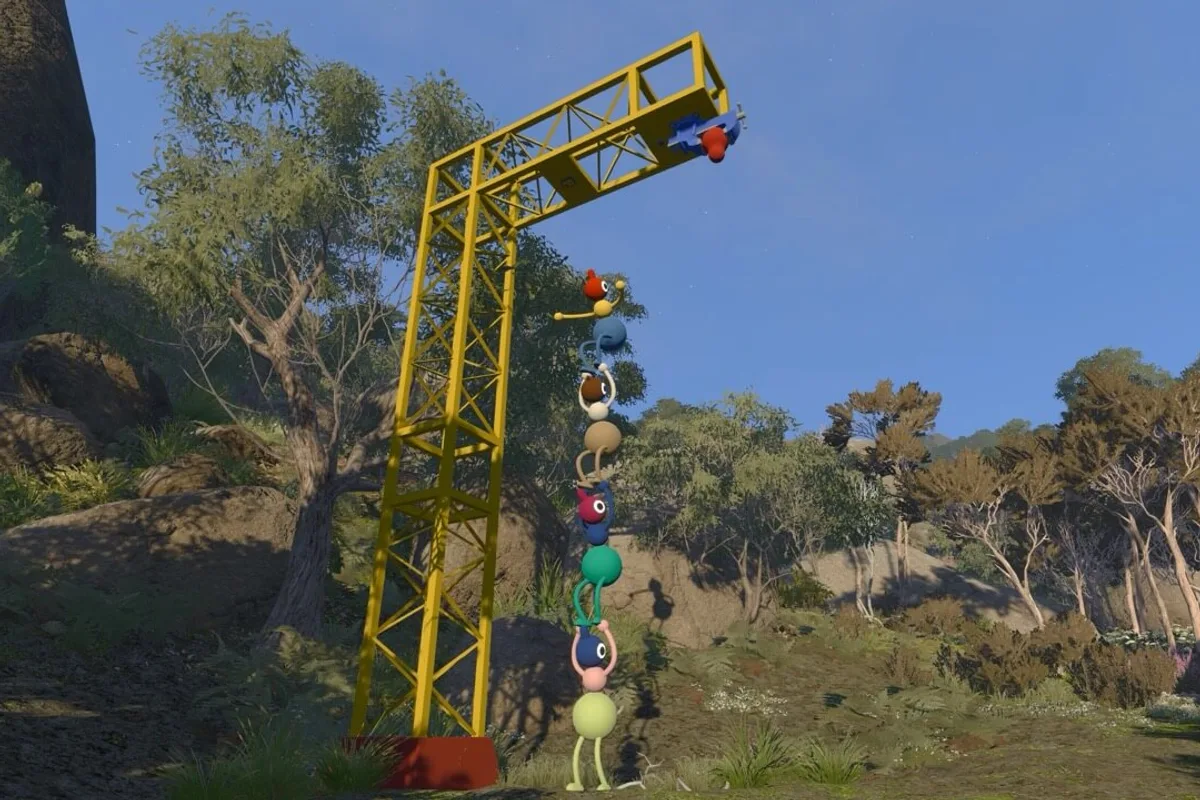
Big Walk's colourful bird-like figures wave, fall, point and stack on top of one another with physical awkwardness.
The visual comedy prevents the environmental grandeur from becoming self-important. House House remains interested in silliness even when the goose is gone.
Australia is present without being literal
Bushland, coastal light and vegetation give the island a distinctly Australian texture. Modernist buildings and stranger structures then interrupt any attempt to read it as a realistic location.
It feels culturally specific without being a tourism simulation.
Your friends become part of the quality of the game
GameSpot calls Big Walk one of the best cooperative games ever, but the proposition is unusually dependent on social chemistry.
A group that wants to optimise every puzzle will have a different evening from one willing to wander, talk and waste time with toys.
Big Walk has no interest in eliminating that variability.
A multiplayer game built to become a memory
House House deliberately gave Big Walk an ending rather than an infinite progression structure.
Its value is concentrated in shared anecdotes instead of retention systems: the wrong turn, the terrible hand signal, the distant lamp blinking in the dark. That feels quietly radical for a contemporary online game.