
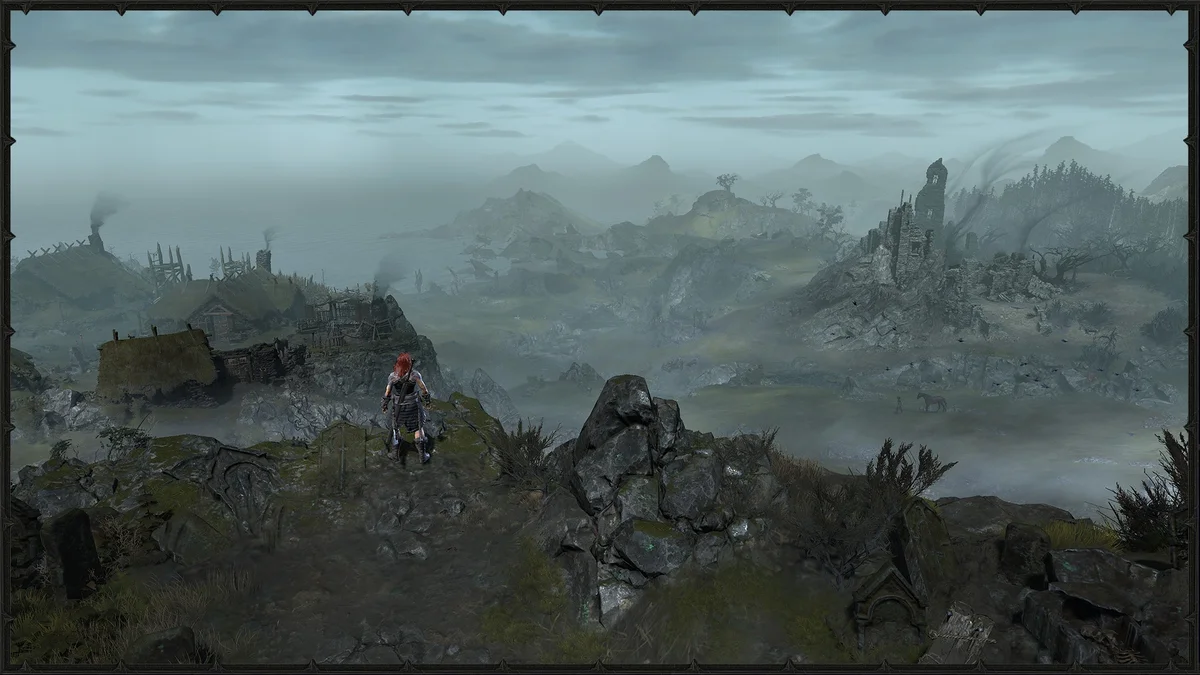
The opening village explains the whole tone
Diablo IV wastes very little time establishing its version of Sanctuary. A traveller helps an isolated settlement, accepts food and shelter, and discovers that the hospitality is merely preparation for a ritual sacrifice.
Diablo has always enjoyed corpses and desecrated churches. The difference here is proximity. The horror is allowed to happen to recognisable people before the story escalates toward cosmic stakes.
Lilith works because the game lets her argument breathe
Lilith could easily have been another enormous demon waiting at the end of a campaign. Instead, her history as one of Sanctuary's creators gives her anger a specific target. This world was supposed to offer an escape from the Eternal Conflict, yet angels and demons continue to treat humanity as material.
GameSpot's launch review praised how gradually her motivations are revealed. Diablo IV never needs the player to approve of her methods. It simply allows the uncomfortable possibility that some of what she says about Sanctuary's supposed protectors is difficult to dismiss.
A continuous Sanctuary changes the storytelling
The open world gives geography to the misery. Fractured Peaks, Scosglen, the Dry Steppes, Kehjistan and Hawezar no longer feel like disconnected stage sets waiting for the next boss.
The weakest side quests still reduce local tragedy to routine errands. The stronger ones make the cosmic conflict feel almost irrelevant by focusing on people who are already losing everything for smaller reasons.
Its supporting cast carries the damage
Vigo's guilt, Donan's family and Lorath's exhausted fatalism give the campaign emotional anchors. GameSpot singled out that character work as one of the largest improvements over earlier Diablo storytelling.
It also supports the art direction. Sanctuary is not dark because somebody lowered the colour saturation. It looks exhausted because the people living there behave as though history has been grinding them down for generations.
Vessel of Hatred deliberately refuses a clean ending
The 2024 expansion pushes the story into Nahantu and centres Neyrelle, bringing a more intimate journey alongside major additions to the wider game. Critical reaction to its narrative was noticeably less unified than reaction to its mechanics.
PC Gamer found a stronger emotional core in the expansion, while GameSpot's review was more frustrated by how much of the central conflict remained unresolved. Both responses make sense. Vessel of Hatred is constructed like the middle chapter of a much longer arc.
Lord of Hatred provides the release
That patience receives a stronger payoff in 2026. Reviews from PC Gamer and GameSpot praised Lord of Hatred for its character-driven campaign, Skovos setting and much more satisfying conclusion to the long-running conflict around Mephisto.
Diablo IV is now a less tidy narrative object than the game released in 2023. Expansions, seasons and permanent system changes surround the original campaign.
Its central idea remains intact: humans live between greater powers that constantly insist they know what humanity needs. Lilith was simply more interesting about it than most.