The tournament is only the first layer
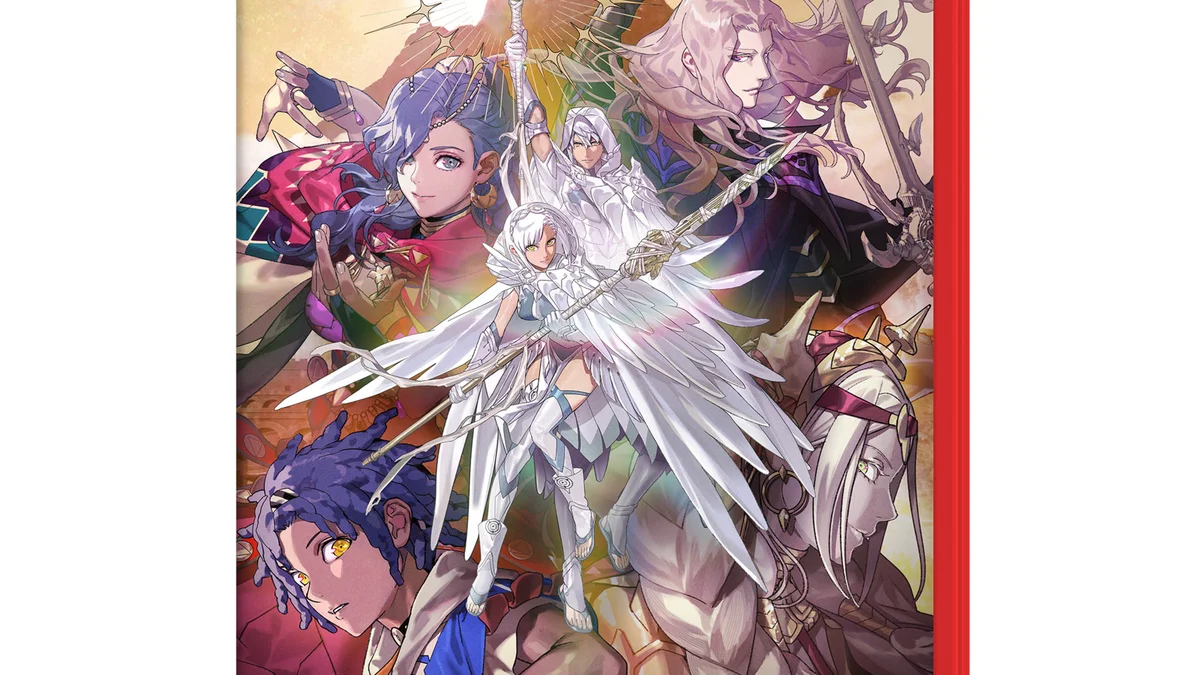
Fortune's Weave begins with a premise that feels comfortably Fire Emblem. Warriors gather in Dagsion for the Heroic Games, a tournament whose victor is promised a wish. Cai wants to save his father. Leda is driven by revenge. Dietrich searches for a worthy opponent. Theodora carries the aspirations of her people.
Then the frame expands. Five years later, the world has been devastated by Balor, and Eshmel must travel back through time to alter the fates of those four figures. What looked like a tournament story becomes the opening movement of something much larger.
VGC, Game Informer and GamesRadar all respond strongly to the resulting scale, though not without acknowledging how much narrative machinery is involved. Each hero's storyline reveals another angle on Dagda, and the game eventually asks those separate perspectives to coexist rather than remain isolated routes.
Four leads no longer have to wait for four playthroughs
The smartest structural choice is the ability to move between the Flame Lords' stories. Fortune's Weave does not demand that one route be exhausted before another begins. Returning to Eshmel allows a different thread to be picked up, meaning discoveries from one path can immediately reshape the context of another.
That is a meaningful answer to one of Three Houses' awkward compromises. Multiple viewpoints were one of that game's strengths, but reaching them required replaying a substantial amount of familiar material. Fortune's Weave keeps the viewpoints and folds them into a single sprawling campaign.
VGC is especially enthusiastic about this design. Nintendo Life is more cautious about how elegantly all those layers fit together later on. Both readings make sense: the structure is exciting precisely because it attempts something difficult.
Eshmel enters a story that already has enough heroes
Eshmel makes the time-travel framework function. As a dramatic center, the character is less convincing.
Nintendo Life's criticism is particularly useful here. Cai, Leda, Dietrich and Theodora already carry distinct motives, conflicts and arcs. Placing a more restrained fifth protagonist above them can occasionally feel like adding another frame around a picture that was already complete.
It is not fatal. It is simply another example of Fortune's Weave having two ideas and deciding that the correct number to keep is both.
Epic scale has epic-scale side effects
The four leads sit inside an enormous supporting cast. Nintendo Life counts more than 80 fully voiced recruitable characters, while Siliconera praises the game's ambition but argues that some less central characters receive less room to breathe, particularly through the series' familiar support relationships.
Pacing suffers from the same abundance. The early routes have clear identities. Later acts must merge those threads, escalate into war and move a huge cast toward a common destination. Several reviews identify repetition or slower stretches once that convergence begins.
Yet the game rarely feels like four unrelated scripts stitched together. These perspectives were built to collide, inform one another and eventually occupy the same story.
Fortune's Weave earns the word epic. It also inherits most of the inconveniences that come with it.