Teyvat stopped being generic anime fantasy a long time ago
Genshin already had mythology in 2020, but six years of updates have turned its hints into architecture.
Each nation now has its own relationship with power, religion, memory and the Archons. Ruins no longer merely provide places to hide treasure; they support layers of history that echo across regions.
That may be HoYoverse's greatest cultural achievement. Players can ignore much of the text and follow the main adventure, or spend hours reconstructing events through books, item descriptions and environmental details.
Regions increasingly behave like seasons of one enormous series
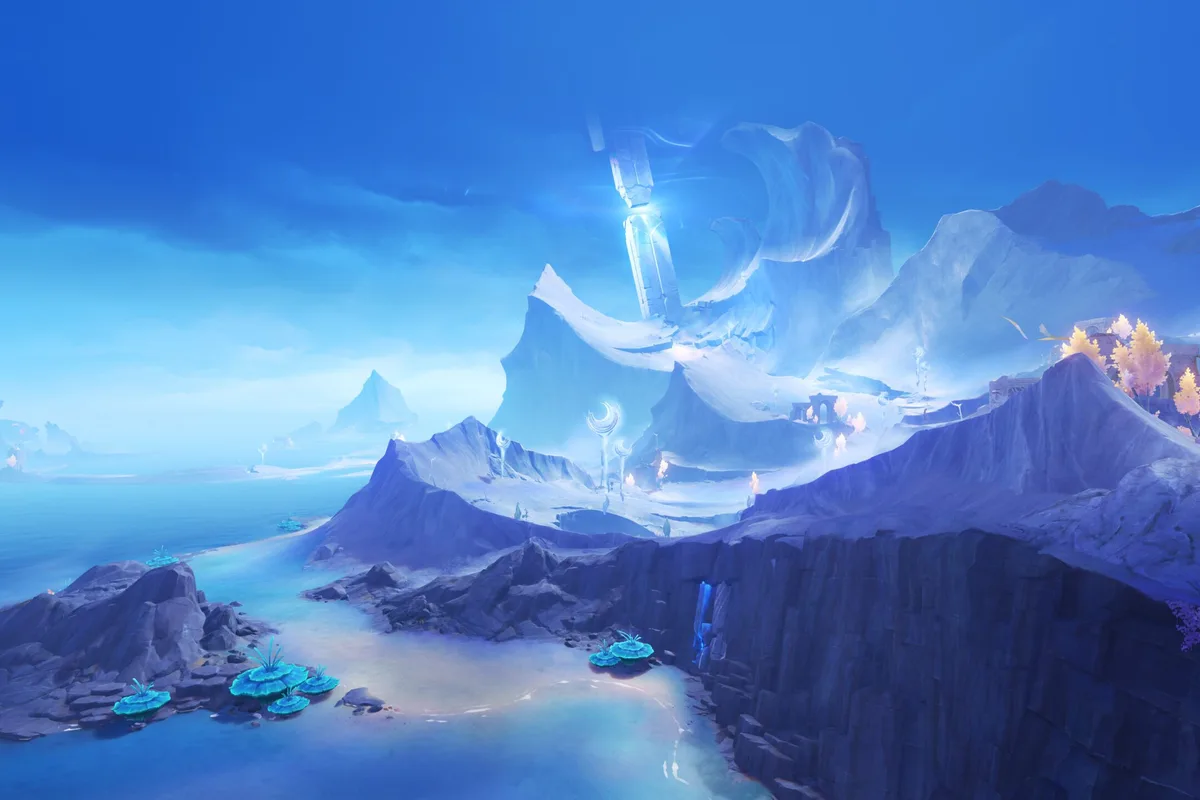
Mondstadt introduced Teyvat through relatively familiar fantasy. Liyue, Inazuma, Sumeru, Fontaine, Natlan and later areas progressively pushed the game toward much stronger regional identities.
The result feels less like one homogeneous continent and more like a serial in which each season changes location, conflict and supporting cast while the Traveler and Paimon remain the connective tissue.
That structure helps explain why a major regional update can feel like a new game even when the fundamental systems barely change.
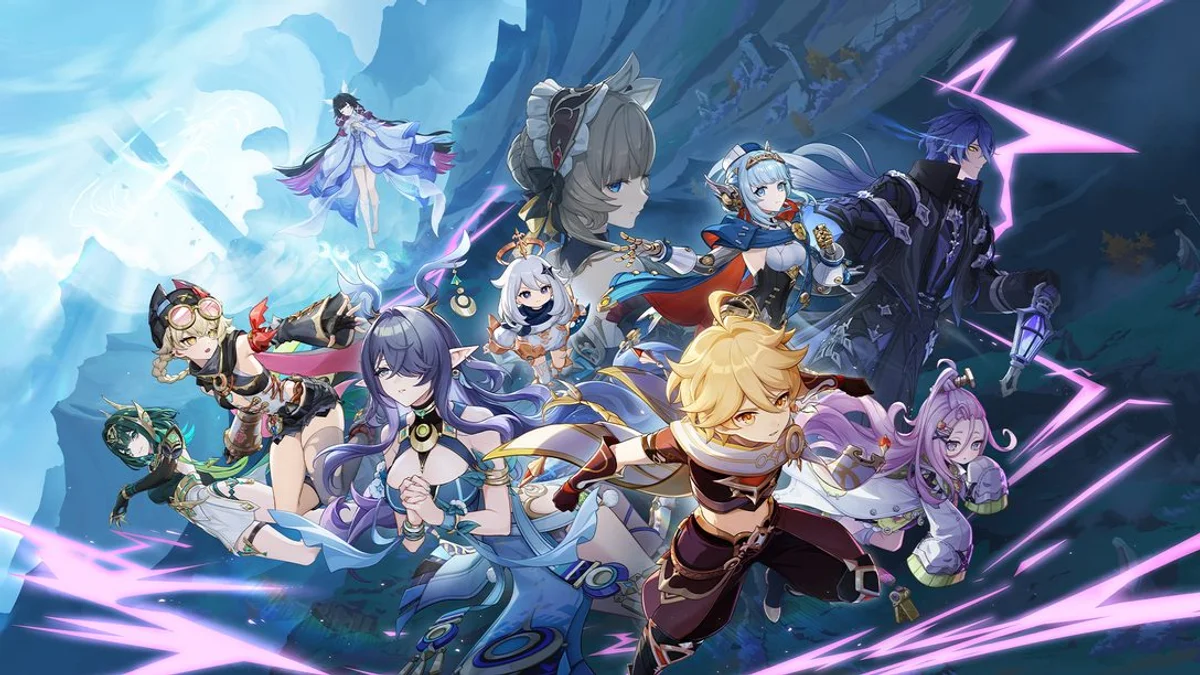
Characters are astonishingly efficient pieces of visual storytelling
HoYoverse is extremely good at silhouette, animation and immediately readable character hooks.
Every important character must work in a cutscene, illustration, trailer, combat team and inevitably a banner.
That commercial constraint paradoxically creates an unusually memorable cast. Even secondary characters often carry enough visual and musical identity to suggest a specific subculture within Teyvat.
The problem is that every important character is also a product
That double purpose occasionally becomes visible in the writing.
A new five-star unit must be appealing, competent, marketable and prominent enough to justify weeks of promotion. Truly hostile or morally irredeemable personalities therefore have a much more difficult road toward becoming playable.
Some arcs consequently feel as though sharper edges are being softened to keep characters compatible with their commercial function.
The Traveler remains the weakest link
A mostly silent protagonist was understandable at launch. Six years later it feels increasingly strange.
The Traveler has an identity, history, objective and relationships, yet Paimon continually restates their reactions, explains situations for them and occupies most conversations.
Dialogue choices rarely alter meaningful outcomes. The player is therefore asked to click for the protagonist without truly being allowed to perform the protagonist.
And Paimon speaks a lot
The mascot has real comic and emotional value. Her narrative function is the issue.
She routinely repeats information, verbalizes what the scene has already shown and answers before the Traveler is allowed to exist.
Across a short RPG this would be a quirk. Across hundreds of hours, it becomes one of the writing's most persistent sources of fatigue.
Archon Quests prove the game absolutely can tell stories
Whenever Genshin shortens its exposition and lets characters act, its major story chapters can be excellent.
HoYoverse can seed mysteries across multiple updates, gradually reveal lost civilizations and turn seemingly minor characters into dramatic pivots.
Presentation has also improved enormously since 2020, with more bespoke animation, pre-rendered sequences and genuine event-scale set pieces.
Music sometimes does more world-building than dialogue
Each major region carries instrumental signatures strong enough to establish cultural identity before a character explains anything.
This may be the area where Genshin most successfully communicates inspiration without burying it under exposition.
Removing the soundtrack from Teyvat would remove an enormous part of its personality.
The serial remains fascinating despite all the talking
With Version 7.1 approaching, Genshin no longer needs to prove that its lore can sustain years of storytelling.
The more interesting question is whether HoYoverse will eventually trust that world enough to speak less: let images carry information, let the Traveler speak and stop explaining the same revelation after the player already understood it.
Teyvat has earned that confidence. It is already one of live-service gaming's most recognizable worlds.