Death is still just another resource
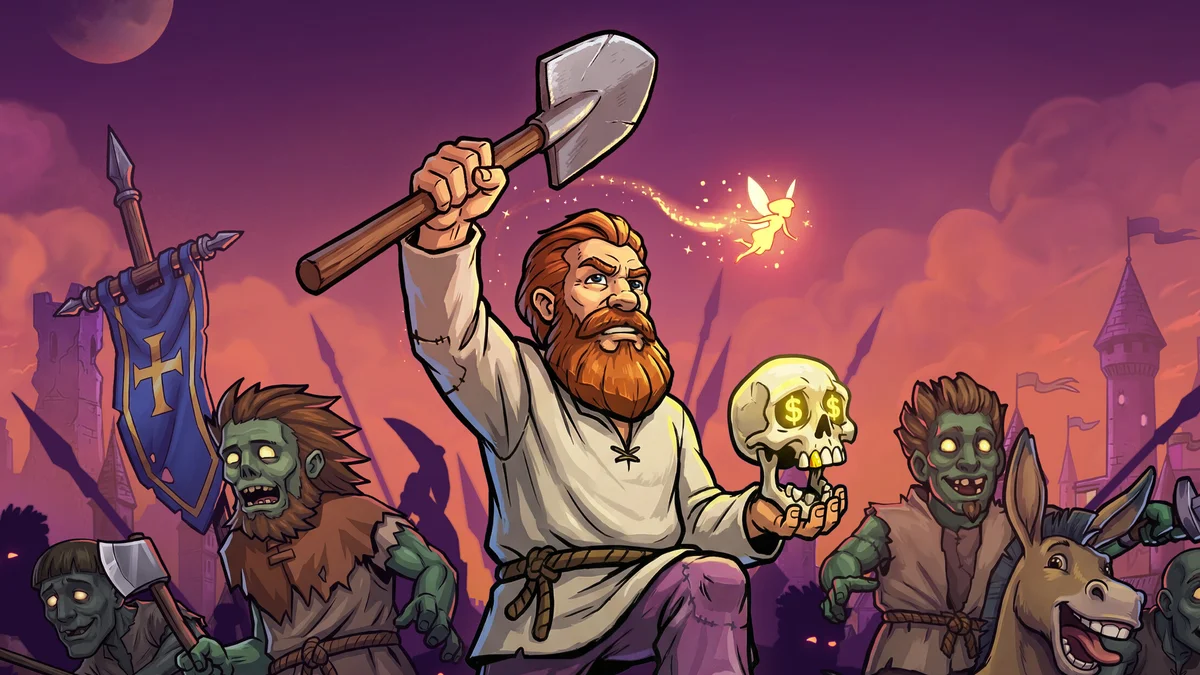
Graveyard Keeper remains distinctive because of the gap between its warm presentation and the things it actually asks the player to do. Growing vegetables or repairing a building can sit next to extracting skin, fat, blood or other useful components from a corpse.
Try Hard Guides emphasizes that contradiction and the slightly guilty amusement created when desecration becomes a perfectly ordinary crafting step. AIPT approaches the same idea as a macabre inversion of the traditional cozy game.
Graveyard Keeper 2 is not trying to become more respectable. It is simply more comfortable with its bad taste.
Full voice acting changes more than expected
GameSpew, Thumb Culture and Steam Deck HQ strongly agree on one point: fully voiced dialogue gives the sequel substantially more personality. The original leaned much more heavily on text boxes and visual characterization.
GameSpew specifically praises the range of British accents, while Steam Deck HQ highlights Larry, a sarcastic skull whose exhausted exchanges with the Keeper provide useful relief from the dense management systems.
It sounds like a secondary feature on a specification sheet. Across dozens of hours of quests, it becomes much more significant.
The Keeper has not had a peaceful eight years
The sequel deals with consequences from the original and places its protagonist in a world damaged by what happened before. Zombies have become a much more concrete threat, while restoring The Town provides structure to much of the new campaign.
Steam Deck HQ appreciates the stronger story focus and the way the undead threat gives narrative weight to proper burial. Netto's Game Room similarly responds positively to the sequel's continuation of the Keeper's story and the circumstances surrounding his return.
Story and labor are never separated for long. Saving the world frequently means crafting something before speaking to someone who will request something else.
The living are strangely less interesting than the dead
Try Hard Guides offers one of the clearest criticisms of the social layer. NPCs largely exist to progress the story, sell items or provide quests rather than develop into relationships comparable to those found in many life sims.
That is consistent with Graveyard Keeper's priorities. The original was already more interested in what villagers could provide the Keeper than in building friendships.
The genre has changed significantly since 2018, however. When competing games devote as much attention to residents as their economies, the omission becomes more noticeable.
Dark humor remains a matter of tolerance
AIPT enjoys the abundance of jokes and absurd quests while finding some humor too obvious. Shacknews is considerably harsher, arguing that tone does not always provide enough motivation to justify the enormous workload.
The most positive reviews see that casual cruelty as the franchise's identity. A corpse simultaneously becoming a ritual object, crafting inventory and potential zombie employee is the joke.
The sequel simply has many more opportunities to tell it.
This is still a comedy about work
Beneath the corpses and talking skulls, almost every system is about production. Residents have problems; the Keeper sees supply chains. A town collapses; it becomes a construction project. Zombies appear; some become enemies and others become employees.
That economic cynicism may ultimately matter more to Graveyard Keeper's identity than the cemetery itself.
The sequel has more characters and more voices. It remains fascinated by machinery.