In August 2016, No Man's Sky asked players to look at an enormous universe and feel small.
Ten years later, they can do exactly the same thing with three friends aboard a ship they built themselves.
That contrast tells most of the game's story.
Solitude did not disappear; it became optional
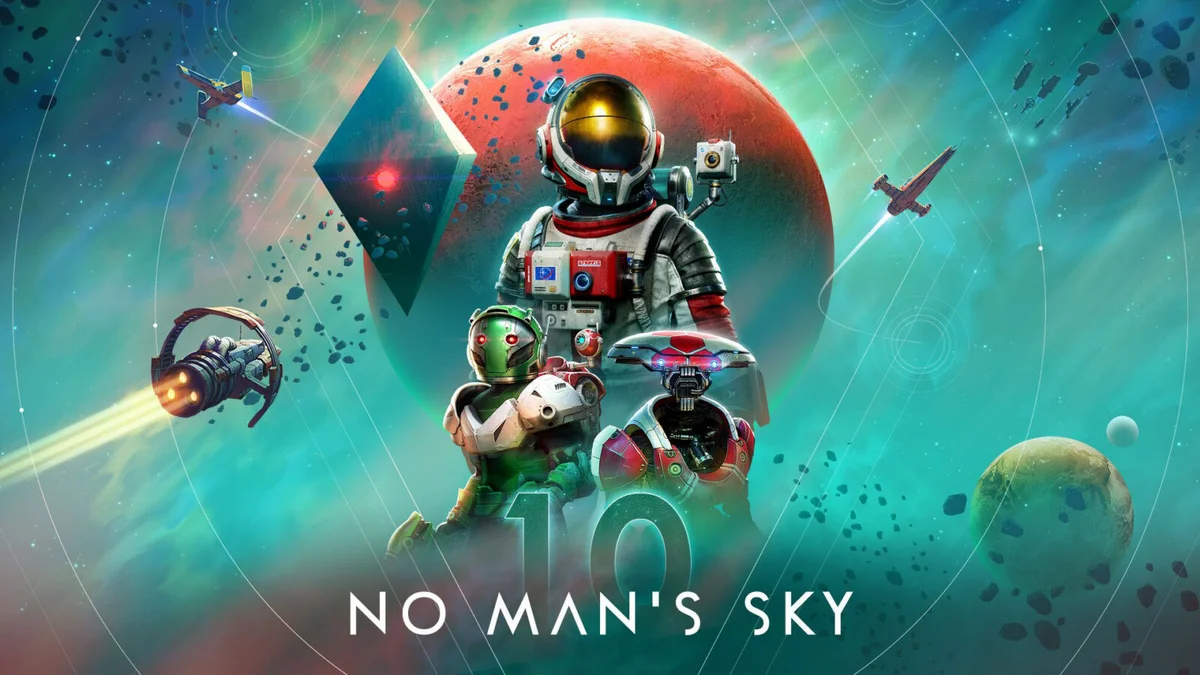
For the tenth anniversary, Sean Murray returned to the founding idea: discovering a world nobody had seen and feeling insignificant inside a universe extending far beyond the player.
The modern game could easily have destroyed that sensation beneath social systems.
It has not entirely done so.
Players can still avoid most communal activity, leave the Anomaly behind and find silent planets accompanied only by ambient music and some procedural animal moving like an evolutionary mistake.
The important change is that immensity can now be shared
Multiplayer was once one of the most famous symbols of what No Man's Sky failed to provide at launch.
It is now structural.
Shared bases, Nexus missions and expeditions already existed. Voyagers added something more intimate: a physical common space during travel.
A Corvette can carry several players, function like a flying home and continue moving while crew members leave their seats.
The fantasy changes from travelling together to inhabiting the thing carrying everyone through space.
The Swarm briefly turns an infinite galaxy into one shared story
The latest released major update pushes that community structure further.
Players are divided between three Traveller fragments and contribute toward a common effort against the Hive of Glass.
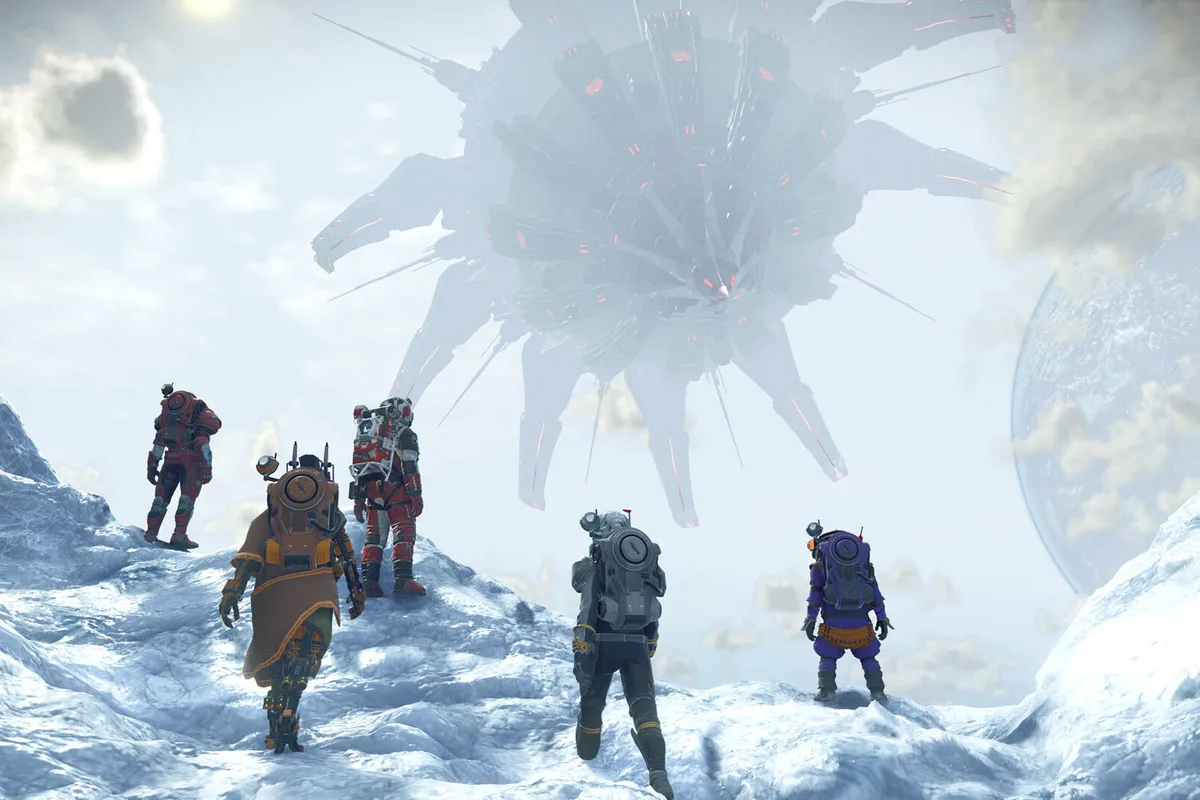
Progress appears in the Anomaly and Galactic Atlas, allowing individual actions to feed a larger communal event.
The narrative itself remains relatively thin. No Man's Sky never became a character-driven RPG whose campaigns depend on dialogue.
Its success lies elsewhere: players scattered across an almost endless universe suddenly have a reason to look in the same direction.
The strongest story is still the save file
PCGamesN described the tenth anniversary as evidence of what games can become when they are allowed time to grow.
That is especially true because growth rarely erased the player's personal past.
An old base may still exist. An ancient ship can join systems created years later. Returning after half a decade does not necessarily mean abandoning everything previously built.
That continuity creates an emergent personal history stronger than many of the written quests.
Abundance has diluted some of the original strangeness
Sean Murray recently acknowledged that he still enjoys the sparse, odd quality of the 2016 build.
The modern game can hardly be described as sparse.
Menus, currencies, technology trees, settlements, companions, freighters, exocraft, construction and dozens of activities now surround the original loop.
The additional possibility is undeniably valuable, but some mystery has been traded away. The incomprehensible universe is now full of recognizable game systems.
Free updates became part of the game's identity
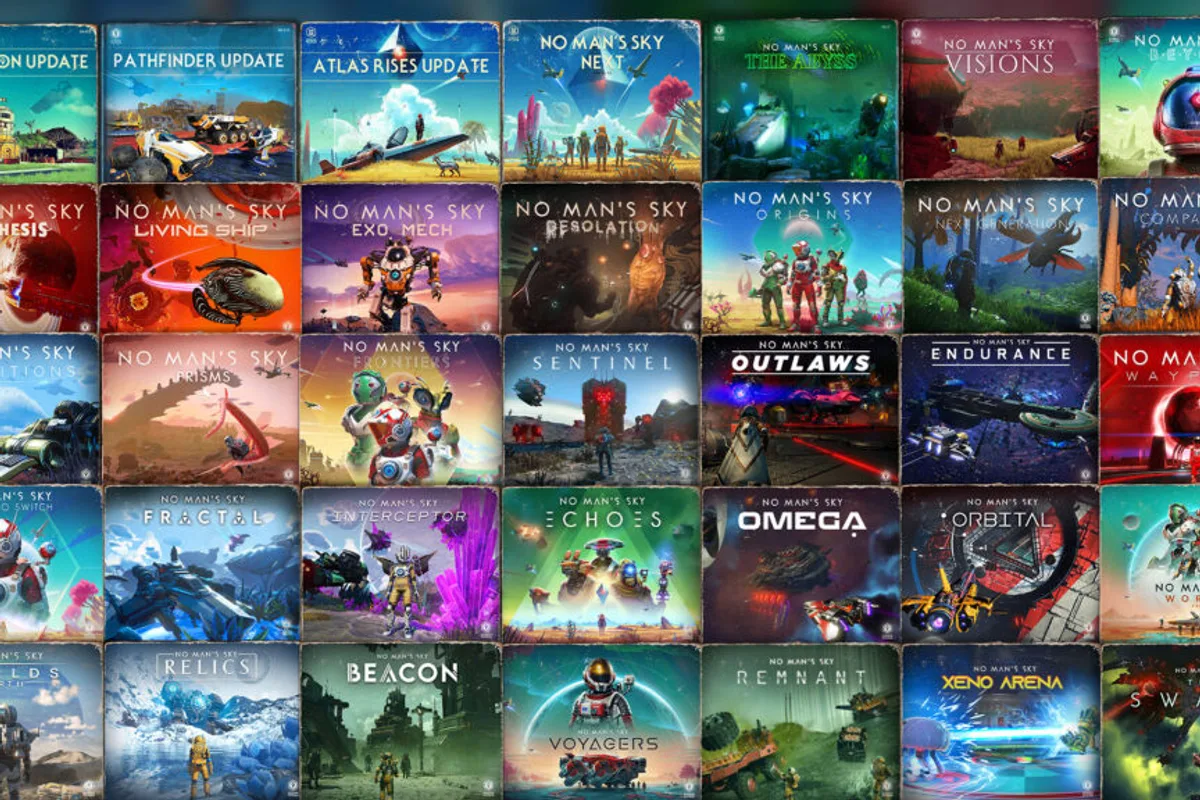
Nearly forty major updates arrived without paid expansions.
That policy changed the relationship between No Man's Sky and its community.
When something like Remnant or Xeno Arena focuses on an activity that does not appeal to every player, nobody has to justify buying a separate expansion.
It gives Hello Games unusual freedom to release strange, occasionally imperfect experiments without needing each one to carry the value proposition of a paid DLC.
The Swarm is the sort of idea only modern No Man's Sky can casually absorb
A gigantic hostile structure above planets, hundreds of fighters, three player factions and a universal war effort could have sounded like an entire sequel in 2016.
In 2026 it is another update.
That normalization of ambition may be the most fascinating cultural part of the game's transformation.
No Man's Sky no longer needs to prove that it might someday become the game once promised. Comparing it with six months ago is often more informative than comparing it with launch.
Cosmos still belongs to the future
Hello Games used the tenth anniversary to reveal the name of its next major update: Cosmos.
No features or release date have been announced, so it cannot be considered part of the playable game reviewed here.
This review therefore ends with The Swarm and patch 6.45.1.
That is already enough to make No Man's Sky extraordinarily difficult to summarize. It can be solitary or social, contemplative or industrial, peaceful or full of hundreds of ships. An actually infinite variety of content remains impossible. A universe where different players can construct genuinely different journeys is much closer to reality than it was ten years ago.