A bus should not walk like that
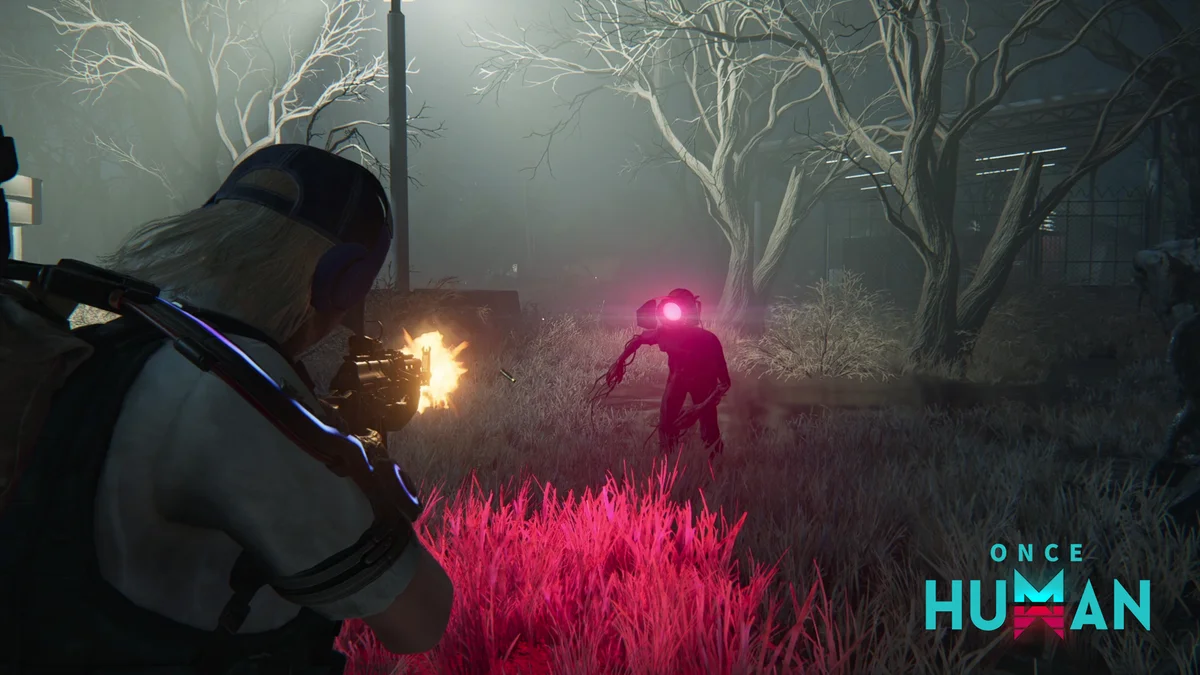
An old bus moves on enormous human limbs. A humanoid creature has a spotlight instead of a face. Familiar machinery develops biological features nobody asked for. Once Human is strongest when it takes something ordinary and changes one rule too many.
NetEase now openly describes the project's visual philosophy through New Weird influences: fantasy, science fiction and horror colliding through mutations of familiar reality. That description fits the game far better than a generic post-apocalyptic label ever did.
The monsters have more personality than the humans
IGN identified creature design as one of the original release's biggest strengths. PC Gamer admired the same weirdness even while finding many combat encounters too easy, and GamingBolt praised the haunting lore despite a much more mixed overall assessment.
Human characters rarely compete. Rosetta, Mitsuko, Meta-Humans and competing factions produce a substantial amount of terminology, yet the writing struggles to turn those concepts into personalities as immediate as a monster standing silently beside an abandoned road.
COGconnected already found the narrative exposition messy in 2024. Additional scenarios have expanded the mythology without making the original storytelling suddenly elegant.
Empty houses tell the apocalypse better
Once Human's strongest small stories are frequently environmental. GamingBolt highlighted abandoned notes describing ordinary families collapsing during the disaster, while towns retain enough normal architecture to make the supernatural corruption feel intrusive.
A kitchen chair is nothing. A kitchen chair behaving as though anatomy now applies to it creates a much clearer impression of a broken world than another paragraph explaining Stardust.
The Control comparison is obvious and slightly unfair
Paranormal science, altered objects and impossible spaces naturally recall Remedy's Control, a comparison PC Gamer made almost immediately.
Once Human has to place that atmosphere inside a completely different structure. Horror shares space with resource gathering, home decoration, multiplayer traffic and inventory management.
Cosmic dread becomes difficult to sustain when somebody nearby has constructed a brightly illuminated mansion.
Then the apocalypse becomes cute
Deviations create another tonal disruption. Some are disturbing. Others are deliberately charming, silly or domesticated, and can end up working around the player's territory.
The inconsistency can weaken horror, but it has also become central to the game's identity. Once Human is not simply about surviving monsters anymore. It is about capturing, exploiting, befriending and occasionally decorating around them.
The story remains less interesting than the scenery
But Why Tho? and GamingBolt both criticised the writing in 2024, while NME found a compelling shared-world survival game underneath a dull narrative.
That distinction still defines Once Human remarkably well.
Nalcott regularly makes the player wonder what is waiting behind the next door. The dialogue waiting there is far less dependable.