
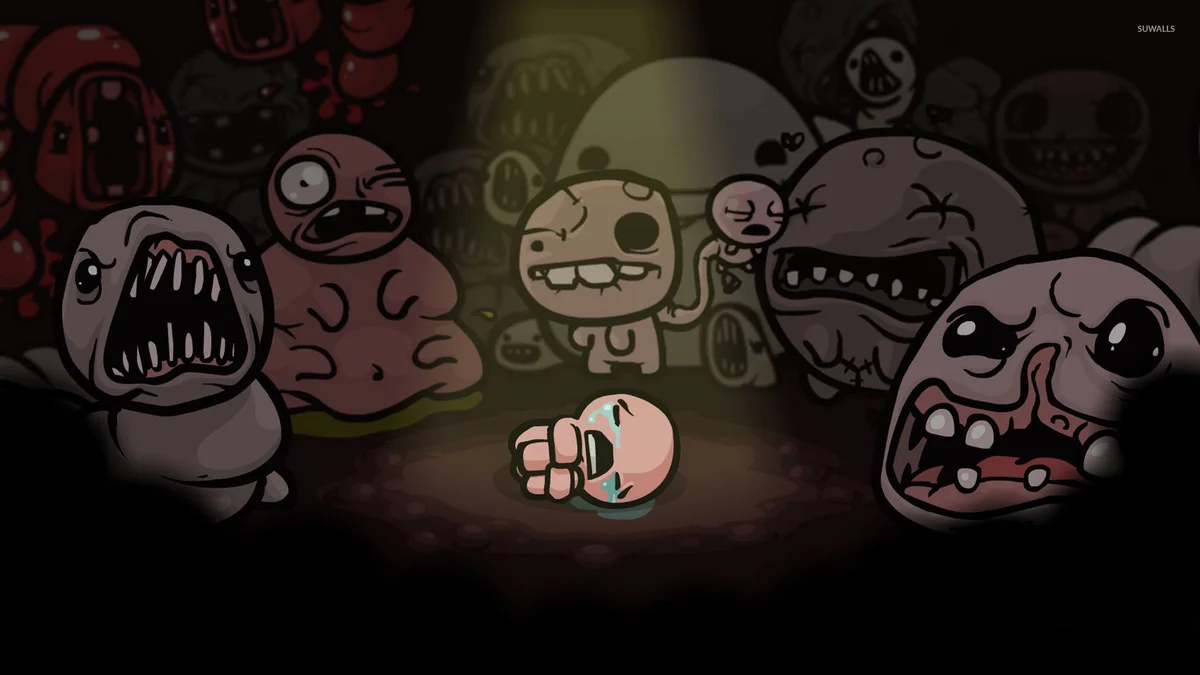
A mother hears the voice of God demanding proof of her faith. Her son escapes through a trapdoor before she can sacrifice him. The biblical reference in the title is established immediately, then twisted into a story about a frightened child trapped beneath his own home.
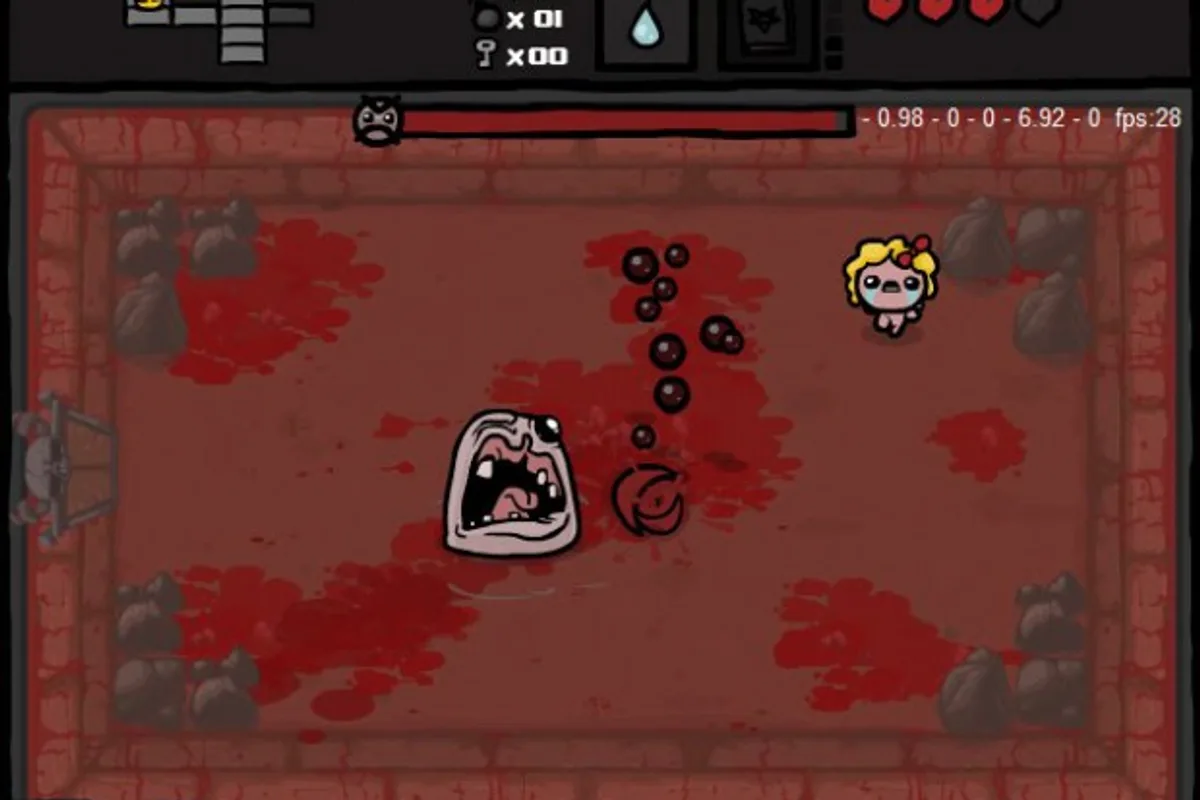
The visual language refuses subtlety. Tears become ammunition. Diseased bodies become enemies. Blood and waste cover the basement. Domestic objects can be more unsettling than the monsters.
Disgust is part of the vocabulary
Destructoid identified the visual style as one of the game's major strengths, particularly the way Edmund McMillen combines fleshy grotesquerie with cartoon humour. Isaac himself becomes part of that process. Items physically alter him until a successful build can also look like a catalogue of abuse.
It would be easy for those images to function as disposable shock jokes. Their recurrence makes them harder to separate from the game's themes: childhood, bodies, guilt, religion and a home that has ceased to be safe.
The game refuses to annotate its religion
Christian imagery is everywhere without becoming a conventional theological argument. Destructoid read the premise as carrying a criticism of religious extremism while noting that it avoids becoming overtly preachy.
PC Gamer found another productive ambiguity in the roguelike structure itself. Randomness can feel hostile enough to tempt the player into imagining an unseen hand arranging punishment, even though the system is simply producing outcomes from its rules.
Isaac leaves that connection available rather than underlining it.
A soundtrack built for repetition
Danny Baranowsky's score has a difficult job because the earliest floors are revisited constantly. GameSpot praised the way those tracks sit behind repeated play without becoming exhausting, while deeper areas push the music toward greater unease.
The original Flash presentation has aged. Its specific combination of religious iconography, black comedy and childish horror has not. Even its crude drawings remain difficult to mistake for anything else.