

The Wild Hunt is the title, Ciri is the objective, and political collapse frames the map. Yet The Witcher 3 is often at its best when none of those things occupy the center of the screen.
A village problem can begin as folklore and end as domestic tragedy. A monster contract can become an argument about who deserves sympathy. The game's reputation for side quests comes from that willingness to let apparently minor lives occupy serious narrative space.
War is mostly visible in what it leaves behind
Velen's mud matters because people are trying to survive in it. Refugees, soldiers, racial hatred and poverty give the landscape context that goes beyond environmental decoration. PC Gamer's original review emphasized how strongly the Northern Realms put ordinary people ahead of heroic abstraction.
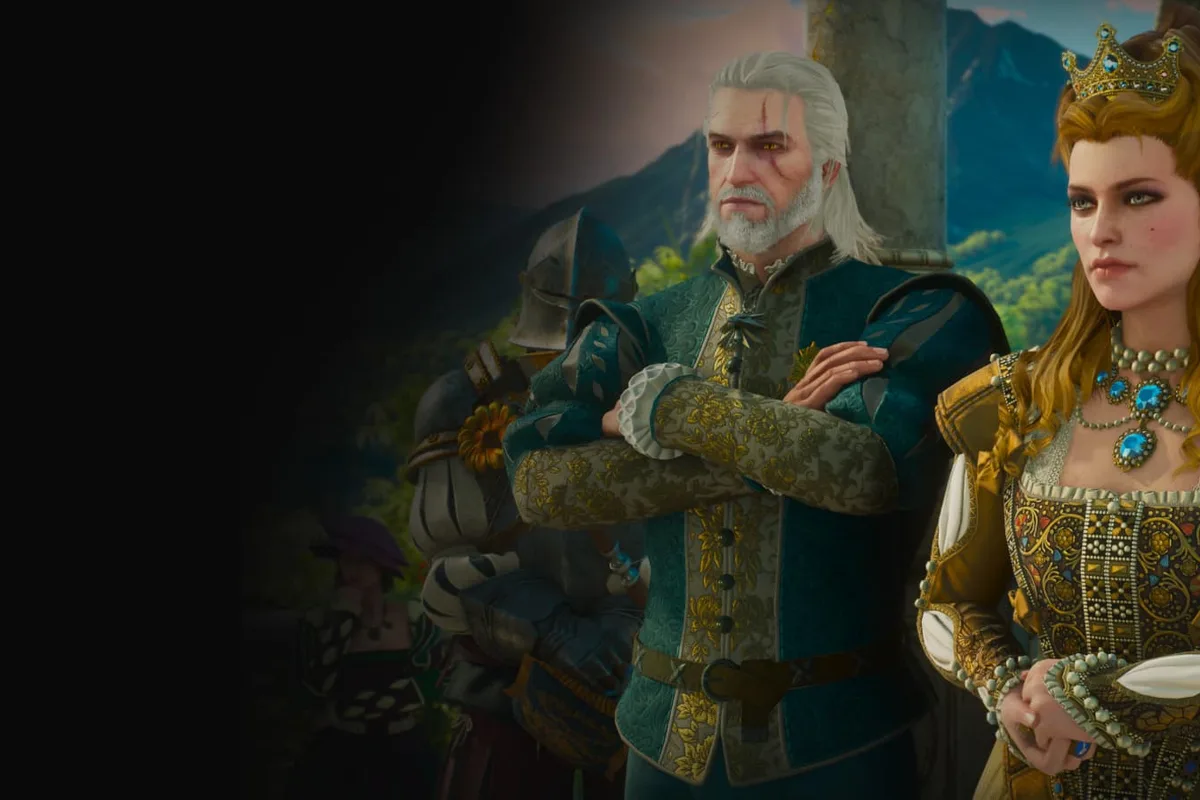
The writing is also comfortable withholding judgment. Decisions frequently arrive before the player can know every consequence, and the game can wait hours before showing what changed.
It is one reason the morality has aged well. There is no universal meter capable of explaining whether helping one damaged person at somebody else's expense was the correct choice.
Geralt brings baggage, in the useful sense
Wild Hunt does not offer a blank protagonist. Geralt already loves, distrusts, owes and remembers people. Role-playing happens inside that history.
Returning characters therefore carry weight that a new open-world cast would need hours to manufacture. Newcomers can follow the plot—dialogue often offers background—but familiarity with earlier games or Sapkowski's books inevitably changes the texture of those meetings.
The main plot occasionally loses the argument with its own world
Finding Ciri is supposed to be urgent. The world is simply too good at interrupting it. That creates stretches where the emotional clock and the player's behavior stop agreeing.
Some investigation chains also fall back on conventional structures: talk to one person, ride to another, discover that a third person has the next piece of information. In a shorter RPG those repetitions would be easier to notice.
The campaign recovers because Ciri eventually becomes more than a destination. Geralt's treatment of her contributes to the ending, turning apparently personal interactions into some of the game's most important decisions.
The Complete Edition then adds Hearts of Stone and Blood and Wine, two expansions that further strengthen the argument that this series is at its sharpest when it narrows its attention to particular people.