
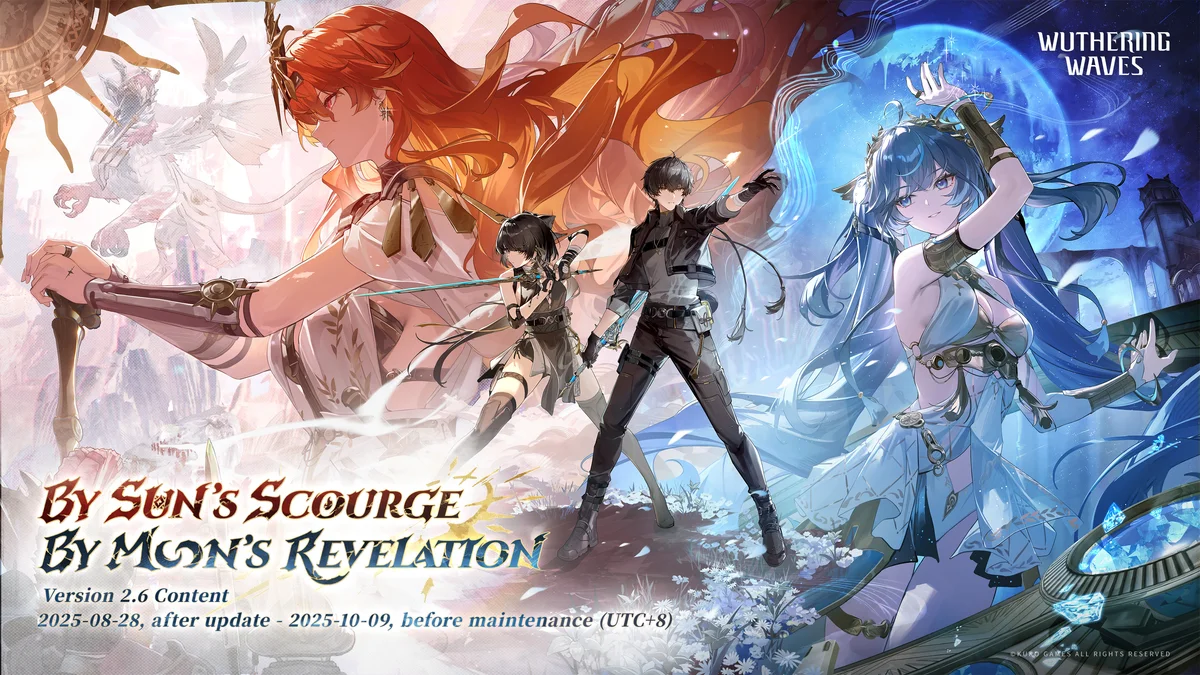
The opening boss was terminology
Rover wakes without memories, meets a small group near Jinzhou and almost immediately becomes the target of a vocabulary avalanche: the Lament, Tacet Discords, Resonators, Waveworn Phenomena and enough additional terminology to make ordinary dialogue feel like documentation.
GamingBolt already criticised the 2024 story for taking too long to start. Push Square was harsher when reviewing the PS5 version, calling the writing the game's biggest weakness and specifically attacking its fixation on proper nouns.
The frustrating part is that the world underneath them is genuinely interesting.
An apocalypse organised around sound
Solaris-3 has a strong conceptual spine. The catastrophe did not merely destroy civilisation; it altered reality through phenomena associated with waves, frequencies and resonance.
The terminology can be exhausting, but it is not random. Tacet Discords, Resonators and Echoes all belong to the same conceptual language, allowing the science-fiction technology, supernatural abilities and creature design to feel related.
The launch story simply explained the framework before earning much emotional investment in it.
Rinascita discovers the value of staging
Version 2.0 represents the clearest early improvement. Push Square praised Rinascita's visual design and much broader mission variety, including heists, performance sequences and other quests that physically express the culture rather than discussing it for minutes at a time.
The cinematics became more ambitious as well. Characters are better when allowed to act inside a scene rather than standing still while lore passes between text boxes.
Game8's 2025 reassessment went further, praising later character-driven stories and a Rover who participates more actively in the narrative.
Rover attracts a suspicious amount of admiration
The improved protagonist creates a different imbalance. Rover is deliberately important to the setting, but the story can be extremely eager to remind everyone of that importance.
Characters frequently develop trust, fascination or affection unusually quickly. The effect is especially noticeable in a game whose commercial model encourages each new Resonator to establish an appealing relationship with the player character.
Destiny is one explanation. Banner design is another.
Live-service storytelling leaves people behind
A character in a gacha RPG is both fiction and a limited product. Wuthering Waves sometimes exposes that tension when a newly introduced Resonator receives an intense burst of narrative attention and then becomes much less relevant after the associated update.
A 2026 analysis of Version 3.0 still identified this character-centred structure as a weakness, particularly when older relationships receive little follow-up.
Individual arcs can work beautifully. Continuity between them is less dependable.
Solaris-3 eventually becomes bigger than its bad introduction
By Version 3.6, Wuthering Waves is deep into Chapter IV and continues to add new regions, cultures and Resonators. Judging the entire narrative by the 2024 prologue now gives an incomplete picture.
The game remains verbose. It still mistakes terminology for texture more often than it should.
It also now contains enough genuinely strong visual storytelling and character moments for the setting to survive the writing's worst habits.