
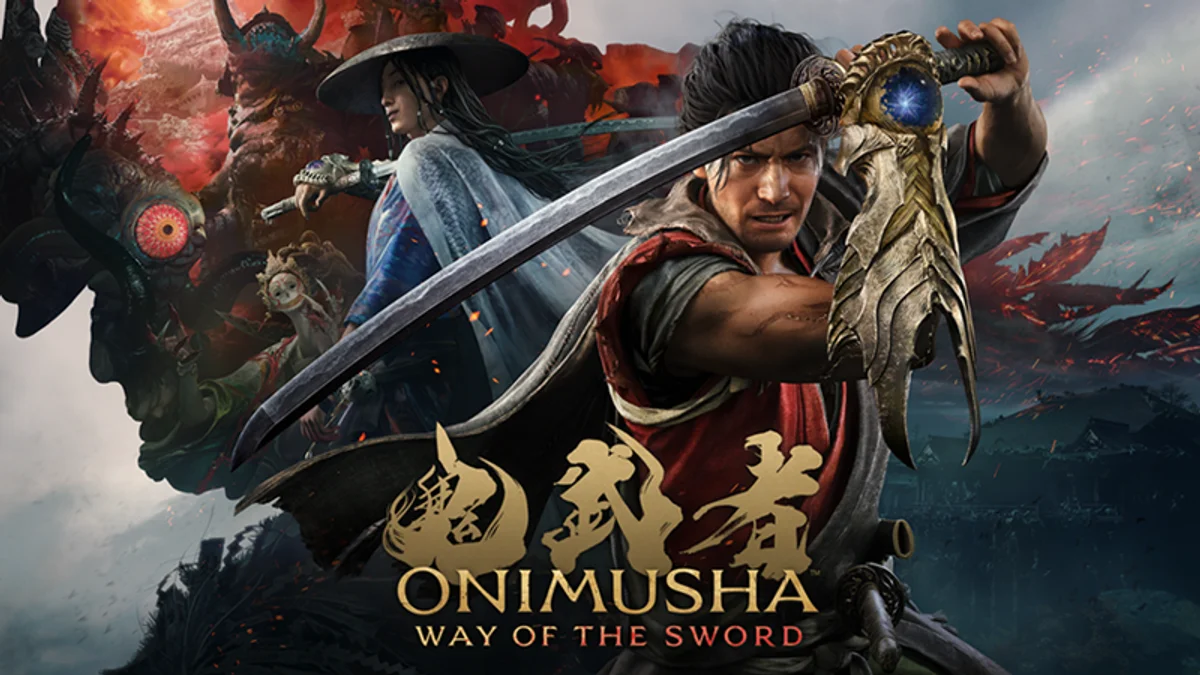
Using Toshiro Mifune's likeness for Miyamoto Musashi could have become a prestige stunt: one cultural legend pasted onto another to give an old franchise instant gravitas.
Way of the Sword works because it refuses to turn Musashi into a monument.
This Musashi is allowed to look foolish
He boasts, snarls, overreacts and carries himself with the confidence of somebody who expects every room to become another chapter in his legend.
The facial animation is crucial. Critics repeatedly praise how expressive the character is, with small gestures and comic reactions preventing the Mifune reference from becoming a frozen act of reverence.
That gives Musashi somewhere to go. His early obsession with personal strength gradually collides with responsibilities created by the Oni Gauntlet and the Genma invasion.
The plot is conventional; the cast gives it shape
The broad supernatural story does not offer many shocks. Kyoto is collapsing under a demonic threat, reality itself is in danger, and a reluctant warrior ends up carrying power that makes him responsible for more than his own reputation.
The stronger material comes from individual personalities. Ganryu turns rivalry into theatre. Dokyo adds cruelty and body horror. Even isolated bosses often receive enough visual and narrative definition to make their encounters feel like scenes rather than checkpoints.
That matters in an action game so dependent on duels. A boss can have dramatic stakes before the first parry window appears.
The game understands samurai cinema as movement, not decoration
Way of the Sword's best sequences feel less like a historical theme park than a supernatural sword film that has been allowed to become grotesque.
Bodies brace before impacts. Conversations give faces room to perform. Violence has a rhythm of restraint and sudden release. The game frequently evokes jidaigeki without becoming solemn about the reference.
Lady Murasaki's Curious Cases are particularly effective side stories, using morbid little fables and recurring citizens to give Kyoto a literary texture missing from its more mechanical errands.
Kyoto is a better image than it is a structure
The city looks compelling when Malice and the Genma distort familiar spaces. As a hub, it repeatedly slows the story with upgrade materials, blocked routes and minor tasks.
The contradiction is difficult to ignore. Cutscenes communicate a world under supernatural pressure; the next objective may involve combing side streets for crafting components.
Way of the Sword's narrative energy improves almost every time it leaves the hub for a more authored, linear location.
Repeated bosses lose some dramatic power
Mechanically, fighting a familiar enemy can show how much the player has learned. Narratively, an encore is still an encore.
The script occasionally lets Musashi complain about having to beat the same opponent again, which is charming but also a quiet admission that the repetition is visible.
Onimusha needed a protagonist before it needed mythology
The franchise already had Oni powers, Genma and historical fantasy. What this revival needed was somebody capable of making those pieces feel contemporary without sanding away the early-2000s Capcom swagger.
Musashi does that.
The central plot may not become the defining samurai story of the decade, but its hero gives the series something more valuable for a comeback: a personality worth following after the sword is sheathed.